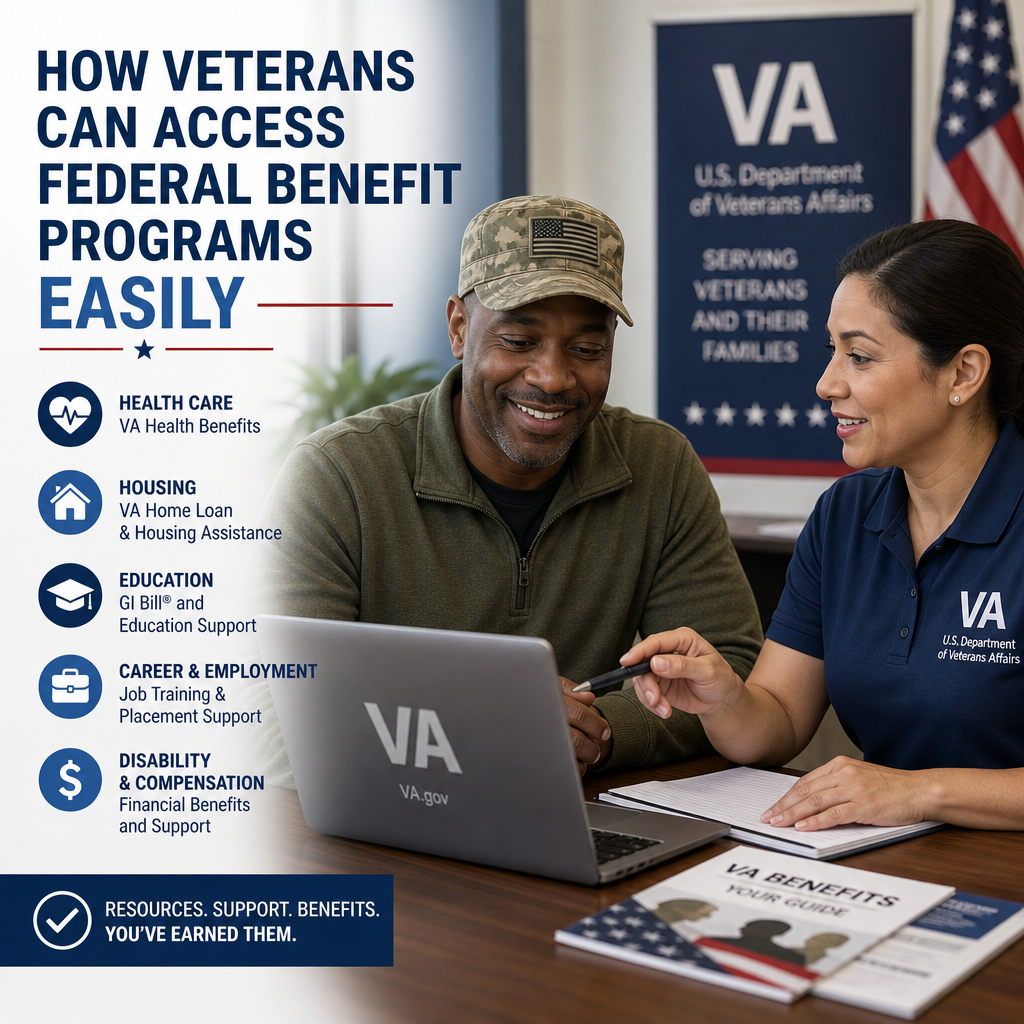
How Veterans Can Access Federal Benefit Programs Easily
Learning how veterans can access federal benefit programs starts with understanding your eligibility and knowing where to look for help. From health care and disability compensation to education and housing support, the right benefits can make a meaningful difference for you and your family.
By: Emily Adams on julho 31, 2026
Navigating how veterans can access federal benefit programs can feel overwhelming at first, especially when you are balancing work, family, health concerns, or a recent transition out of the military. The good news is that the federal government offers a wide range of benefits designed to support veterans and their families, from health care and disability compensation to education, housing, employment, and more.
The challenge is not that help does not exist. It is knowing which programs you may qualify for, how to apply, and where to find reliable guidance. This article breaks down the process in plain language so you can move forward with confidence and make informed decisions about the benefits available to you.
Understanding Federal Benefit Programs for Veterans
Federal benefit programs for veterans are administered through several agencies, with the U.S. Department of Veterans Affairs (VA) serving as the primary source for many key services. Other agencies, such as the Department of Labor, Department of Education, and Social Security Administration, also provide support that may apply to veterans and their families.
These programs can include:
Health care through VA medical facilities
Disability compensation for service-connected conditions
VA pensions for eligible wartime veterans
Education benefits such as the GI Bill
Home loan guarantees
Vocational rehabilitation and employment support
Life insurance options
Burial and memorial benefits
Understanding how veterans can access federal benefit programs starts with identifying which benefits fit your service history, current situation, and long-term goals.
Start With Your Eligibility
Before applying, confirm your eligibility. Federal benefits often depend on several factors, including:
Length of service
Type of discharge
Dates of active duty
Whether your condition is service-connected
Income and financial need for some programs
Family status for dependent-related benefits
Review Your Discharge Status
Your discharge characterization can affect access to benefits. In many cases, veterans with an honorable discharge qualify for the broadest range of programs. However, some other discharge types may still allow access to certain benefits.
If you are unsure how your discharge affects eligibility, review your DD214 and contact a VA-accredited representative or a veterans service organization for help.
Gather Core Documents
Having the right paperwork ready can speed up the process. Commonly requested documents include:
DD214 or other separation papers
Military service records
Social Security number
Government-issued ID
Marriage or birth certificates, if applying for dependent benefits
Medical records, especially for disability claims
Income information, if needed for certain programs
Organizing these records early can save time and reduce delays later.
How Veterans Can Access Federal Benefit Programs Step by Step
The application process varies by program, but the general path is similar. If you are trying to understand how veterans can access federal benefit programs, these steps provide a practical starting point.
1. Identify the Benefit You Need
Begin with the outcome you are trying to achieve. For example:
Need medical care? Explore VA health care
Living with a service-related injury? Look into disability compensation
Planning for school? Review education benefits
Struggling with housing costs? Consider VA home loans or housing assistance
Looking for work? Explore career and vocational services
Focusing on one goal at a time makes the process less stressful.
2. Create or Use Your VA Account
Many applications can be started online through VA.gov. A secure VA account can help you:
Check eligibility
Apply for benefits
Track claim status
Upload documents
Review letters and correspondence
Using the online portal is often the fastest way to begin, though phone, mail, and in-person support remain available.
3. Submit the Application
Different benefits require different forms. For example:
Disability compensation claims usually require medical evidence and details about your condition
Health care enrollment uses a separate application
Education benefits may involve school enrollment information
Home loan benefits may require lender coordination
Be as accurate and complete as possible. Missing information can delay review.
4. Respond to Requests Promptly
The VA or another agency may ask for more documentation. Respond quickly and keep copies of everything you submit.
Helpful habits include:
Saving confirmation numbers
Writing down names and dates of calls
Keeping digital copies of forms
Checking your mail and online portal regularly
5. Follow Up on the Decision
Once a decision is made, review it carefully. If you are approved, note any next steps, such as scheduling an appointment, selecting a school, or using a loan benefit.
If your claim is denied or the benefit amount is lower than expected, you may have appeal rights. Do not assume a denial is final without reviewing the explanation.
Key Federal Benefits Veterans Should Know About
There are many programs available, but a few stand out as especially important.
VA Health Care
VA health care can include primary care, specialty care, mental health services, prescriptions, preventive care, and rehabilitation services. Eligibility depends on several factors, including military service, income in some cases, and whether you have service-connected conditions.
Why It Matters
Access to care can make a major difference if you are dealing with:
Chronic pain
Post-traumatic stress
Hearing loss
Mobility issues
Exposure-related health concerns
Depression or anxiety
If you have delayed treatment because of cost or uncertainty, this benefit may be worth exploring early.
Disability Compensation
Disability compensation is a tax-free monthly benefit for veterans who have a service-connected disability. The condition does not have to be combat-related. It can include physical injuries, mental health conditions, or illnesses that were caused or worsened by service.
What Helps a Claim
Strong claims often include:
Medical diagnosis
Evidence linking the condition to service
Treatment records
Buddy statements or personal statements
Military service records
If you are learning how veterans can access federal benefit programs, disability compensation is one of the most commonly used and most important options.
Education Benefits
Education support can help veterans pay for college, vocational training, apprenticeships, and certification programs. The Post-9/11 GI Bill is one of the best-known programs, but there are others depending on service history and family circumstances.
Ways Veterans Use Education Benefits
Veterans often use education benefits to:
Earn a degree
Gain a professional license
Switch careers
Complete technical training
Support dependents through transferred benefits
These benefits can be a strong bridge to civilian career success.
VA Home Loan Guaranty
The VA home loan program helps eligible veterans, active-duty service members, and some surviving spouses buy, build, or refinance a home with favorable terms. While the VA does not lend money directly, it guarantees part of the loan, which can make borrowing easier under certain conditions.
Common Advantages
No required down payment in many cases
No monthly private mortgage insurance
Competitive interest rates
Refinance options for some borrowers
For veterans hoping to buy a home or reduce housing costs, this program can be a valuable resource.
Pension and Financial Support
The VA pension is a needs-based benefit for certain wartime veterans with limited income and assets. It is different from disability compensation and is not based on service-connected injury.
In addition, some veterans may qualify for:
Aid and attendance support
Housebound benefits
Survivor benefits for spouses and dependents
These programs can help older veterans or veterans with significant care needs.
Employment and Career Assistance
Federal support is not limited to compensation and medical care. Veterans can also access career services through the Department of Labor and VA programs.
Helpful Employment Resources
Job search assistance
Resume building support
Interview preparation
Career counseling
Training opportunities
Support for disabled veterans
Many veterans bring leadership, discipline, and technical skills to the civilian workforce, and these services can help translate military experience into a strong job search strategy.
Where to Get Help With Applications
You do not have to handle everything alone. In fact, using support can reduce errors and improve your chances of a smooth process.
VA-Accredited Representatives
A VA-accredited representative can help you understand the process and prepare claims. These professionals are authorized to assist veterans with benefit applications and appeals.
Veterans Service Organizations
Many veterans service organizations offer free help with claims and questions. These groups can be especially useful if you prefer in-person guidance.
County and State Veterans Offices
Local veterans offices often help with:
Document gathering
Benefit screening
Application submission
Referrals to community resources
School and Employer Resources
If you are using education or employment benefits, schools and employers may have dedicated staff who understand veteran programs and can help you navigate the paperwork.
Common Mistakes to Avoid
When figuring out how veterans can access federal benefit programs, a few simple mistakes can create unnecessary delays.
1. Waiting Too Long to Apply
Some benefits can be used sooner than people expect. Delaying an application may mean losing time or missing support when you need it most.
2. Submitting Incomplete Forms
Missing signatures, dates, or evidence can slow things down. Review every application carefully before submitting it.
3. Not Keeping Copies
Always keep copies of your claims, medical records, letters, and forms. This makes it easier to appeal or clarify information later.
4. Assuming You Do Not Qualify
Many veterans overlook benefits because they assume they are ineligible. Eligibility rules vary, so it is worth checking.
5. Ignoring Appeal Rights
If a decision is unfavorable, review the next steps. Appealing a denial or requesting reconsideration may be appropriate depending on the program.
Practical Example: A Veteran Starting the Process
Imagine a veteran who recently left active duty and is dealing with knee pain and sleep problems. They are also thinking about going back to school.
File a disability compensation claim for the knee and sleep issues
Research GI Bill education benefits
Meet with a VA-accredited representative for support
By taking one step at a time, the veteran can avoid confusion and build a clear plan.
Building a Long-Term Benefits Strategy
Federal benefits are not just one-time applications. For many veterans, they are part of a long-term plan for health, stability, and financial security.
Consider reviewing your situation after major life changes, such as:
Leaving active duty
Getting married
Having children
Buying a home
Developing a new medical condition
Returning to school
Retiring
A benefit that did not matter five years ago may become important now.
Frequently Asked Questions
1. How do veterans begin the process of applying for federal benefits?
Start by identifying the benefit you need most, then create a VA.gov account or contact a VA office for help. Gather essential documents such as your DD214, medical records, and any income or family information needed for the specific program. Once you submit the application, monitor your mail and online account for updates or requests for more information.
2. Can a veteran qualify for more than one federal benefit program?
Yes. Many veterans receive multiple benefits at the same time. For example, a veteran may use VA health care, file for disability compensation, and apply for education benefits. Eligibility is reviewed separately for each program, so one approval does not automatically mean approval for another, but it can make sense to explore all options.
3. What if my military discharge is not honorable?
Some veterans with other than honorable or general discharges may still qualify for certain benefits, but eligibility depends on the details of the discharge and the program. If your discharge may affect access, speak with a VA-accredited representative or veterans service organization to review your records and determine whether you can request a discharge upgrade or apply for benefits.
4. Do veterans need a lawyer to apply for federal benefits?
Not usually. Many veterans successfully apply with help from VA-accredited representatives, veterans service organizations, or local veterans offices. A lawyer may be helpful in more complex cases, especially appeals or discharge upgrades, but many initial benefit applications do not require legal representation.
5. How long does it take to get a decision on a veterans benefit claim?
Processing times vary depending on the program, the completeness of your application, and the amount of evidence needed. Some claims move faster than others. You can reduce delays by submitting a complete application, responding promptly to requests, and checking your claim status regularly through your online account or support contacts.
Learning how veterans can access federal benefit programs is one of the most practical steps a veteran can take to protect health, finances, education, and long-term stability. While the system can feel complicated, the process becomes much more manageable when you break it into smaller steps: identify the benefit you need, gather the right documents, apply through the proper channel, and follow up consistently.
The most important thing to remember is that these programs exist to support veterans and their families. Whether you need medical care, disability compensation, education assistance, home loan help, or job support, there is likely a federal resource that can help. If you are unsure where to begin, start with VA.gov and consider reaching out to a VA-accredited representative or veterans service organization. Taking that first step can open the door to benefits you have earned through service.
Emily A, holds a Master's degree in Public Administration (MPA) and has over 7 years of experience researching federal and state assistance programs. She writes educational content focused on government benefits, public policy, and community resources, using information from official agencies to help readers understand available programs and eligibility requirements.