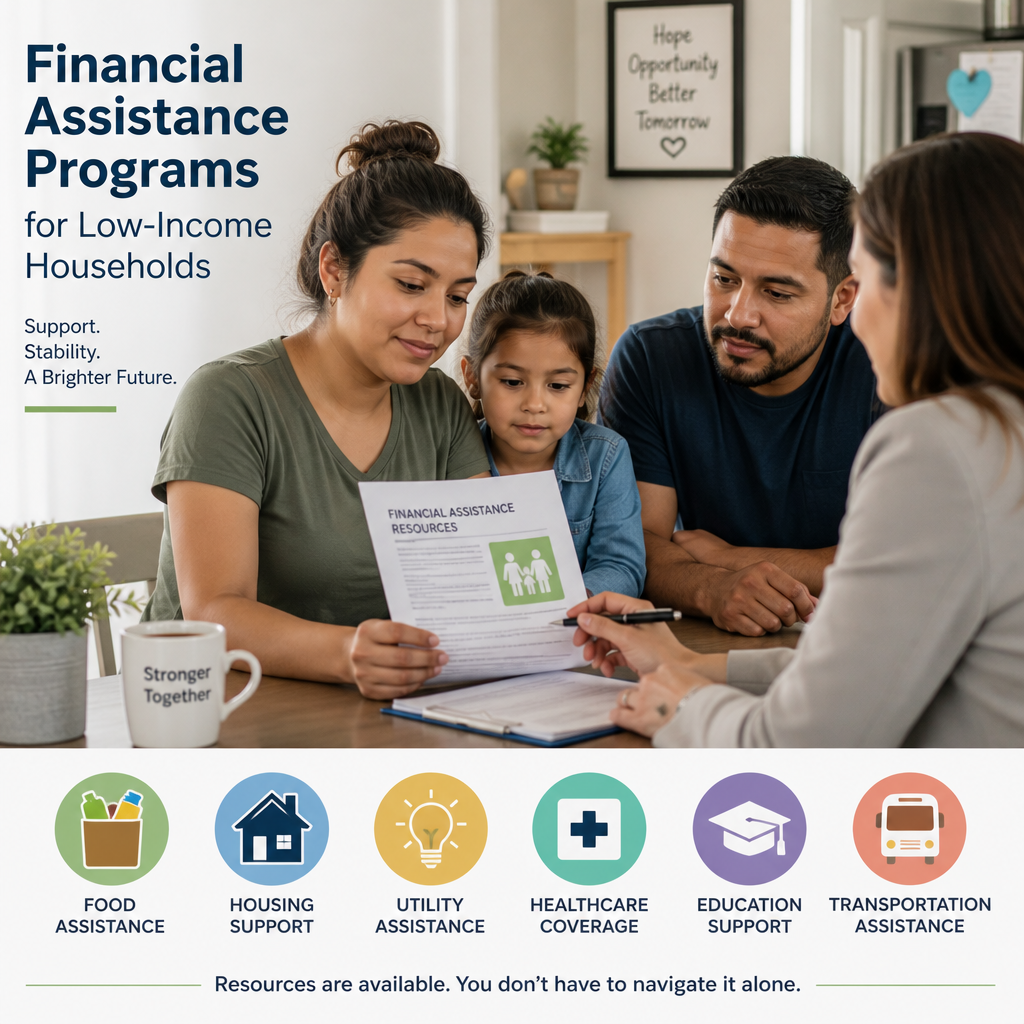
Financial Assistance Programs for Low-Income Households
Financial assistance programs can make everyday expenses a little easier to manage when money is tight. From food and housing to utilities and child care, these supports can help low-income households stay afloat and build more stability over time.
By: Emily Adams on julho 31, 2026
For many families, making ends meet is a constant balancing act. Rent, groceries, utilities, transportation, and medical costs can stretch a budget to its limit. That’s where financial assistance programs that help low-income households can make a real difference. These programs are designed to ease pressure on essential expenses, provide temporary relief during emergencies, and help families build greater stability over time.
Whether you’re trying to cover food costs, pay a heating bill, find affordable child care, or reduce housing stress, there are government and nonprofit resources available. The key is knowing which programs exist, who qualifies, and how to apply without getting overwhelmed. This guide breaks down the most common types of assistance, how they work, and what to do next if you need support.
What Are Financial Assistance Programs?
Financial assistance programs are services or benefits that help eligible people pay for basic needs. Some programs provide direct cash or debit-style benefits, while others reduce the cost of food, housing, health care, utilities, or child care.
These programs may be offered by:
Federal agencies
State and local governments
Tribal organizations
Nonprofit agencies
Community action groups
Utility providers and housing organizations
The most important thing to remember is that financial assistance programs that help low-income households are often means-tested, which means your income, household size, and sometimes assets determine eligibility.
Major Types of Financial Assistance Programs
Low-income households may qualify for one or more forms of support depending on their situation. Here are the most common categories.
1. Food Assistance Programs
Food assistance helps families put meals on the table and reduce grocery costs.
Supplemental Nutrition Assistance Program (SNAP)
SNAP is one of the most widely used food assistance programs in the United States. It provides monthly benefits on an electronic card that can be used to buy eligible groceries.
SNAP can help with:
Bread, cereal, fruits, and vegetables
Meat, poultry, and fish
Dairy products
Seeds and plants that produce food
It usually does not cover:
Alcohol
Tobacco
Hot prepared foods in most cases
Many states offer online applications, and some households can receive expedited benefits if they have urgent needs.
Women, Infants, and Children (WIC)
WIC supports pregnant people, new parents, infants, and young children who are at nutritional risk. It offers healthy foods, nutrition education, breastfeeding support, and referrals to health services.
WIC is especially helpful for families with children under age five.
School Meal Programs
If you have children, school breakfast and lunch programs can reduce monthly food expenses. Many schools also offer free or reduced-price meals based on family income.
2. Housing Assistance Programs
Housing is often the biggest monthly expense for low-income households. Assistance in this area can help prevent eviction, reduce rent burdens, and improve long-term stability.
Housing Choice Voucher Program
Commonly known as Section 8, this program helps eligible households pay rent in the private housing market. Participants typically pay a portion of their income toward rent, while the voucher covers the rest up to a program limit.
Public Housing
Public housing offers government-owned rental homes for eligible low-income families, seniors, and people with disabilities.
Emergency Rental Assistance
Some state and local programs provide short-term help with rent, past-due rent, or utility payments. These programs can be especially useful after job loss, medical issues, or another financial emergency.
Homelessness Prevention and Rapid Re-Housing
These programs are designed to keep people housed or help them move quickly into stable housing after homelessness. They may cover move-in costs, deposits, temporary rent, or case management.
3. Utility and Energy Assistance
Keeping the lights on and the heat running can be a major challenge for households on tight budgets.
Low Income Home Energy Assistance Program (LIHEAP)
LIHEAP helps eligible households pay heating and cooling bills. In some areas, it can also assist with energy-related home repairs or weatherization.
This program is especially valuable during extreme weather months when utility costs rise.
Weatherization Assistance
Weatherization programs help improve a home’s energy efficiency. Common upgrades include sealing drafts, insulating attics, and fixing heating system issues. These changes can lower utility bills over time.
Utility Company Discount Programs
Many electric, gas, and water companies offer discounted rates, payment plans, or hardship assistance. These programs are often less publicized, so it’s worth contacting your utility provider directly.
4. Health Care Assistance
Medical bills can quickly destabilize a household budget. Health-related assistance programs help cover insurance, doctor visits, prescriptions, and long-term care.
Medicaid
Medicaid provides health coverage for eligible low-income individuals and families. Coverage varies by state but generally includes doctor visits, hospital care, prescription drugs, and preventive services.
Children’s Health Insurance Program (CHIP)
CHIP helps families who earn too much to qualify for Medicaid but still need affordable health coverage for children.
Marketplace Subsidies
Some households qualify for premium tax credits and cost-sharing reductions through the Health Insurance Marketplace. These can lower monthly premiums and out-of-pocket costs.
5. Cash Assistance Programs
Cash assistance gives families flexibility to cover urgent needs like rent, food, transportation, and clothing.
Temporary Assistance for Needy Families (TANF)
TANF is a state-run federal program that provides temporary cash assistance and work-related support to eligible families with children. Benefits and rules vary widely by state.
General Assistance
Some states or counties offer general assistance for adults who do not qualify for other cash aid. These programs may be limited, but they can bridge a gap during emergencies.
Disability-Related Support
People with disabilities may qualify for Supplemental Security Income (SSI) or state disability programs, which can help with basic living expenses.
How to Know Which Programs You May Qualify For
Eligibility for financial assistance programs that help low-income households depends on several factors. Common requirements include:
Household income
Household size
Citizenship or immigration status rules, depending on the program
Age or disability status
Pregnancy or parenting status
Employment status
State or county residency
A Practical Example
Suppose a single parent with two children loses work hours and struggles to pay rent and groceries. They may qualify for:
SNAP for food
WIC if one child is under five
Medicaid or CHIP for health coverage
LIHEAP for winter heating costs
Emergency rental assistance through a local housing agency
A family does not need to fit only one program. In many cases, stacking multiple forms of support creates the biggest impact.
How to Apply Without Getting Overwhelmed
Applying for assistance can feel intimidating, but breaking it into steps makes the process more manageable.
Step 1: Gather Documents
Most programs ask for similar paperwork, such as:
Photo ID
Social Security numbers or other identification information
Proof of income
Lease or mortgage documents
Utility bills
Bank statements
Birth certificates for children
Proof of residency
Keeping these documents together in a folder can save time later.
Step 2: Check Eligibility Carefully
Program rules vary by state and household type. Read the current requirements on official websites before applying. If you are unsure, contact the agency directly.
Step 3: Apply Through Official Channels
Use government websites, local benefits offices, or trusted nonprofit partners. Avoid third-party sites that charge fees to “help” you apply for free public benefits.
Step 4: Follow Up Promptly
After submitting an application, respond quickly to requests for more information. Delays often happen when documents are missing or forms are incomplete.
Step 5: Ask About Other Benefits
Many agencies can screen you for multiple programs at once. If one benefit is denied, ask whether you qualify for another type of help.
Common Mistakes to Avoid
When applying for financial assistance, simple mistakes can slow down approval or cause denials.
Missing Deadlines
Some programs have short application windows, especially emergency aid. Apply as soon as you can.
Incomplete Forms
Double-check names, addresses, income information, and household details before submitting.
Ignoring Renewal Dates
Many programs require periodic recertification. Mark renewal dates on a calendar so you do not lose benefits unexpectedly.
Overlooking Local Programs
National programs are important, but local charities, community action agencies, and city programs may fill gaps the federal system does not cover.
Where to Find Help Faster
If you need assistance now, start with agencies that can connect you to multiple programs.
Community Action Agencies
These organizations often help with energy bills, housing support, job readiness, and referrals to other resources.
211 Helpline
Calling 211 in many areas connects you to local services for rent, food, utility assistance, and crisis support.
County Social Services Offices
These offices often handle SNAP, Medicaid, TANF, and emergency assistance applications.
Local Nonprofits and Faith-Based Groups
Food pantries, emergency funds, and housing nonprofits may offer short-term help while you wait for government benefits.
Financial Assistance Programs Can Work Together
One of the most helpful things to understand about financial assistance programs that help low-income households is that they are not always standalone solutions. In fact, combining programs often produces the most meaningful relief.
For example:
Food support reduces grocery spending
Utility assistance frees up money for rent
Medicaid lowers medical expenses
Child care aid helps a parent work more hours
Cash assistance covers urgent gaps during a transition
This layered support can help families avoid crisis and focus on long-term stability.
Tips for Staying Organized During the Process
When you are applying for several programs, staying organized makes everything easier.
Create a checklist of programs you applied for
Save copies of every application and notice
Keep a phone log of agency calls
Track deadlines for interviews, renewals, and document requests
Store digital copies of important files in a secure folder
A little organization can reduce stress and help you avoid losing benefits due to paperwork problems.
Frequently Asked Questions
1. What financial assistance programs help low-income households the most?
The most common and useful programs include SNAP for food, Medicaid for health care, LIHEAP for energy bills, housing vouchers or rental assistance for rent, and TANF or general assistance for cash support. The best option depends on the household’s specific needs.
2. Can I qualify for more than one assistance program at the same time?
Yes. Many households receive multiple forms of support at once. For example, a family may use SNAP, Medicaid, and utility assistance together. Each program has its own eligibility rules, so qualifying for one does not automatically disqualify you from another.
3. How do I apply for financial assistance programs?
Most programs allow online, in-person, mail, or phone applications. Start with your state benefits portal, local social services office, or a trusted nonprofit. Be prepared to provide proof of income, identity, residency, and household size.
4. Do I have to pay back financial assistance benefits?
Most public assistance programs do not need to be repaid if you qualified honestly and followed program rules. However, some emergency loans or special relief funds may have repayment terms. Always read the program details before accepting aid.
5. What if I was denied assistance?
If you are denied, review the reason carefully. You may be able to appeal, submit missing documents, or reapply later if your circumstances change. You can also ask the agency about other programs you may qualify for instead.
Financial stress can feel isolating, but help is available. Financial assistance programs that help low-income households are designed to reduce pressure on the essentials: food, housing, utilities, health care, and emergency needs. The right combination of programs can create breathing room, prevent crises, and support a more stable future.
If you are looking for support, start by identifying your biggest monthly burden and then match it to the right program. Gather your documents, apply through official sources, and follow up consistently. Don’t overlook local agencies, community action groups, or the 211 helpline, which can connect you to additional resources.
The process may take some time, but each application is a step toward greater stability. By learning how these programs work and taking action early, you can improve your chances of getting the support your household needs. Whether you need help with food, rent, energy bills, or health coverage, the right program can make a meaningful difference.
Emily A, holds a Master's degree in Public Administration (MPA) and has over 7 years of experience researching federal and state assistance programs. She writes educational content focused on government benefits, public policy, and community resources, using information from official agencies to help readers understand available programs and eligibility requirements.