Understanding Data Privacy in Today’s Digital World
Data privacy has become one of the most important issues in modern life. Every time we shop online, stream a movie, use a fitness app, or sign up for a newsletter, we share pieces of personal information. In many cases, that data helps improve our experience. But it can also create risk if it’s collected, stored, or shared without proper safeguards. That’s why understanding data privacy in today’s digital world matters for individuals, families, and businesses alike.
At its core, data privacy is about control. It means knowing what information is being collected, how it’s used, who can access it, and how to protect it. As technology becomes more connected, the need for clear privacy practices keeps growing. The good news is that you do not need to be a cybersecurity expert to make smarter decisions. With a few practical habits and a basic understanding of privacy principles, you can better protect your personal information and navigate the digital world with more confidence.
What Data Privacy Really Means
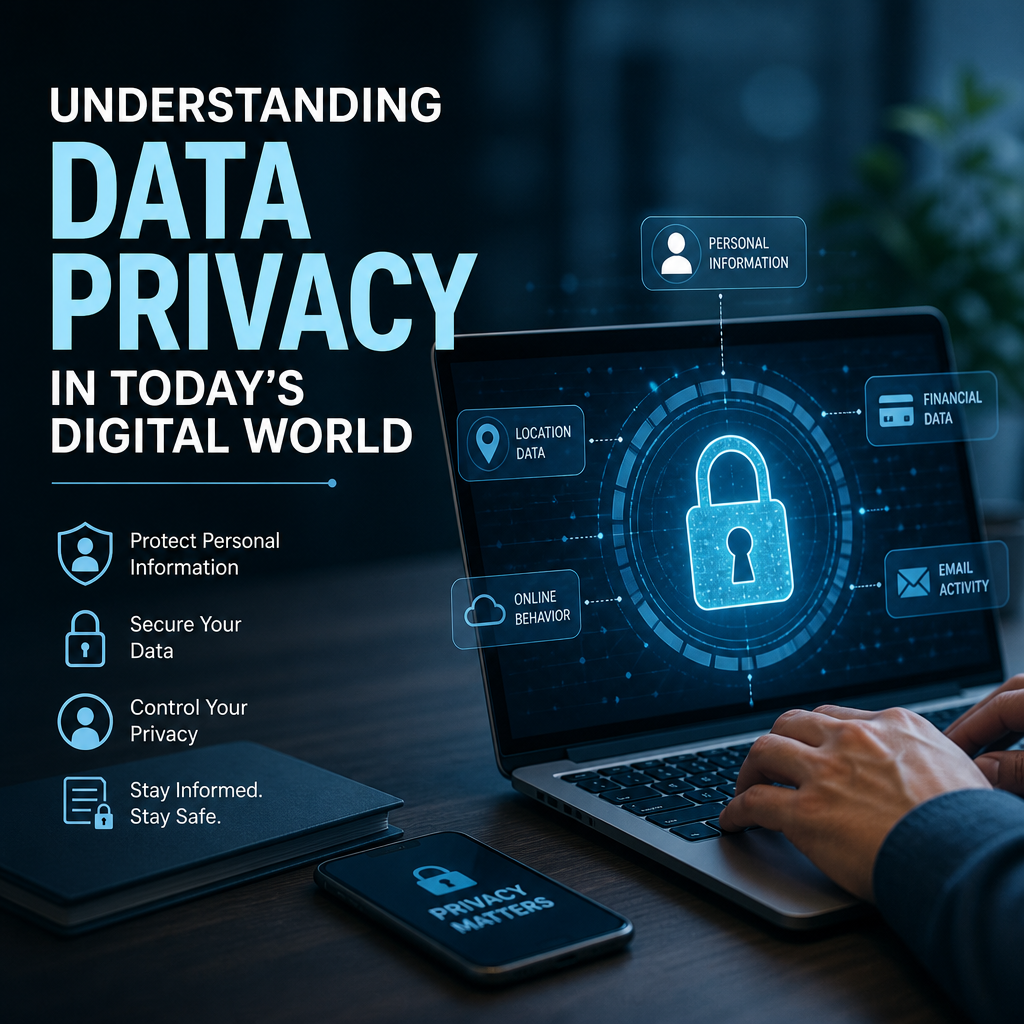
Data privacy refers to the proper handling of personal information. That includes the collection, use, storage, sharing, and deletion of data that can identify a person directly or indirectly.
Personal data can include:
- Full name
- Email address
- Phone number
- Home address
- IP address
- Location data
- Financial details
- Health information
- Browsing behavior
- Device identifiers
Not all data is equally sensitive, but even small pieces of information can reveal a lot when combined. For example, a birthday, zip code, and gender may seem harmless on their own, yet together they can help identify someone.
It’s also important to distinguish between data privacy and data security. Privacy is about how data is collected and used. Security is about how that data is protected from unauthorized access, theft, or loss. The two work together, but they are not the same thing.
Why Data Privacy Matters More Than Ever
The digital world runs on data. Businesses use it to personalize ads, improve services, and measure performance. Apps use it to remember preferences and track activity. Governments and institutions may also collect data to deliver services or enforce rules. This constant flow of information creates convenience, but it also increases exposure.
Here’s why data privacy deserves attention:
1. Personal information has real value
Your data can be used to target ads, shape recommendations, or influence decisions. In the wrong hands, it can also be sold, misused, or exposed in a breach.
2. Privacy affects trust
People are more likely to engage with companies and services they trust. Clear privacy practices help build confidence and reduce uncertainty.
3. Data breaches can have lasting consequences
When personal data is exposed, the impact may include identity theft, financial fraud, account takeovers, or unwanted contact.
4. Privacy is a matter of autonomy
Everyone should have a say in how their information is used. Data privacy supports that basic right by giving individuals more control.
Common Ways Your Data Is Collected
Many people think about privacy only when they fill out an online form. In reality, data collection happens in far more places than that.
Websites and cookies
Websites often use cookies and similar tracking tools to remember sessions, analyze traffic, and personalize content. Some tracking is useful, but some can follow your behavior across websites.
Apps and permissions
Mobile apps may request access to your location, contacts, photos, microphone, or camera. Sometimes those permissions are necessary. Other times, they are more invasive than needed.
Social media platforms
Social media sites collect a wide range of information, including posts, likes, connections, and interactions. Even passive behavior, such as how long you pause on content, may be tracked.
Smart devices
Connected TVs, voice assistants, smart speakers, and wearables often gather usage data to function properly. Because these devices are always on or always connected, they can create new privacy concerns.
Online forms and accounts
When you create accounts, subscribe to services, or make purchases, you often provide names, payment details, and other identifying information. That data may be shared with third parties depending on the company’s policies.
Major Privacy Risks in the Digital Age
Understanding privacy risks helps you make better choices about what to share and where.
Data breaches
A data breach happens when unauthorized people gain access to personal information. Breaches can affect anyone, from small businesses to large corporations. Even if a company responds quickly, leaked data may still circulate online.
Phishing and social engineering
Phishing attacks trick people into revealing personal details, login credentials, or payment information. These scams often look convincing and may arrive by email, text, or direct message.
Oversharing on social media
Public posts can reveal more than you realize. Vacation plans, birthdays, family connections, and location check-ins can all be used to build a profile about you.
Weak passwords and reused logins
If you reuse the same password across multiple accounts, one compromised login can expose several services. Weak passwords also make it easier for attackers to guess or crack your accounts.
Third-party data sharing
Some services share user data with advertisers, analytics providers, or partner companies. This is often buried in privacy policies that few people read in full.
How to Protect Your Privacy Online
The best privacy strategy combines awareness with practical habits. You do not need to hide from technology. You just need to use it more intentionally.
Use strong, unique passwords
Create different passwords for every important account. A password manager can help generate and store them securely.
Turn on multi-factor authentication
Multi-factor authentication adds another layer of protection beyond a password. Even if someone learns your password, they still need a second verification step.
Review app permissions regularly
Check which apps have access to your location, contacts, camera, microphone, and files. Remove permissions that are not necessary for the app to work.
Adjust privacy settings
Most platforms let you control who can see your content, how you are discovered, and what data is shared. Spend a few minutes reviewing these settings on your most-used accounts.
Be selective about what you post
Ask yourself whether a detail is truly necessary before sharing it online. The less personal information you post publicly, the less exposed you are.
Watch for suspicious messages
Do not click unfamiliar links or open unexpected attachments. If a message urges urgency or asks for sensitive information, verify it through official channels.
Keep software updated
Updates often include security and privacy fixes. Install them promptly on phones, computers, browsers, and connected devices.
Data Privacy and Businesses: Why It’s a Competitive Advantage
For businesses, data privacy is no longer optional or purely legal. It is a core trust issue. Customers increasingly expect companies to handle personal information responsibly. Organizations that respect privacy tend to earn stronger loyalty and reduce long-term risk.
Good privacy practices for businesses include:
- Collecting only the data they need
- Explaining how data will be used in plain language
- Limiting internal access to sensitive information
- Securing data with modern protections
- Deleting data when it is no longer needed
- Offering meaningful choices to users
Companies that adopt privacy-by-design principles often find it easier to stay compliant and maintain customer trust. Instead of treating privacy as an afterthought, they build it into products, systems, and workflows from the start.
Understanding Privacy Laws and Your Rights
Privacy laws vary by country, state, and industry, but many aim to give people more transparency and control over their data. Some rules require organizations to disclose what they collect. Others let users request access, corrections, or deletion of personal information.
Common privacy rights may include:
- The right to know what data is collected
- The right to access personal information
- The right to correct inaccurate data
- The right to request deletion in certain cases
- The right to opt out of some data sharing or sale
- The right to receive clearer privacy notices
If you’re dealing with a company’s privacy practices, look for its privacy policy, data request form, or help center. For businesses, it’s wise to consult legal guidance to understand which regulations apply.
Practical Examples of Data Privacy in Everyday Life
Data privacy can feel abstract until you see it in real situations.
Example 1: Shopping online
You buy a gift from an online store and provide your name, address, and payment details. A privacy-conscious company will explain how that information is used, keep it secure, and only share it with necessary service providers.
Example 2: Using a fitness app
A workout app may request location and health data to track runs or measure performance. Before granting permission, check whether those features are essential and whether the app shares data with advertisers.
Example 3: Posting on social media
You upload a photo from a family event and tag the location. Even if the post seems harmless, it may reveal patterns about your routine, home life, or travel plans.
Example 4: Signing up for newsletters
When you enter your email address to receive updates, you may also be added to marketing lists. Review subscription preferences and unsubscribe from services you no longer use.
These examples show that data privacy is not just a technical issue. It affects daily decisions, often in subtle ways.
Building Better Privacy Habits as a Family
Privacy education should start early. Children and teens grow up surrounded by apps, devices, and social platforms, often before they fully understand the consequences of sharing personal information.
Family privacy habits can include:
- Talking about what is safe to post online
- Using parental controls where appropriate
- Teaching kids to recognize scams and suspicious messages
- Reviewing app permissions together
- Encouraging strong passwords and secure devices
- Setting expectations for what personal details should stay private
A few family conversations can prevent a lot of future problems. The goal is not fear. The goal is informed confidence.
How to Evaluate a Company’s Privacy Practices
Before you trust a service with your information, take a closer look.
A few signs of stronger privacy practices:
- The privacy policy is readable and specific
- The company explains why it collects data
- It gives users clear settings and choices
- It limits unnecessary data collection
- It offers support for privacy questions or requests
- It provides timely security updates
Red flags to watch for:
- Vague or confusing privacy language
- Too many unnecessary permissions
- Little or no control over sharing settings
- Frequent privacy policy changes without clear notice
- No obvious way to delete your account or data
If a service makes it hard to understand how your data is used, that’s worth noticing.
The Future of Data Privacy
As artificial intelligence, biometric tools, connected cars, and smart home devices become more common, privacy challenges will continue to evolve. More data means more opportunities for convenience, but also more chances for misuse if systems are poorly designed.
The future of data privacy will likely depend on three things:
- Stronger user awareness
- Better company accountability
- Clearer rules and enforcement
That means privacy will remain a shared responsibility. Individuals need to stay alert. Organizations need to design responsibly. Policymakers need to keep updating standards as technology changes.
Frequently Asked Questions
1. What is data privacy in simple terms?
Data privacy is the right to control how personal information is collected, used, shared, and stored. It focuses on making sure people understand what happens to their data and have some say in that process.
2. What’s the difference between data privacy and data security?
Data privacy is about the rules and choices around personal information. Data security is about protecting that information from unauthorized access, loss, or theft. Privacy answers “who should use the data and why,” while security answers “how do we keep it safe.”
3. How can I improve my personal data privacy right away?
Start with the basics: use strong passwords, turn on multi-factor authentication, review app permissions, update privacy settings on your accounts, and be careful about what you share publicly. These steps make a noticeable difference.
4. Are privacy policies worth reading?
Yes, at least the important parts. You do not need to read every word, but look for what data is collected, why it’s collected, whether it’s shared with third parties, and what choices you have. That helps you decide whether a service aligns with your expectations.
5. Why is data privacy important for businesses?
Businesses that protect privacy build trust, reduce legal and reputational risk, and create better customer relationships. Good privacy practices also help organizations manage data more responsibly and respond more effectively to changing regulations.
Official Resources
- Federal Trade Commission (FTC) – Consumer Privacy
- National Institute of Standards and Technology (NIST) – Privacy Framework
- U.S. Department of Health and Human Services – HIPAA Privacy Rule
- European Commission – Data Protection
- Privacy Rights Clearinghouse
Conclusion
Data privacy is no longer a niche concern or a technical issue reserved for experts. It is part of everyday life. From social media and online shopping to smart devices and mobile apps, personal information moves through digital systems constantly. The key is not to avoid technology, but to use it more thoughtfully.
When you understand how data is collected, where the risks are, and what practical steps can protect your information, you gain real control. Strong passwords, multi-factor authentication, careful app permissions, and smarter sharing habits all contribute to better privacy. For businesses, the lesson is just as clear: privacy builds trust, and trust supports long-term success.
As the digital world keeps changing, the people who stay informed will be in the best position to adapt. Start with the basics, review your settings, and make privacy part of your routine. Small actions taken consistently can make a meaningful difference in protecting your personal information and supporting a more responsible digital future.