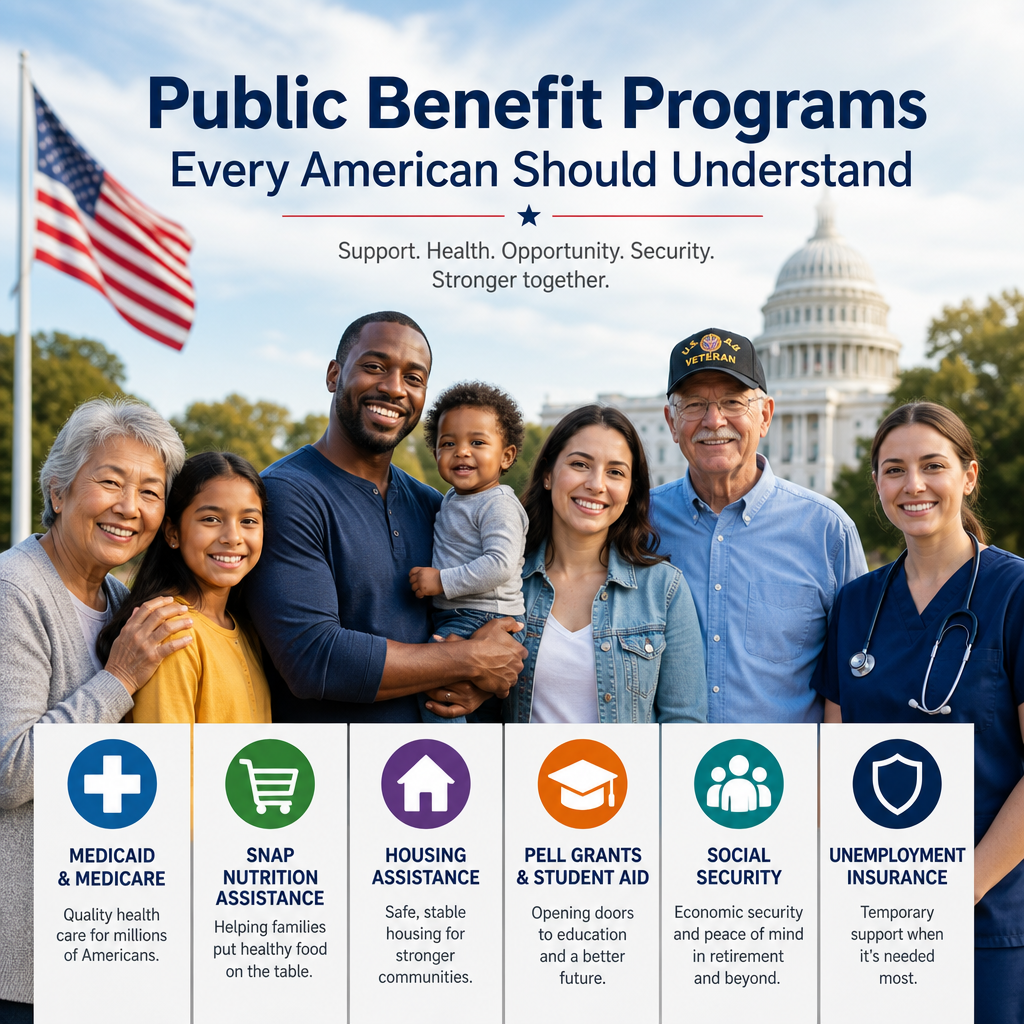
Public Benefit Programs Every American Should Understand
Public benefit programs can be a lifeline when life gets expensive or uncertain, offering support for essentials like food, health care, housing, and income. Understanding how these programs work can help you recognize help when you need it—and plan ahead before a crisis hits.
By: Emily Adams on julho 31, 2026
Public benefit programs play a major role in helping millions of people meet basic needs, recover from hardship, and build more stable lives. Whether someone is dealing with job loss, rising housing costs, disability, retirement, food insecurity, or a temporary family emergency, these programs can provide a critical safety net. Yet many Americans are only vaguely aware of what is available, who qualifies, and how to apply.
Understanding public benefit programs is useful even if you do not think you need help right now. Life changes quickly. A layoff, medical issue, divorce, natural disaster, or economic downturn can shift a household’s financial picture overnight. Knowing how these programs work can save time, reduce stress, and help families make smarter decisions before a crisis hits.
This guide breaks down the major public benefit programs every American should understand, including how they work, who they may help, and where to find reliable information.
What Are Public Benefit Programs?
Public benefit programs are government-funded or government-supported programs designed to help individuals and families access essential resources. These programs are often based on income, age, disability status, employment history, or household size.
They can provide support in areas such as:
Food assistance
Health coverage
Housing support
Cash assistance
Unemployment compensation
Child and family support
Disability and retirement benefits
Some programs are federal, while others are managed by states or local agencies. In many cases, federal rules set the framework, but eligibility and application steps vary by location.
Why Public Benefit Programs Matter
Public benefit programs help stabilize households and communities. For many people, they make the difference between temporary hardship and long-term financial crisis.
Here are a few reasons they matter:
They help people afford basic necessities.
They reduce the impact of job loss, illness, or family emergencies.
They support children, seniors, and people with disabilities.
They can help workers re-enter the labor market after a setback.
They strengthen local economies by keeping money circulating in communities.
Many people assume these programs are only for long-term hardship, but some are designed specifically for short-term help. That makes it important to understand the options before you need them.
Key Public Benefit Programs Every American Should Know
1. Social Security Retirement Benefits
Social Security is one of the most widely known public benefit programs in the United States. It provides monthly retirement income to workers who paid into the system through payroll taxes.
You can typically begin claiming retirement benefits as early as age 62, though the monthly amount is usually higher if you wait until full retirement age or beyond. Your benefit amount depends on your earnings history and when you begin collecting.
Why it matters
For many older adults, Social Security is a foundational source of income. It is not intended to replace all retirement income, but it helps cover essential living expenses.
Practical example
A worker who spent decades in the labor force may use Social Security to supplement savings, pensions, or part-time work after retirement.
2. Supplemental Security Income (SSI)
SSI is different from Social Security retirement benefits. It is a need-based program for people who are blind, disabled, or age 65 and older and have limited income and resources.
SSI can help pay for food, clothing, and shelter. In some states, recipients may also qualify for additional state supplements.
Why it matters
SSI serves people who may not have enough work history to qualify for other federal disability or retirement benefits.
Practical example
An older adult with very limited income and savings may qualify for SSI even if they do not have enough work credits for Social Security retirement.
3. Social Security Disability Insurance (SSDI)
SSDI provides benefits to workers who have a qualifying disability and enough work history to be insured under the Social Security system. Unlike SSI, SSDI is based on prior payroll contributions.
To qualify, a person must meet the Social Security Administration’s definition of disability, which generally means the condition prevents substantial work activity and is expected to last at least 12 months or result in death.
Why it matters
SSDI can provide income and, after a waiting period, access to Medicare for eligible recipients.
Practical example
A middle-aged worker who can no longer perform their job due to a severe, long-term medical condition may qualify for SSDI if they meet the work and medical standards.
4. Medicare
Medicare is the federal health insurance program for people age 65 and older, and for some younger people with disabilities or certain medical conditions. It includes different parts that cover hospital care, medical services, prescription drugs, and supplemental options.
Main parts of Medicare
Part A: Hospital insurance
Part B: Medical insurance
Part D: Prescription drug coverage
Medicare Advantage: Private plan alternative to Original Medicare
Why it matters
Healthcare costs can be one of the biggest financial burdens in retirement or during disability. Medicare helps reduce that pressure.
5. Medicaid
Medicaid is a joint federal and state program that helps cover healthcare costs for eligible low-income individuals and families. Because states administer the program, eligibility rules vary.
Medicaid may cover:
Doctor visits
Hospital care
Long-term care
Preventive services
Maternity care
Mental health services
Children’s health coverage
Why it matters
Medicaid is one of the most important public benefit programs for people who cannot afford private health insurance.
Practical example
A parent working part-time with modest income may qualify for Medicaid for themselves or their children, depending on the state.
6. Children’s Health Insurance Program (CHIP)
CHIP provides low-cost health coverage for children in families who earn too much to qualify for Medicaid but may still struggle to afford private insurance.
In some states, CHIP also covers pregnant women.
Why it matters
CHIP helps fill an important coverage gap, especially for families who are working but still have limited financial flexibility.
7. Supplemental Nutrition Assistance Program (SNAP)
SNAP helps eligible households buy groceries through monthly food benefits loaded onto an electronic benefit transfer card.
The program is designed to improve food access for low-income individuals and families. Eligibility is based on household income, size, and certain expenses in many cases.
Why it matters
SNAP can help people stretch their grocery budget and reduce food insecurity during tough times.
Practical example
A family that loses one income may use SNAP to maintain access to nutritious food while they look for new work.
8. Women, Infants, and Children (WIC)
WIC is a nutrition program for pregnant women, new mothers, infants, and young children who meet income and nutritional risk guidelines.
The program may provide:
Nutritious foods
Breastfeeding support
Nutrition education
Referrals to healthcare and social services
Why it matters
WIC supports healthy development during pregnancy and early childhood, which can have long-term benefits.
9. Unemployment Insurance
Unemployment insurance provides temporary income to eligible workers who lose their jobs through no fault of their own. Each state runs its own unemployment program under federal guidelines.
Eligibility often depends on:
Past earnings
Work history
Reason for job separation
Availability to work
Why it matters
Unemployment benefits can help people cover basic bills while they search for new employment.
Practical example
A laid-off employee may use unemployment insurance to pay rent, utilities, and transportation costs while applying for new jobs.
10. Housing Assistance Programs
Housing assistance comes in several forms, including rental assistance, public housing, and housing choice vouchers. These public benefit programs aim to reduce housing instability for low-income households.
Support may be available through local public housing agencies or other government-administered programs.
Why it matters
Housing costs are often the largest monthly expense for families. Assistance can prevent eviction, homelessness, and overcrowding.
11. Temporary Assistance for Needy Families (TANF)
TANF is a state-run program funded by the federal government that provides temporary cash assistance and related support to low-income families with children.
Programs may also include work training, childcare help, and job placement services.
Why it matters
TANF is designed to help families meet immediate needs while moving toward self-sufficiency.
12. Child Care Assistance
Child care subsidies help eligible families pay for child care so parents can work, attend school, or participate in training programs.
Because child care can be expensive, this support can make employment possible for many parents.
Why it matters
Reliable child care is often essential for family stability and workforce participation.
How Eligibility Usually Works
Eligibility rules vary by program, but most public benefit programs consider some combination of the following:
Household income
Household size
Age
Disability status
Pregnancy or parenting status
Employment history
Immigration status in some programs
State of residence
Some programs use gross income, while others look at net income after certain deductions. Asset limits may apply in some cases, especially for means-tested programs.
A common mistake is assuming ineligibility without checking the official rules. Many programs have broadened or changed over time, and some households qualify for more help than they expect.
How to Apply Without Getting Overwhelmed
Applying for public benefit programs can feel intimidating, but breaking the process into steps makes it more manageable.
1. Gather your documents
You may need:
Photo ID
Social Security numbers
Proof of income
Proof of address
Bank statements
Tax returns
Medical records, if applying for disability-related benefits
Immigration documents, if required
2. Use official websites
Apply through official federal, state, or local agency websites whenever possible. This helps reduce errors and scams.
3. Keep copies of everything
Save confirmation numbers, screenshots, letters, and submitted forms. If you need to appeal a decision or follow up, records matter.
4. Respond quickly to requests
Agencies often ask for additional documents or interviews. Delays can slow or interrupt benefits.
5. Ask about appeals
If you are denied, you may have the right to appeal. Denials are not always the end of the process.
Common Myths About Public Benefit Programs
“These programs are only for people who are unemployed.”
Not true. Many public benefit programs support working families, seniors, children, veterans, and people with disabilities.
“If I apply, I’ll lose my privacy.”
Agencies collect personal information to determine eligibility, but official programs are bound by privacy rules and data protections.
“I probably won’t qualify.”
Many people assume they are over the income limit without checking the details. Program rules can be nuanced, and some deductions may affect eligibility.
“Applying is too complicated.”
The process can be frustrating, but many agencies offer online applications, local offices, and help from community organizations.
Public Benefit Programs and Long-Term Financial Health
Public benefit programs are not just about surviving a crisis. For many households, they create room to recover, stabilize, and plan ahead.
They can help people:
Keep housing stable during transitions
Maintain access to healthcare
Avoid debt from medical bills or food shortages
Stay employed by covering child care or transportation gaps
Protect children’s well-being during difficult periods
Used wisely, these programs can function as a bridge rather than a permanent solution. They buy time for families to rebuild income, find work, recover from illness, or adjust to new circumstances.
Frequently Asked Questions
1. What are the most important public benefit programs in the United States?
Some of the most important public benefit programs include Social Security, SSI, SSDI, Medicare, Medicaid, SNAP, WIC, unemployment insurance, housing assistance, TANF, and child care support. The right program depends on a person’s age, income, health, family situation, and employment history.
2. Can working people still qualify for public benefit programs?
Yes. Many working families qualify for public benefit programs, especially those with modest incomes or high expenses. Programs like Medicaid, CHIP, SNAP, WIC, and child care assistance often support workers who still struggle to cover essentials.
3. Are public benefit programs the same in every state?
No. Some programs, like Social Security and Medicare, are federal programs with uniform national rules. Others, like Medicaid, unemployment insurance, TANF, and housing assistance, are managed partly or mostly at the state or local level, so eligibility and benefits can vary.
4. How do I know which public benefit programs I might qualify for?
Start by reviewing your household income, family size, age, disability status, and current expenses. Then check official government websites or use trusted screening tools from state agencies. Many local nonprofits and community organizations can also help you identify possible options.
5. What should I do if my application for benefits is denied?
Read the denial notice carefully and note the appeal deadline. In many cases, you can request a review or appeal and submit additional documents. If possible, contact the agency or a legal aid organization to understand why you were denied and what evidence may help.
Public benefit programs are an essential part of the American safety net. They help people access healthcare, food, housing, income support, and family services when life becomes difficult or unpredictable. While each program has its own rules, the big picture is simple: these benefits exist to protect stability and open a path forward.
The most important step is understanding what is available before an emergency forces you to act quickly. If you know the basics of Social Security, Medicaid, SNAP, unemployment insurance, housing assistance, and other major programs, you are better prepared to navigate change and support your household when it matters most.
Whether you are planning for retirement, recovering from a setback, or helping a family member find support, learning about public benefit programs can save time, reduce stress, and uncover help you may not realize exists. Start with official sources, review eligibility carefully, and keep records organized. A little preparation today can make a major difference later.
Emily A, holds a Master's degree in Public Administration (MPA) and has over 7 years of experience researching federal and state assistance programs. She writes educational content focused on government benefits, public policy, and community resources, using information from official agencies to help readers understand available programs and eligibility requirements.