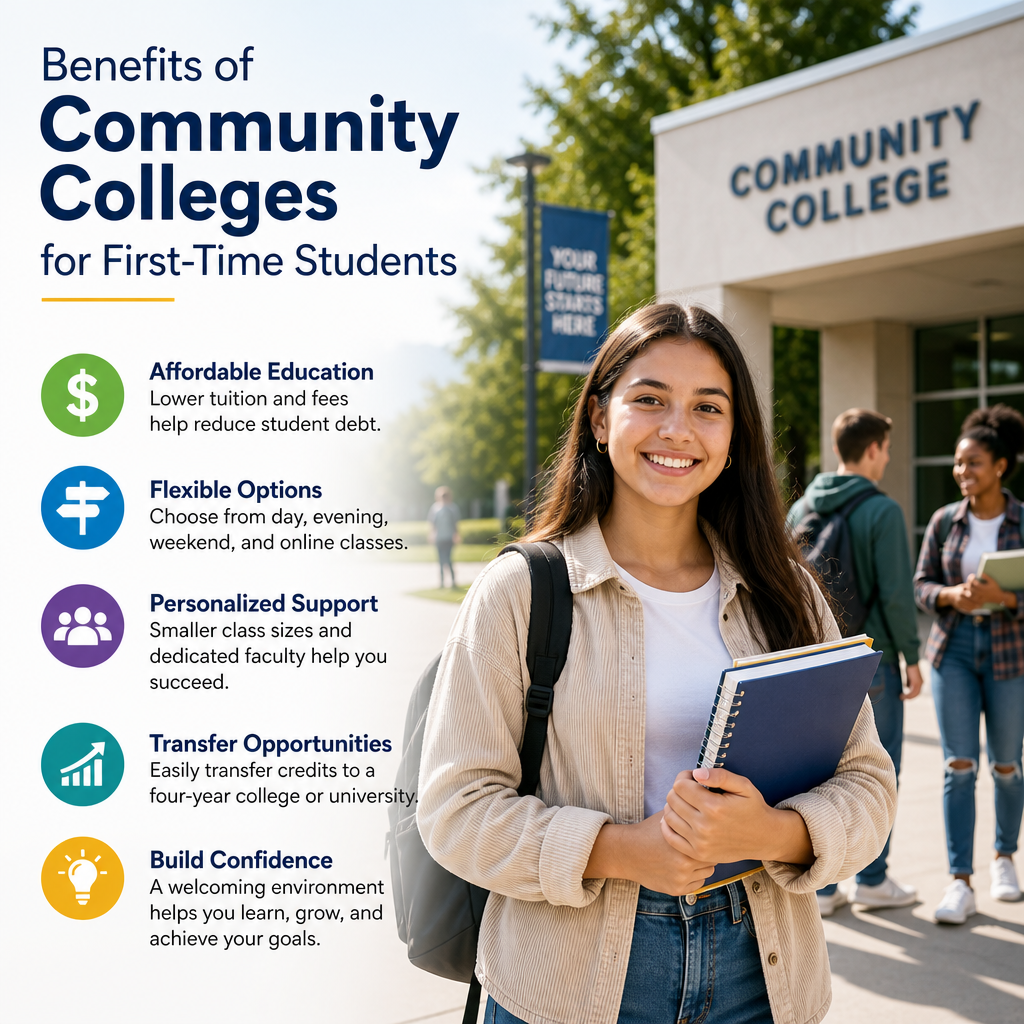
Benefits of Community Colleges for First-Time Students
Community colleges give first-time students a smart, supportive place to start, with lower costs, flexible classes, and the chance to build confidence before taking the next step. For many learners, community colleges make higher education feel more accessible, less stressful, and better suited to their goals.
By: Jennifer Collins on julho 30, 2026
Starting college for the first time can feel exciting, overwhelming, and expensive all at once. For many students, the benefits of community colleges for first-time students make them one of the smartest ways to begin higher education. Community colleges offer a practical path to earning a degree, building academic confidence, and exploring career goals without the pressure that can come with a four-year university right away.
Whether you are graduating from high school, returning to school later in life, or helping a family member decide what comes next, community colleges provide flexibility, affordability, and support that can make a major difference during those early college years. In many cases, they give students the chance to adjust to college-level work while keeping costs manageable and options open.
Why Community Colleges Matter for First-Time Students
The transition into college is not the same for every student. Some are ready to move away from home and jump into a university environment. Others want a slower, more affordable start. That is where the benefits of community colleges for first-time students stand out.
Community colleges are designed to serve a wide range of learners, including students who are still deciding on a major, those who want to transfer later, and those focused on career training. For first-time students, this can mean a more personal and less intimidating introduction to higher education.
A more accessible first step
Community colleges often have open enrollment policies or simpler admissions requirements than four-year institutions. That makes it easier for students to begin college without waiting for a highly competitive admissions cycle.
This accessibility matters because it reduces barriers. Instead of delaying education due to test scores, application pressure, or financial uncertainty, students can get started sooner and build momentum.
Smaller class sizes and more personal attention
First-time college students often benefit from smaller classes and closer interaction with instructors. At many community colleges, students have more opportunities to ask questions, participate in discussions, and get help when they need it.
That support can be especially valuable in foundational classes like:
English composition
College algebra
Biology
Introductory psychology
Public speaking
When students feel seen and supported, they are more likely to stay engaged and succeed.
The Financial Benefits of Community Colleges for First-Time Students
One of the strongest reasons students choose community college is cost. College affordability plays a huge role in whether students can begin and continue their education.
Lower tuition and fewer financial risks
Compared with most four-year schools, community colleges usually charge significantly lower tuition. While exact costs vary by location, the lower price point can reduce the need for large student loans and make education more reachable.
For first-time students, that lower cost can mean:
Less financial stress
Smaller or no student debt
More room in the budget for books, transportation, and living expenses
A chance to test academic interests without a major financial commitment
A student unsure about their major may find it easier to explore options at a community college rather than pay a higher price at a university before settling on a path.
Potential savings on general education courses
Many students use community college to complete general education requirements before transferring to a four-year school. This approach can save money on courses that would cost more at a university.
For example, a student might take:
Introductory writing
College math
Basic science classes
Social science electives
These credits often transfer toward a bachelor’s degree, allowing the student to reduce the total cost of a four-year education.
A practical choice for students managing work and family
First-time students are not always full-time, campus-focused 18-year-olds. Some are working part-time or helping care for family members. Community colleges often offer evening, weekend, and online classes that make school easier to balance with real-life responsibilities.
That flexibility can help students stay enrolled instead of dropping out because the schedule is unrealistic.
Academic Support That Helps New Students Succeed
For students who have never taken college classes before, the learning curve can feel steep. Community colleges often provide built-in support systems that help students adapt.
Academic advising and orientation services
Many community colleges offer orientation sessions, academic advising, and student success workshops. These resources help first-time students understand how to register for classes, choose a program, and stay on track.
Advisors can help students answer important questions such as:
Which classes should I take first?
Do I want a certificate, associate degree, or transfer path?
What major matches my interests and goals?
How do I avoid taking unnecessary courses?
This guidance can prevent confusion and save both time and money.
Tutoring and learning centers
It is common for first-time students to need extra help in at least one subject. Community colleges often provide tutoring centers, writing labs, math labs, and peer mentoring programs at little or no additional cost.
These resources can make a big difference for students who are adjusting to college-level expectations. Instead of struggling alone, they can get support early and improve before problems grow.
Flexible pacing and developmental support
Some community colleges also offer developmental or bridge courses for students who need to strengthen reading, writing, or math skills before moving into credit-bearing classes. This can be especially helpful for first-time students who may not feel fully prepared for college academics.
Rather than viewing this as a setback, many students benefit from the chance to build confidence step by step.
Career and Transfer Opportunities
Community college is not just a backup plan. For many students, it is a strategic starting point that leads to a strong academic or career future.
Transfer pathways to four-year colleges
One of the most well-known benefits of community colleges for first-time students is the ability to transfer credits to a university later. Many schools have articulation agreements or transfer partnerships that help students move from an associate degree into a bachelor’s program.
This route can be a smart choice for students who want to:
Save money on the first two years of college
Improve their GPA before applying to a university
Explore majors before committing to a four-year school
Stay closer to home at the beginning
Students who plan carefully with an advisor can make the transfer process smoother and avoid losing credits.
Career-focused certificates and associate degrees
Not every student wants a four-year degree right away. Community colleges offer certificate programs and associate degrees in fields such as:
Nursing
Information technology
Automotive technology
Early childhood education
Criminal justice
Medical assisting
Welding
Business administration
These programs can help first-time students move into the workforce faster with practical skills that employers value.
Internships, apprenticeships, and workforce connections
Many community colleges build relationships with local employers, hospitals, trade organizations, and public agencies. That can lead to internships, apprenticeships, and hands-on training opportunities that make education more relevant to real careers.
For students who learn best by doing, this connection between classroom learning and workplace experience can be a major advantage.
A Supportive Environment for Exploration
A big part of first-time college life is figuring out who you are as a student and what you want to do next. Community colleges give students room to explore without as much pressure.
Exploring majors without feeling locked in
Choosing a major too early can lead to wasted time and frustration. At a community college, students can take introductory courses in different subjects and see what fits.
For example, a student might try classes in:
Business
Computer science
Education
Health sciences
Graphic design
This kind of exploration can help students make better decisions about a transfer path or career focus.
A less intimidating transition into college life
For many first-time students, the idea of attending a large university can feel overwhelming. Community colleges often have a more relaxed atmosphere, with diverse students of different ages and backgrounds.
That environment can help students build confidence in:
Time management
Study habits
Speaking with professors
Using campus resources
Navigating independent learning
When students gain those skills early, they are often better prepared for future academic challenges.
Practical Advantages Beyond the Classroom
The benefits of community colleges for first-time students go beyond academics. These schools often support students in practical ways that matter just as much.
Convenient locations
Community colleges are usually located close to where students live. That reduces commute times, transportation costs, and the need to move far from home right away.
For students who want to stay near family, work, or local support networks, this convenience can be a major plus.
Diverse student populations
Community colleges serve recent high school graduates, adult learners, parents, veterans, and students changing careers. That mix can create a richer learning environment and help first-time students see that college success comes in many forms.
This diversity also gives students the chance to connect with peers who have different life experiences and goals.
Easier adjustment to college routines
First-time students often need time to adjust to things like class schedules, assignments, office hours, and self-directed study. Community college can provide a gentler introduction to these expectations.
Students learn how to:
Manage deadlines
Balance coursework with personal responsibilities
Communicate with instructors
Use campus services effectively
Build consistent study routines
These habits can carry over into a university, a certification program, or the workplace.
How to Make the Most of Community College as a First-Time Student
Choosing community college is only the beginning. Students who take advantage of available support tend to get the most out of the experience.
Start with a plan
Even if you are undecided, it helps to have a general direction. Ask yourself:
Do I want to transfer later?
Do I want to earn a certificate or degree for immediate employment?
Which subjects interest me most?
What schedule can I realistically manage?
A simple plan can help you avoid random course selection and stay focused.
Meet with an advisor early
One of the best things a first-time student can do is speak with an academic advisor during the first semester. Advisors can help map out a course schedule, identify transfer requirements, and prevent common mistakes.
Use campus resources
Tutoring, counseling, financial aid offices, disability services, and career centers exist for a reason. Students who use these services are often better prepared and less likely to feel isolated.
Stay organized
Strong student habits matter more than most people realize. Keep track of:
Class deadlines
Assignment instructions
Financial aid paperwork
Meeting dates with advisors
Registration windows
Small organizational habits can prevent major problems later.
Is Community College the Right Fit for Every Student?
Community college is an excellent option for many first-time students, but it is not the only path. Some students thrive at a university from the start, especially if they already know their major, want a residential campus experience, or have access to significant financial aid.
Still, for students who want affordability, flexibility, support, and room to explore, community college can be a strong and smart beginning.
The best choice depends on the student’s goals, budget, learning style, and personal circumstances. What matters most is choosing a path that supports long-term success.
Frequently Asked Questions
1. What are the main benefits of community colleges for first-time students?
The main benefits include lower tuition, smaller class sizes, flexible schedules, academic support, and the opportunity to explore majors before transferring to a four-year college. These advantages can make the transition into college easier and less expensive.
2. Can community college credits transfer to a university?
Yes, many community college credits can transfer to four-year colleges and universities, especially general education courses. However, transfer rules vary by school and program, so students should meet with an advisor and confirm transfer agreements early.
3. Is community college a good option if I do not know my major yet?
Yes. Community college is often a great choice for undecided students because it allows them to take introductory courses, explore different subjects, and make informed decisions before committing to a major.
4. Do community colleges offer financial aid?
Yes. Most community colleges participate in federal and state financial aid programs, including grants, loans, and work-study. Students should complete the FAFSA and check with the school’s financial aid office for available options.
5. Will employers respect a community college education?
Absolutely. Many employers value the skills, certifications, and practical training community college students gain. For career-focused fields, an associate degree or certificate can be directly relevant to hiring and advancement.
For first-time students, community college can be a practical, affordable, and confidence-building way to begin higher education. The benefits of community colleges for first-time students are clear: lower tuition, smaller classes, flexible scheduling, strong academic support, and multiple pathways toward a degree or career. Just as important, community college gives students space to adjust, explore interests, and build momentum without taking on unnecessary financial pressure.
That makes it more than a budget-friendly option. It is a strategic one. Students can complete general education courses, earn career credentials, or prepare for a smooth transfer to a four-year university while developing the habits they need to succeed in college and beyond.
If you are just starting your college journey, community college deserves serious consideration. Take time to research programs, speak with advisors, and compare transfer or career options. With a clear plan and the right support, your first step can set the stage for lasting success.
Jennifer, M.Ed., holds a degree in Higher Education Administration, with
a focus on U.S. college financial aid, admissions policy, and student
support systems. She researches and writes about scholarships, federal
aid programs, and the college planning process to help students and
families make informed, well-supported decisions.