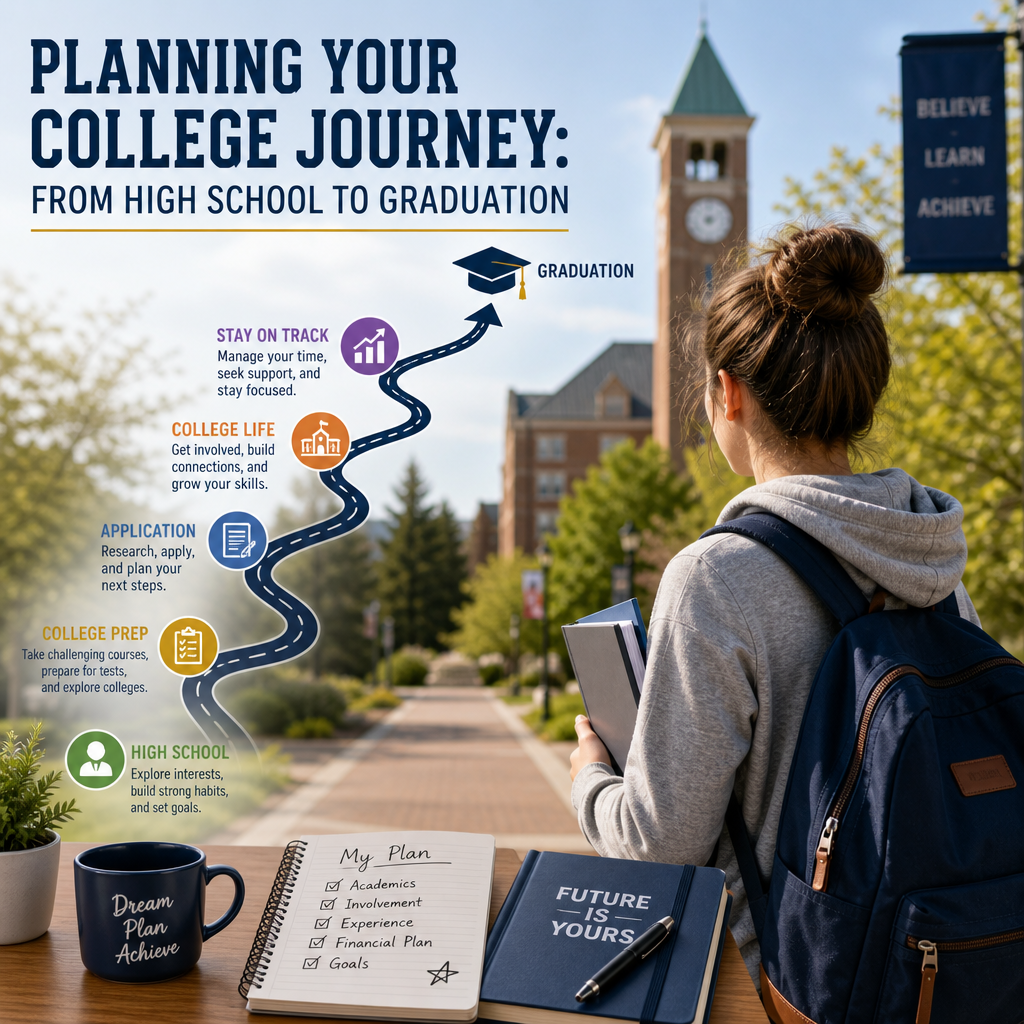
Planning Your College Journey: From High School to Graduation
Planning your college journey early can make every step feel more manageable, from choosing the right high school classes to preparing for applications and financial aid. With a clear plan, you can move through college with less stress and more confidence from freshman year to graduation.
By: Jennifer Collins on julho 30, 2026
Planning your college journey from high school to graduation can feel overwhelming at first, but it becomes much more manageable when you break it into clear steps. The best college experiences rarely happen by accident. They happen when students prepare early, make thoughtful choices, and stay flexible as their goals evolve.
Whether you are a high school sophomore just starting to think about college or a senior finalizing applications, having a plan helps you save time, reduce stress, and make better decisions. It can also help you choose a college path that fits your interests, finances, and long-term career goals.
Why Planning Your College Journey Matters
College is more than picking a school and showing up in the fall. It involves academic planning, financial preparation, personal growth, and career exploration. When you plan ahead, you give yourself room to make informed decisions instead of rushed ones.
A thoughtful college plan can help you:
Narrow down schools that fit your goals
Avoid missing application deadlines
Understand financial aid options early
Build a strong academic record in high school
Transition more smoothly into college life
Stay on track for graduation
Planning your college journey from high school to graduation also helps you see the bigger picture. College success is not only about getting accepted. It is about choosing the right environment, finishing your degree, and leaving with the skills you need for life after college.
Start Planning Early in High School
The earlier you begin, the more options you have. High school is the time to explore interests, build habits, and position yourself for future opportunities.
Freshman and Sophomore Years: Build Your Foundation
During the early years of high school, focus on establishing strong academic and personal habits. These years are a good time to explore different subjects and extracurricular activities without needing to make final decisions.
Helpful steps include:
Taking challenging but manageable courses
Keeping your grades as strong as possible
Joining clubs, sports, or community activities
Developing time management skills
Talking with teachers, counselors, and family members about future goals
This is also a smart time to begin researching college expectations. Learn what admissions officers typically look for, and think about what kind of learning environment suits you best.
Junior Year: Narrow Your Focus
Junior year often becomes a turning point in planning your college journey from high school to graduation. At this stage, students usually begin looking more seriously at college options and test requirements.
You may want to:
Create a list of colleges that match your interests
Visit campuses if possible, in person or virtually
Prepare for standardized tests if needed
Start building a resume of academic and extracurricular achievements
Ask teachers and mentors if they might write recommendations later
This year is also a good time to evaluate your intended major or career direction. You do not need to have everything figured out, but having a general sense of what you want can help you choose colleges wisely.
Senior Year: Make the Transition
Senior year is when planning turns into action. Applications, financial aid forms, essay writing, and final decisions all happen during this busy period.
Stay organized by creating a checklist that includes:
Application deadlines
Transcript requests
Recommendation letters
Essay drafts and revisions
FAFSA or other financial aid forms
Scholarship applications
Campus visit and decision timelines
A simple calendar or spreadsheet can make a huge difference. Missing one deadline can affect financial aid or admissions opportunities, so staying organized matters.
Choose Colleges That Fit Your Goals
One of the most important parts of planning your college journey from high school to graduation is choosing colleges that fit you, not just schools with the biggest name recognition.
Look Beyond Rankings
Rankings can be helpful as one factor, but they should not be the only one. A college that looks impressive on paper may not be the best match for your major, budget, or preferred learning style.
Instead, consider:
Academic programs and majors
Campus size and location
Internship and research opportunities
Student support services
Cost and financial aid packages
Graduation rates and retention support
Campus culture and student life
For example, a student who thrives in small classes and close faculty relationships may prefer a liberal arts college. Another student might want a larger university with strong engineering labs, athletic programs, or a wide range of student organizations.
Ask the Right Questions
When comparing schools, ask practical questions such as:
Does the school offer my intended major?
Can I change majors if my interests shift?
What support is available for first-year students?
Are internships built into the program?
How easy is it to meet with academic advisors?
What housing options are available?
How much debt might I take on to attend?
These questions help you make a decision based on your real needs, not just emotions or pressure.
Understand the Financial Side of College
Finances are a major part of the college experience, and planning early can reduce surprises later. College can be a significant investment, so it is important to understand what you are paying for and how to pay for it responsibly.
Learn the Basics of Financial Aid
Financial aid may include grants, scholarships, work-study opportunities, and loans. Each type works differently, and students should understand the terms before accepting aid.
Start with:
The FAFSA, if eligible
State financial aid programs
College-specific scholarships and grants
Outside scholarships from community groups or organizations
Be sure to review each aid offer carefully. The total cost of attendance includes more than tuition. Housing, meals, books, transportation, and personal expenses all matter.
Build Smart Money Habits
The habits you build in high school can carry into college. Even small steps can help you become more financially prepared.
Consider:
Tracking spending
Saving part of any income from part-time work
Learning how student loans work
Comparing financial aid offers side by side
Creating a simple monthly budget for college
Planning your college journey from high school to graduation includes thinking about how to stay financially stable through all four years, not just how to get in.
Develop Good Academic and Personal Habits
College success depends on more than intelligence. Time management, self-discipline, and resilience matter just as much.
Practice Independence
In college, you will likely have more freedom and fewer reminders. That means you need systems that help you stay on track.
Good habits include:
Using a planner or digital calendar
Breaking assignments into smaller tasks
Studying consistently instead of cramming
Attending class regularly
Asking for help early when needed
These habits may sound simple, but they can make the difference between staying on top of your work and falling behind.
Learn How to Ask for Support
Many students think asking for help is a sign of weakness. In reality, strong students know when to use campus resources. Colleges often provide tutoring centers, writing labs, academic advisors, counseling services, and career centers.
If you are struggling with a class, a roommate issue, or homesickness, reach out early. Support systems exist to help students succeed.
Prepare for the Transition to College Life
The shift from high school to college affects nearly every part of your daily routine. You may live away from home, manage your own schedule, and make many decisions independently for the first time.
What to Expect in Your First Year
The first year can be exciting, but it may also feel challenging. New routines, new expectations, and new social settings take time to adjust to.
To make the transition smoother:
Attend orientation programs
Get to know your roommate and neighbors
Meet with your academic advisor early
Learn where important campus offices are located
Join a club, student group, or study community
Set realistic expectations for adjustment
It is normal to feel uncertain at first. Growth often happens during the uncomfortable moments.
Balance Academics and Life Outside the Classroom
College should support both your education and your personal development. Students who stay connected to activities outside class often build stronger networks and have a richer college experience.
Look for ways to stay involved through:
Student clubs and organizations
Campus events
Volunteer opportunities
Internships or part-time jobs
Leadership roles
Balance matters. Too much isolation can make college harder, while overcommitting can hurt your grades. Aim for a healthy rhythm that supports both learning and well-being.
Stay on Track for Graduation
Getting into college is only one milestone. Staying on track for graduation requires ongoing planning, especially as you move through your major requirements and general education courses.
Meet With Your Academic Advisor
Academic advising is one of the most valuable resources available to students. Advisors can help you choose classes, understand degree requirements, and avoid unnecessary delays.
Check in with your advisor regularly to review:
General education requirements
Major and minor progress
Credit transfer issues
Internship or practicum requirements
Graduation application deadlines
Students who plan ahead with advising often avoid wasting time and money on courses that do not count toward their degree.
Map Out Each Year of College
It helps to think beyond the current semester. A degree plan can keep you focused on the full path to graduation.
A simple yearly plan might include:
First year: Adjust to college, build study habits, explore interests
Second year: Declare or refine a major, deepen involvement, check degree progress
Third year: Focus on major coursework, internships, leadership, or research
Fourth year: Complete remaining requirements, apply for graduation, prepare for next steps
This kind of structure can make planning your college journey from high school to graduation more practical and less stressful.
Make Career Preparation Part of the Journey
College is an ideal time to explore your career direction and gain experience. The earlier you connect your studies to real-world goals, the more confident you may feel after graduation.
Use Internships and Campus Resources
Internships, co-ops, research projects, and part-time jobs can all help you learn what you enjoy and build your resume. Many campuses also offer career fairs, interview coaching, and networking opportunities.
Helpful career-building steps include:
Visiting the career center
Updating your resume regularly
Practicing interview skills
Seeking faculty mentors
Connecting classroom learning to real-world work
Even if you are unsure about your future job title, these experiences can help you discover your strengths and interests.
Think About Life After Graduation
A strong college plan considers what comes next. Some students pursue jobs immediately after college, while others apply to graduate school, professional programs, or internships.
As graduation approaches, ask yourself:
What kind of work do I want to do?
What skills do employers in my field value?
Do I need certification, graduate study, or a portfolio?
How will I use my degree in the real world?
These questions help turn college from a checklist into a launchpad.
Frequently Asked Questions
1. When should I start planning my college journey from high school to graduation?
It is best to start as early as freshman year of high school. Early planning gives you more time to build grades, explore interests, prepare for admissions, and learn about financial aid. If you are already a junior or senior, do not worry—you can still create a strong plan from where you are now.
2. What should I focus on first when preparing for college?
Start with academics, interests, and organization. Keep your grades strong, explore activities that interest you, and begin learning about college requirements. After that, look at test prep, financial aid, and college visits so you can build a realistic list of schools.
3. How do I choose the right college for me?
Look at fit, not just reputation. Consider academic programs, location, size, support services, cost, and campus culture. A good fit is a college where you can grow academically, feel supported, and complete your degree without unnecessary stress.
4. What is the most common mistake students make in college planning?
One common mistake is waiting too long to get organized. Students sometimes delay researching schools, applying for financial aid, or speaking with advisors. Another mistake is choosing a college based only on prestige rather than long-term fit and affordability.
5. How can I stay on track to graduate on time?
Meet with your academic advisor regularly, follow a degree plan, and register for required classes early. Keep track of credits, prerequisites, and graduation deadlines. If you are considering changing majors, talk with an advisor as soon as possible so you understand the impact on your timeline.
Planning your college journey from high school to graduation is one of the smartest investments you can make in your future. It helps you choose colleges that fit your goals, prepare for the financial side of higher education, and build habits that support long-term success. Just as importantly, it gives you a clearer path through the uncertainty that often comes with big life decisions.
The key is to start where you are and keep moving forward. You do not need a perfect plan on day one. What you need is steady progress: stronger habits in high school, thoughtful college choices, careful financial planning, and regular check-ins once you are enrolled. With each step, you build momentum.
If you approach college as a journey rather than a single event, you will be better prepared to handle challenges and take advantage of opportunities. Focus on fit, stay organized, ask for help when needed, and keep your graduation goal in sight. That mindset can make the entire experience more rewarding—and far more successful.
Jennifer, M.Ed., holds a degree in Higher Education Administration, with
a focus on U.S. college financial aid, admissions policy, and student
support systems. She researches and writes about scholarships, federal
aid programs, and the college planning process to help students and
families make informed, well-supported decisions.