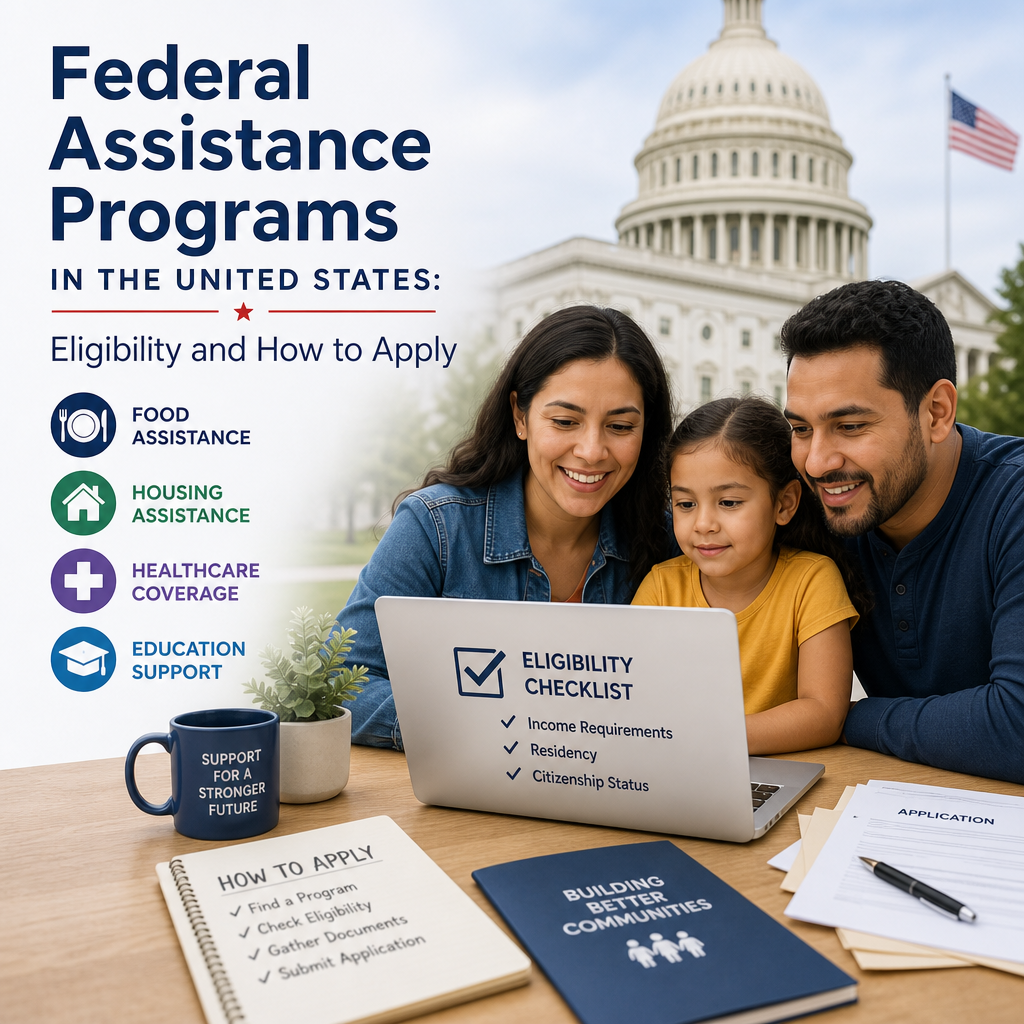
Federal Assistance Programs in the United States: Eligibility and How to Apply
Federal assistance programs can make a real difference when you need help with food, housing, healthcare, education, or income support. This guide explains who qualifies and how to apply so you can find the right support with less guesswork and stress.
By: Emily Adams on julho 31, 2026
Federal assistance programs in the United States help millions of people access food, healthcare, housing, education, income support, and other essential services. If you’re facing financial strain or simply trying to understand what help is available, knowing how federal assistance programs work can save time, reduce stress, and improve your chances of getting the support you need.
These programs are designed for different life situations: unemployment, disability, low income, aging, child care needs, student costs, disaster recovery, and more. The challenge is not just finding the right program, but understanding the eligibility rules and how to apply correctly. This guide breaks down the basics in plain language so you can take the next step with confidence.
What Are Federal Assistance Programs?
Federal assistance programs are benefits, services, or financial aid funded by the U.S. government and administered by federal agencies, states, or local partners. Some programs provide direct payments or vouchers, while others cover specific needs like food, medical care, or education.
Common examples include:
SNAP for food assistance
Medicaid and Medicare for healthcare
Housing assistance through rental support or public housing
Unemployment insurance for workers who lose jobs through no fault of their own
SSI and SSDI for people with disabilities
Federal student aid for college and vocational training
TANF for temporary cash assistance to eligible families
Because each program serves a different purpose, eligibility requirements vary widely. Still, most programs look at some combination of income, household size, age, disability status, work history, citizenship or immigration status, and state residency.
How Federal Assistance Programs Determine Eligibility
Eligibility is one of the most important parts of any federal assistance program. While the details differ, applications usually ask for information that helps agencies confirm whether you qualify.
Income and Household Size
Many federal assistance programs use income limits based on the number of people in your household. In general, larger households may qualify at higher income levels because their basic living costs are greater.
You may need to provide:
Recent pay stubs
Tax returns
Bank statements
Proof of other income, such as child support or unemployment benefits
Some programs consider gross income before taxes, while others look at net income after certain deductions. Always check the program’s specific rules.
Citizenship and Immigration Status
Some programs require U.S. citizenship, while others are open to certain qualified non-citizens. The rules depend on the benefit.
For example:
Medicaid and SNAP may have state-specific eligibility rules for non-citizens
SSI generally has stricter citizenship or qualifying-status requirements
Emergency services and some school-based programs may have broader access
If immigration status is a concern, it’s wise to review official guidance before applying so you understand how the program treats household members.
Residency and Location
Many federal assistance programs are run through states, which means you usually must live in the state where you apply. Some benefits are tied to your county, school district, or local service area.
Examples include:
State Medicaid applications
State unemployment systems
Local housing authorities
School lunch and child nutrition programs
Age, Disability, Family Status, and Work History
Some programs are designed for specific groups:
Seniors
Children
People with disabilities
Veterans
Pregnant individuals
Families with dependent children
Workers who recently lost employment
For instance, Social Security Disability Insurance (SSDI) requires a work history, while Supplemental Security Income (SSI) focuses more on financial need and disability or age. Likewise, some child care and nutrition programs prioritize households with young children.
Major Federal Assistance Programs and Who They Help
Understanding the most common programs can help you quickly identify where to start.
Food Assistance Programs
Food programs help households afford groceries and improve nutrition.
SNAP
The Supplemental Nutrition Assistance Program (SNAP) provides monthly food benefits through an electronic benefits transfer (EBT) card. Eligibility usually depends on income, household size, and certain expenses.
WIC
The Women, Infants, and Children (WIC) program supports pregnant people, new mothers, infants, and children under age five who are at nutritional risk.
National School Lunch and Breakfast Programs
These programs help eligible children get free or reduced-price meals at school.
Healthcare Programs
Healthcare benefits can reduce medical costs and improve access to regular care.
Medicaid
Medicaid helps eligible low-income individuals and families cover doctor visits, hospital care, prescriptions, and more. States administer Medicaid within federal guidelines, so rules can vary.
Medicare
Medicare provides health coverage for most people age 65 and older, as well as some younger people with disabilities or certain medical conditions.
Housing Assistance Programs
Housing support can help with rent, public housing, and temporary shelter-related needs.
Housing Choice Voucher Program
Often called Section 8, this program helps eligible low-income households pay rent in the private market.
Public Housing
Local housing authorities manage public housing units for eligible low-income households, seniors, and people with disabilities.
Emergency Housing and Homeless Assistance
Some federal funding supports shelters, transitional housing, and local services for people experiencing homelessness.
Income Support and Cash Assistance
These programs can provide temporary financial help or replace income in specific situations.
Unemployment Insurance
If you lose your job through no fault of your own, unemployment benefits may help you while you search for new work. States administer the program, and you usually must meet wage and work history requirements.
TANF
Temporary Assistance for Needy Families (TANF) gives states funding to assist low-income families with children through cash aid and work-support services.
SSI and SSDI
SSI helps people with limited income and resources who are aged, blind, or disabled.
SSDI supports disabled workers who have earned enough work credits through Social Security.
Education and Training Assistance
Education support can lower the cost of college, job training, or career development.
Federal Student Aid
The Free Application for Federal Student Aid (FAFSA) helps determine eligibility for grants, loans, and work-study programs.
Career and Workforce Programs
Federal and state workforce programs may offer job training, career counseling, and placement services.
How to Apply for Federal Assistance Programs
Applying can feel overwhelming, but a step-by-step approach makes the process more manageable.
Step 1: Identify the Right Program
Start by matching your need to the right type of assistance.
Ask yourself:
Do you need help with food, rent, healthcare, or bills?
Are you applying for yourself, your child, or your whole household?
Is the support temporary or long-term?
Do you already know which agency handles the program?
A good starting point is the official Benefits.gov screening tool, which can help you find federal and state programs you may qualify for.
Step 2: Gather Your Documents
Most applications require proof of identity and eligibility. Having your paperwork ready can speed up the process.
Common documents include:
Government-issued photo ID
Social Security numbers or proof of application
Proof of address
Income verification
Tax returns
Utility bills
Lease agreements
Medical records or disability documentation, if applicable
Proof of household members, such as birth certificates
Step 3: Complete the Application Carefully
You may apply:
Online
By mail
By phone
In person at a local office or agency
Read every question closely and answer honestly. Small mistakes can cause delays or denials. If you are unsure how to answer something, use the agency’s help line or official instructions.
Step 4: Submit Supporting Documents
Many programs ask you to upload, mail, or deliver documents after the initial application. Respond quickly if the agency requests more information.
Tips:
Keep copies of everything you send
Note the date you submitted each item
Use a secure method if sending sensitive information
Watch for deadlines
Step 5: Follow Up and Track Your Case
After applying, monitor your application status. Some programs provide online portals, while others send notices by mail.
If you don’t hear back in time, contact the agency. Delays are common, especially during high-demand periods, but staying proactive can help prevent missed opportunities.
Common Mistakes to Avoid
Even strong applications can be delayed by simple errors. Avoid these common problems:
Missing signatures or incomplete forms
Not reporting all household income
Failing to submit required documents
Using outdated forms
Missing interview appointments
Ignoring agency letters or deadlines
Applying to the wrong office or program
If your application is denied, don’t assume that’s the final answer. Many programs allow you to appeal or reapply if your situation changes.
Practical Tips for a Smoother Application Process
A few simple habits can make a big difference.
Create a Benefit Application Folder
Keep one folder, physical or digital, for:
Applications
Notices
Proof documents
Submission dates
Contact names and phone numbers
Apply as Soon as You Can
Some programs only start benefits from the date you apply. Waiting too long may mean losing valuable support.
Use Official Sources
Third-party websites can be helpful for general information, but always verify details through official government websites before submitting sensitive information.
Ask for Help if Needed
Local community organizations, legal aid offices, libraries, schools, and social workers often help people complete applications. That support can be especially useful if English is not your first language or if you have trouble gathering records.
What Happens After You’re Approved?
Once approved, you’ll receive instructions on how the benefit works. This may include:
Monthly deposit schedules
EBT card use
Appointment requirements
Renewal or recertification dates
Reporting obligations if your income or household changes
It’s important to keep your information current. If your household size, job status, address, or income changes, report it as required. Failing to do so can affect future benefits.
When to Reapply or Renew
Many federal assistance programs are not permanent. You may need to renew your benefits every few months or once a year.
Renewal often requires you to:
Confirm income and household information
Provide updated documents
Complete a short recertification form
Attend an interview if required
Mark renewal deadlines on your calendar so you don’t lose access unexpectedly.
Frequently Asked Questions
1. How do I know which federal assistance programs I qualify for?
Start by identifying your main need: food, housing, healthcare, income, or education. Then use official screening tools like Benefits.gov or your state agency website. Eligibility usually depends on income, household size, residency, and other factors such as age, disability, or work history.
2. Can I apply for more than one federal assistance program at the same time?
Yes. Many people apply for multiple programs because their needs overlap. For example, someone might apply for SNAP, Medicaid, and housing assistance at the same time. Just make sure you provide accurate information on each application and keep track of separate deadlines.
3. What if my income is slightly above the limit?
You may still qualify if the program counts deductions, household expenses, or special circumstances. Some programs also have different rules for different household types or states. If you think you are close, apply anyway or ask the agency whether deductions could help you qualify.
4. Do I need a Social Security number to apply?
Not always, but many programs require one from the applicant or certain household members. Some benefits allow applications without a Social Security number in specific situations, while others do not. Always check the official program rules before applying.
5. What should I do if my application is denied?
Read the denial notice carefully. It should explain the reason and whether you can appeal. If the denial was based on missing documents or incorrect information, you may be able to fix the problem and reapply. If you disagree with the decision, file an appeal by the deadline listed in the notice.
Official Resources
Benefits.gov — Official screening tool for federal and state benefit programs
Federal assistance programs in the United States exist to help people meet basic needs and stabilize their lives during difficult times. Whether you need food support, healthcare coverage, rental help, unemployment benefits, or educational aid, the key is understanding the eligibility rules and applying through the correct official channel.
The process may seem complicated at first, but it becomes much easier when you break it into steps: identify the right program, gather documents, complete the application carefully, and follow up on any requests. If you are denied, don’t give up immediately. Many programs allow appeals, updates, or reapplication when circumstances change.
The most important thing is to start. Use trusted government resources, check your state’s specific rules, and keep records of everything you submit. With the right information and a little organization, you can move from uncertainty to action and get closer to the support your household needs.
Emily A, holds a Master's degree in Public Administration (MPA) and has over 7 years of experience researching federal and state assistance programs. She writes educational content focused on government benefits, public policy, and community resources, using information from official agencies to help readers understand available programs and eligibility requirements.