U.S. Tax Planning 2026: Key Tips for Families and Individuals
Tax planning may not be the most exciting item on your calendar, but it can make a meaningful difference in what you keep, what you owe, and how smoothly your finances run year to year. As 2026 approaches, U.S. tax planning 2026 is especially important for individuals and families who want to stay ahead of possible rule changes, manage withholding wisely, and make better decisions about income, savings, and deductions.
The U.S. tax system changes often enough that a plan built on last year’s assumptions can quickly become outdated. Even if Congress does not make major changes, inflation adjustments, IRS updates, retirement contribution limits, and shifting family circumstances can all affect your tax outcome. A thoughtful approach helps you avoid surprises and gives you more control over your money.
Why U.S. Tax Planning 2026 Deserves Attention
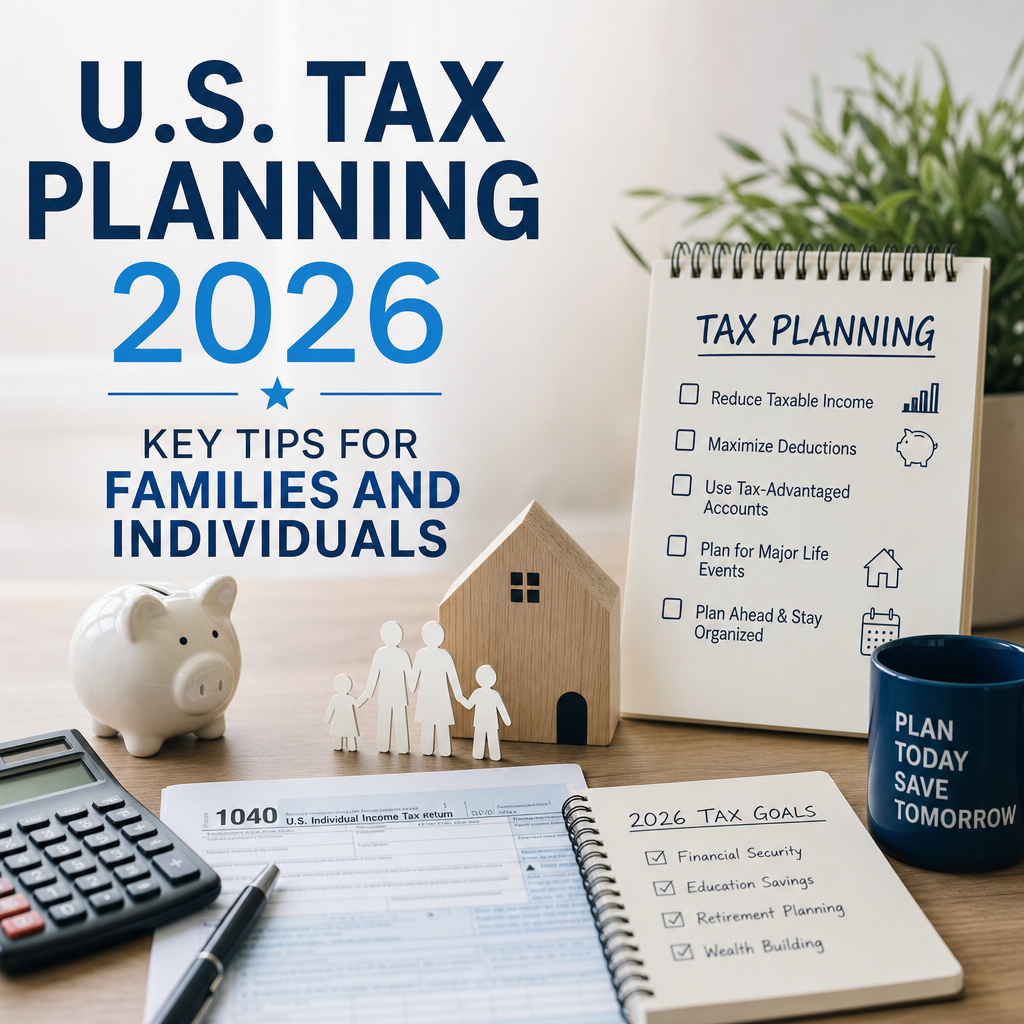
Tax planning is not just for high-income earners or business owners. Families, renters, homeowners, employees, retirees, and parents all benefit from understanding how taxes affect their cash flow.
In 2026, the most practical tax planning strategy is likely to be the same one that works every year: prepare early, keep good records, and review your situation before the year ends. That matters because many tax moves must happen before December 31 to count for the current tax year.
What makes 2026 different?
While no one can predict every tax law change, several factors can affect your 2026 planning:
- Possible updates to tax brackets and standard deductions
- Changes to child-related credits or dependent rules
- New IRS guidance on retirement accounts, digital reporting, or energy-related credits
- Inflation-driven adjustments to contribution limits and thresholds
- Shifts in your own life: marriage, divorce, children, homeownership, job changes, or retirement
The best response is not to guess. It is to build a flexible tax plan that works under different scenarios.
Start With the Big Picture: Income, Deductions, and Credits
A smart tax strategy begins with the three main drivers of your tax bill:
- How much income you have
- What deductions you qualify for
- What tax credits can reduce your bill directly
Understanding the difference between deductions and credits is especially useful. A deduction lowers the amount of income subject to tax. A credit reduces the tax you owe, dollar for dollar, which often makes it more valuable.
Common income sources to review
When planning for U.S. tax planning 2026, look at all the money that may be taxable, such as:
- Wages and salaries
- Bonuses and commissions
- Self-employment income
- Investment dividends and capital gains
- Interest income
- Rental income
- Retirement distributions
- Unemployment benefits, in some cases
If you expect a big shift in income in 2026, that alone can change your tax strategy. For example, a family expecting a bonus, stock compensation, or a Roth conversion may want to adjust withholding or estimated payments.
Deductions worth revisiting
For many households, the standard deduction will still be a major factor. But itemizing can make sense if you have enough qualifying expenses, such as:
- Mortgage interest
- State and local taxes, subject to federal limits
- Charitable contributions
- Certain medical expenses
- Some unreimbursed expenses in limited situations
Because tax rules can change and thresholds adjust over time, it is smart to check whether itemizing still benefits you before the filing season begins.
Tax Planning Moves for Individuals in 2026
Individuals have a surprising number of ways to manage taxes without making major lifestyle changes. The key is knowing which actions matter before the year ends and which can wait until filing season.
Review your withholding early
One of the simplest tax planning steps is checking your paycheck withholding. If too little is withheld, you may owe money later. If too much is withheld, you are essentially giving the government an interest-free loan.
Use the IRS withholding estimator and review your situation if you:
- Changed jobs
- Got married or divorced
- Had a child
- Added a second income to the household
- Started freelance work
- Received a large bonus
A withholding update can help you avoid underpayment penalties and reduce the chance of a large tax bill.
Harvest losses carefully
If you invest in taxable accounts, tax-loss harvesting may help offset capital gains. That means selling an investment at a loss to reduce taxable gains elsewhere.
A few practical points:
- Losses can generally offset gains first
- If losses exceed gains, a limited amount may offset ordinary income
- Be mindful of wash sale rules, which can disallow a loss if you buy a substantially identical investment too soon
This strategy works best when paired with a long-term investment plan. It should never be the only reason to trade.
Make retirement contributions work harder
Tax-advantaged retirement accounts remain one of the most effective tools in U.S. tax planning 2026. Depending on your income and workplace benefits, you may be able to contribute to:
- Traditional 401(k) plans
- Roth 401(k) plans
- Traditional IRAs
- Roth IRAs
- SEP IRAs or SIMPLE IRAs for self-employed workers
For many people, retirement contributions can reduce current taxable income or provide tax-free growth later, depending on the account type. The right choice depends on whether you expect to be in a higher or lower tax bracket in the future.
Consider charitable giving before year-end
If you already plan to give, tax planning can help you give more efficiently. Common approaches include:
- Bunching donations into one year if itemizing makes sense
- Donating appreciated securities instead of cash, when appropriate
- Keeping written acknowledgments for qualifying gifts
Always confirm that a charity is eligible and that you keep proper records.
Family Tax Planning: What Parents and Caregivers Should Watch
Families often deal with a wider range of tax issues than single filers. Child-related credits, dependent care costs, education expenses, and changes in household income can all affect the final return.
Child tax benefits and dependent rules
If you have children or other dependents, make sure your records are current. The IRS has specific rules for who qualifies as a dependent and which credits may apply. These rules can be affected by custody arrangements, shared living situations, and financial support levels.
Practical steps for families include:
- Confirming Social Security numbers are correct
- Keeping birth, adoption, or guardianship records organized
- Reviewing who claims a child in separated or divorced households
- Updating withholding after a new child is born
Child and dependent care costs
If both parents work, or if you pay for care so you can work or look for work, you may qualify for tax benefits tied to dependent care expenses. Keep receipts and provider information organized throughout the year.
Examples of qualifying care may include:
- Daycare
- Before- and after-school care
- Summer day camps, in some cases
- In-home care, if it meets IRS rules
Education-related planning
Families with students should look at education tax benefits and account options. Depending on the situation, you may be able to use:
- 529 education savings plans
- Education tax credits, if eligible
- Tax-free scholarships or grants, in some cases
If you have a child nearing college age, early planning matters. The timing of distributions and the type of expenses paid from an education account can affect the tax result.
Planning for Homeowners, Renters, and Real Estate Owners
Housing decisions can create tax consequences that are easy to overlook. Whether you own a home, rent, or hold rental property, tax planning should reflect those choices.
For homeowners
If you own a home, review whether your mortgage interest, property taxes, and other costs create any tax advantage under current rules. Also consider whether home improvements may affect your basis for future capital gains calculations.
Homeowners should keep records of:
- Purchase documents
- Closing statements
- Major renovations
- Energy-efficient upgrades
- Property tax bills and mortgage statements
For renters
Renters sometimes assume taxes do not matter much to them, but that is not always true. Renters may still benefit from:
- State-level renter credits, where available
- Tax planning around retirement savings
- Tracking work-related deductions if self-employed
For rental property owners
Rental property comes with income, expenses, depreciation, and possible capital gains issues. If you own a rental property, tax planning should include:
- Accurate expense tracking
- Depreciation records
- Repair versus improvement classifications
- Careful planning for eventual sale or exchange
If this applies to you, keeping clean records all year is much easier than trying to reconstruct everything in March.
Self-Employed and Gig Workers Need a Different Approach
If you freelance, contract, drive for a platform, sell online, or run a small business from home, tax planning becomes even more important. You are more likely to owe estimated taxes and less likely to have automatic withholding handled for you.
Key steps for self-employed filers
- Set aside money for federal and state taxes as income comes in
- Track business income and expenses monthly
- Separate personal and business banking
- Review quarterly estimated tax deadlines
- Consider retirement plans designed for self-employed workers
Business expense deductions can help, but only if they are ordinary, necessary, and properly documented. Keep receipts, invoices, and mileage logs where required.
Watch for estimated tax underpayments
Many self-employed taxpayers get into trouble by waiting until filing season to think about taxes. By then, it may be too late to avoid penalties. A simple rule of thumb is to check your tax liability every quarter and adjust savings or estimated payments as income changes.
Year-End Tax Planning Checklist for 2026
The end of the year is the best time to make tax-saving moves that cannot be done later. A checklist can keep you from missing important deadlines.
Use this short checklist
- Review your withholding
- Estimate your total 2026 income
- Maximize retirement contributions if appropriate
- Make final charitable gifts
- Harvest capital losses or gains strategically
- Check FSA and HSA deadlines
- Review dependent and education-related records
- Pay attention to estimated tax payments
- Organize receipts and account statements
A simple year-end review can prevent a lot of stress in filing season.
Common Tax Planning Mistakes to Avoid
Even well-organized taxpayers make avoidable mistakes. The most common ones usually come from waiting too long or assuming last year’s return will repeat itself.
Mistakes that can cost money
- Ignoring paycheck withholding after a life change
- Forgetting side income
- Missing estimated tax deadlines
- Failing to keep documentation for deductions and credits
- Making financial decisions based only on tax savings
- Waiting until April to organize records
Good tax planning is not about chasing every possible deduction. It is about making informed decisions based on your real situation.
When to Get Professional Help
Many people can handle basic tax planning on their own, but some situations deserve expert support. A tax professional can be especially helpful if you have:
- Multiple income sources
- A new business or side gig
- Investment sales or crypto transactions
- A move between states
- Divorce, remarriage, or blended family issues
- Inheritance, trust, or estate concerns
- Large retirement account withdrawals
- Complex education or dependent situations
A qualified CPA, enrolled agent, or tax attorney can help you avoid costly mistakes and identify opportunities you might miss on your own.
Frequently Asked Questions
1. What is the most important part of U.S. tax planning 2026 for most families?
The most important step is reviewing your income, withholding, and family changes before the end of the year. For many households, a simple withholding update and a quick check of retirement contributions can prevent a surprise tax bill and improve cash flow.
2. Should I change my withholding if I got married or had a child?
Yes, it is a good idea to review your withholding after major life changes. Marriage, a new child, or a second income can all affect your tax situation. Updating your withholding helps you stay closer to the right tax amount throughout the year.
3. Is it better to take the standard deduction or itemize?
It depends on your expenses and filing status. The standard deduction works well for many people, but itemizing may be better if you have enough mortgage interest, charitable giving, medical expenses, or other qualifying costs. Compare both options before filing.
4. How can self-employed workers prepare for taxes in 2026?
Self-employed workers should track income and expenses all year, save for estimated taxes, and review their liability every quarter. Separating business and personal accounts also makes recordkeeping easier and reduces mistakes at tax time.
5. Are retirement contributions still one of the best tax planning tools?
Yes. Retirement accounts remain one of the most effective tools because they can reduce current taxable income, create tax-deferred growth, or provide tax-free withdrawals later depending on the account type. They also help build long-term financial security.
Official Resources
- IRS: Tax Withholding Estimator
- IRS: Retirement Topics
- IRS: Credits & Deductions for Individuals
- Consumer Financial Protection Bureau: Financial Goals and Planning
- U.S. Department of Education: Federal Student Aid
Conclusion
Smart tax planning is less about predicting the future and more about making steady, informed decisions with the information you have today. For individuals and families, U.S. tax planning 2026 means paying attention to withholding, retirement savings, family credits, investment decisions, and any life changes that can affect your return. Small actions taken early often have a bigger impact than last-minute scrambling at tax time.
The most effective approach is simple: review your situation regularly, keep your records organized, and use the tax rules that apply to your household rather than relying on assumptions. If your income changes, your family grows, or your financial goals shift, your tax plan should shift too.
By staying proactive, you can reduce stress, avoid unpleasant surprises, and make decisions that support both your short-term budget and long-term financial goals. The earlier you start, the more options you usually have.