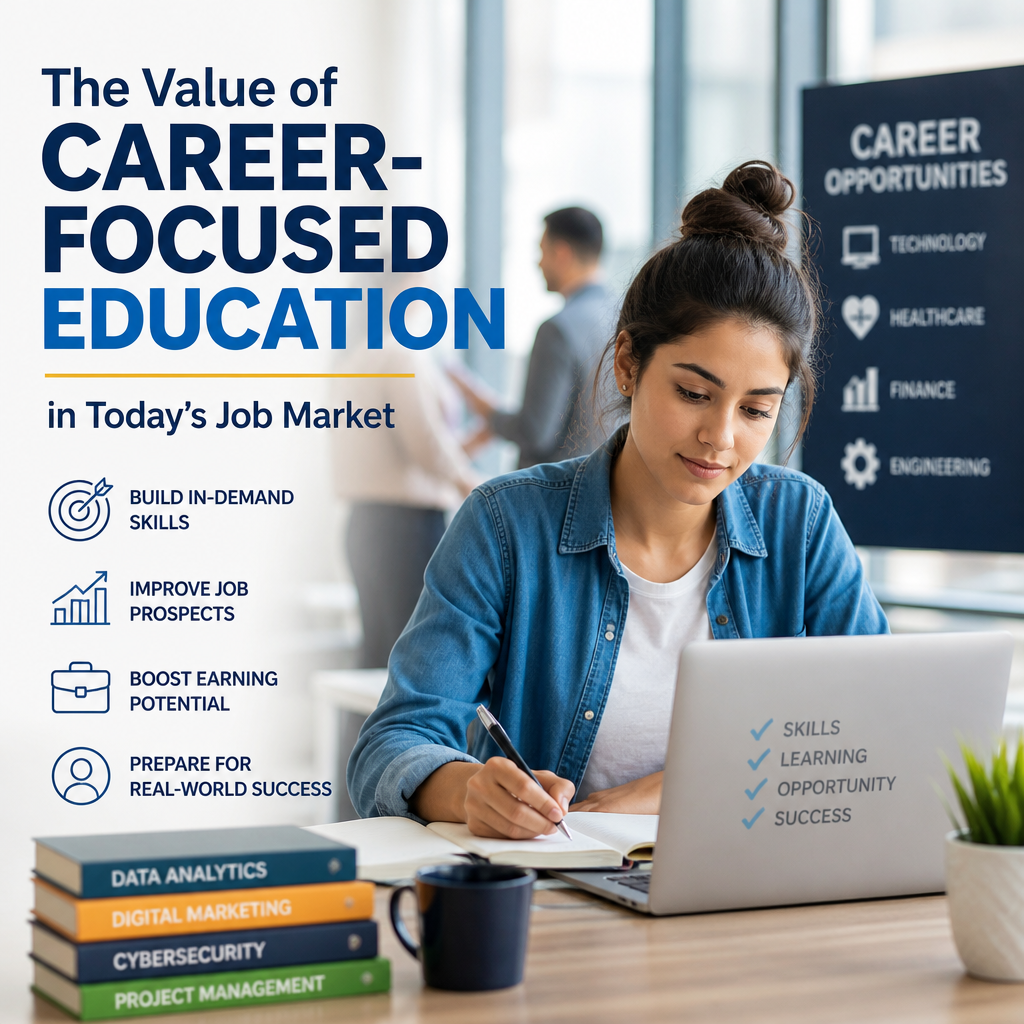
The Value of Career-Focused Education in Today’s Job Market
Career-focused education gives job seekers a practical edge by building the skills employers need right away. In a competitive market, it can be a faster, more direct path from classroom learning to real career opportunities.
By: Jennifer Collins on julho 30, 2026
In a job market shaped by rapid technology changes, shifting employer expectations, and growing competition, career-focused education has become more valuable than ever. Degrees still matter, but employers increasingly want candidates who can contribute quickly, solve real problems, and adapt to changing workplace demands. That is where career-focused education stands out.
Whether it comes through a technical certificate, an associate degree, a trade program, a bootcamp, or a specialized college pathway, career-focused education helps learners build practical skills that connect directly to work. It can shorten the distance between learning and earning, while also creating opportunities for long-term professional growth.
What Career-Focused Education Really Means
Career-focused education is any learning path designed to prepare students for a specific occupation or industry. Instead of emphasizing broad theory alone, it combines knowledge with practical training, hands-on experience, and job-relevant skills.
Common examples include:
Technical and vocational programs
Apprenticeships
Industry certifications
Associate degrees in applied fields
Career and technical education (CTE) in high school
Workforce development programs
Specialized bootcamps and professional training
What makes career-focused education especially powerful is its connection to real-world outcomes. Students do not just learn concepts; they learn how to apply them in a workplace setting.
Why Career-Focused Education Matters in Today’s Job Market
The modern workplace rewards adaptability, skill, and efficiency. Employers are looking for candidates who can do the work, not just talk about it. Career-focused education helps bridge that gap.
It aligns learning with employer needs
One of the biggest strengths of career-focused education is that it is built around market demand. Programs are often designed with input from employers, industry groups, and workforce boards. This means students are more likely to learn the tools, technologies, and workflows that matter in real jobs.
For example:
A healthcare program may teach patient care, medical terminology, and safety protocols
An IT program may include networking, cybersecurity basics, and troubleshooting
A skilled trades program may focus on equipment use, code compliance, and hands-on practice
This alignment can make graduates more job-ready from day one.
It supports faster entry into the workforce
Not everyone wants or needs a four-year degree before beginning a career. Career-focused education offers faster pathways into employment for students who want to start working sooner.
That can be especially helpful for people who:
Need to begin earning quickly
Want a lower-cost educational option
Are changing careers later in life
Prefer practical learning over traditional lecture-based instruction
In many fields, employers value proven skill and reliability as much as formal academic credentials.
It can reduce the skills gap
Many industries report difficulty finding qualified workers with the right combination of technical and soft skills. Career-focused education helps close this skills gap by teaching both.
Students often develop:
Job-specific technical skills
Communication and teamwork
Problem-solving
Time management
Professional conduct
Workplace safety and compliance
These skills make graduates more competitive and more useful to employers.
The Benefits of Career-Focused Education for Students
Career-focused education is not just a good option for employers. It also offers meaningful benefits to students and job seekers.
Clearer career direction
A major advantage of career-focused education is clarity. Students often know what kind of job they are preparing for, which can make education feel more purposeful.
Instead of asking, “What can I do with this major?” students can ask, “What skills do I need for this career?”
That sense of direction can reduce wasted time and help students stay motivated.
Stronger job readiness
Many career-focused programs include internships, labs, simulations, clinical practice, or work-based learning. These experiences help students gain confidence before entering the workforce.
This matters because employers often prefer candidates who understand workplace expectations, can communicate professionally, and are comfortable using industry tools.
More flexibility for different learners
Career-focused education works well for a wide range of learners, including:
Recent high school graduates
Working adults
Parents returning to school
Military veterans
Career changers
Students seeking affordable pathways
Because these programs vary in length and format, they can fit different schedules and goals.
Potentially lower educational costs
While costs vary by program, career-focused education can be a more affordable route than a traditional four-year degree. Shorter programs may reduce tuition, time away from work, and other education-related expenses.
That said, affordability should be considered alongside quality. The best programs offer strong instruction, recognized credentials, and solid career support.
How Career-Focused Education Helps Employers Too
Businesses benefit when workers arrive with relevant training. Career-focused education can improve hiring outcomes, reduce onboarding time, and strengthen workforce stability.
Better-prepared employees
When students train for a specific role, employers spend less time teaching the basics. That can lead to:
Faster onboarding
Improved productivity
Fewer training gaps
Better job performance
Stronger retention and workforce development
Employees who enter a field with realistic expectations and practical skills are often more likely to stay. Career-focused education helps people understand what the work involves before they take the job.
It also supports internal growth. Many employers use credential pathways and continuing education to help workers move into higher-skilled roles.
Types of Career-Focused Education Worth Considering
There is no single path to a career. The right option depends on your goals, interests, timeline, and budget.
Certificates and certifications
Certificates and certifications are popular in fields like healthcare, IT, logistics, construction, business, and project management. Some are earned through colleges, while others come from industry organizations.
These credentials can help you:
Enter a new field
Upgrade your current skills
Demonstrate expertise to employers
Stand out in competitive job searches
Apprenticeships
Apprenticeships combine paid work with structured learning. They are especially valuable in skilled trades and technical fields. Participants learn from experienced professionals while building income and experience at the same time.
Associate degrees
An associate degree can offer a balance of general education and career preparation. Many students use it to prepare for roles in healthcare, information technology, criminal justice, manufacturing, or business support.
Bootcamps and short-term training
Bootcamps and intensive training programs can be useful for people who want to gain focused skills quickly. These programs are common in technology and digital careers, though quality varies widely. It is important to research outcomes, curriculum depth, and employer recognition before enrolling.
Career and technical education in high school
CTE programs give students early exposure to careers in fields like healthcare, engineering, culinary arts, media, and construction. This can help young learners make more informed decisions about their future.
How to Choose the Right Career-Focused Education Path
The best program is the one that matches your goals and helps you move toward a sustainable career.
Start with your career goal
Ask yourself:
What kind of work do I want to do?
What skills are required for that role?
What credentials do employers in that field prefer?
How much time can I realistically commit?
What is my budget?
Evaluate program quality
Before enrolling, look for signs of quality such as:
Accredited or recognized institutions
Clear curriculum tied to industry skills
Experienced instructors
Job placement or career services
Internship, apprenticeship, or practicum opportunities
Employer partnerships
Strong student support services
Check local labor market demand
A career-focused education is most useful when it connects to real demand. Research hiring trends in your area and see which roles are growing. Occupational outlook resources, employer job boards, and local workforce agencies can help.
Consider long-term growth
A good career path should offer more than an initial job. Look for programs that build a foundation for advancement, continuing education, or additional credentials.
For example, someone may start with a certification, earn experience on the job, and later complete an associate or bachelor’s degree to move into a supervisory role.
The Role of Soft Skills in Career Success
Technical knowledge matters, but it is only part of the equation. Employers also value soft skills that help people work well with others and adapt to change.
Important soft skills include:
Communication
Problem-solving
Teamwork
Reliability
Critical thinking
Customer service
Adaptability
Professionalism
Career-focused education often builds these skills naturally through group projects, hands-on practice, presentations, and workplace-based learning. That combination helps graduates become not only qualified, but employable.
Career-Focused Education and Lifelong Learning
Today’s job market changes quickly. A strong education strategy does not end with one degree or certificate. Instead, it creates a habit of lifelong learning.
Career-focused education can be the first step in an ongoing professional journey. As industries evolve, workers may need to update their credentials, learn new technologies, or move into related specialties.
This flexibility is one of the biggest advantages of career-focused education: it prepares people not just for a first job, but for a career that can grow over time.
Frequently Asked Questions
1. What is career-focused education?
Career-focused education is training designed to prepare learners for a specific job or industry. It emphasizes practical skills, job readiness, and applied learning rather than broad academic study alone.
2. Is career-focused education better than a four-year degree?
Not necessarily better for everyone, but often better for certain goals. If you want to enter a skilled profession quickly, reduce education costs, or gain hands-on experience, career-focused education may be a strong fit. For some careers, a bachelor’s degree is still required.
3. What jobs can I get with career-focused education?
Many fields hire candidates with career-focused education, including healthcare, information technology, manufacturing, construction, transportation, business support, and skilled trades. The exact job depends on the program and credential you earn.
4. How do I know if a program is worth it?
Look at accreditation, curriculum quality, employer connections, graduation outcomes, and career support services. Also compare the program cost with the likely value of the credential in your local job market.
5. Can career-focused education lead to long-term career growth?
Yes. Many people start with a certificate or associate degree, gain work experience, and then pursue additional credentials or degrees later. Career-focused education can be a flexible entry point into a larger career path.
In today’s job market, career-focused education offers a practical and often powerful path forward. It helps learners build real skills, gain confidence, and prepare for roles that employers actually need to fill. For students who want a faster route into the workforce, a more affordable education option, or a clearer connection between learning and employment, it can be an excellent choice.
The value of career-focused education goes beyond landing a first job. It can support long-term growth, strengthen soft skills, and create a foundation for ongoing learning in a changing economy. Whether you are starting your career, switching fields, or helping someone else explore options, the key is to choose a program that aligns with your goals and the market demand in your area.
If you are considering your next step, focus on quality, relevance, and outcomes. The right education path should do more than teach—it should prepare you to contribute, adapt, and grow. In a competitive world, that kind of preparation is not just useful. It is essential.
Jennifer, M.Ed., holds a degree in Higher Education Administration, with
a focus on U.S. college financial aid, admissions policy, and student
support systems. She researches and writes about scholarships, federal
aid programs, and the college planning process to help students and
families make informed, well-supported decisions.