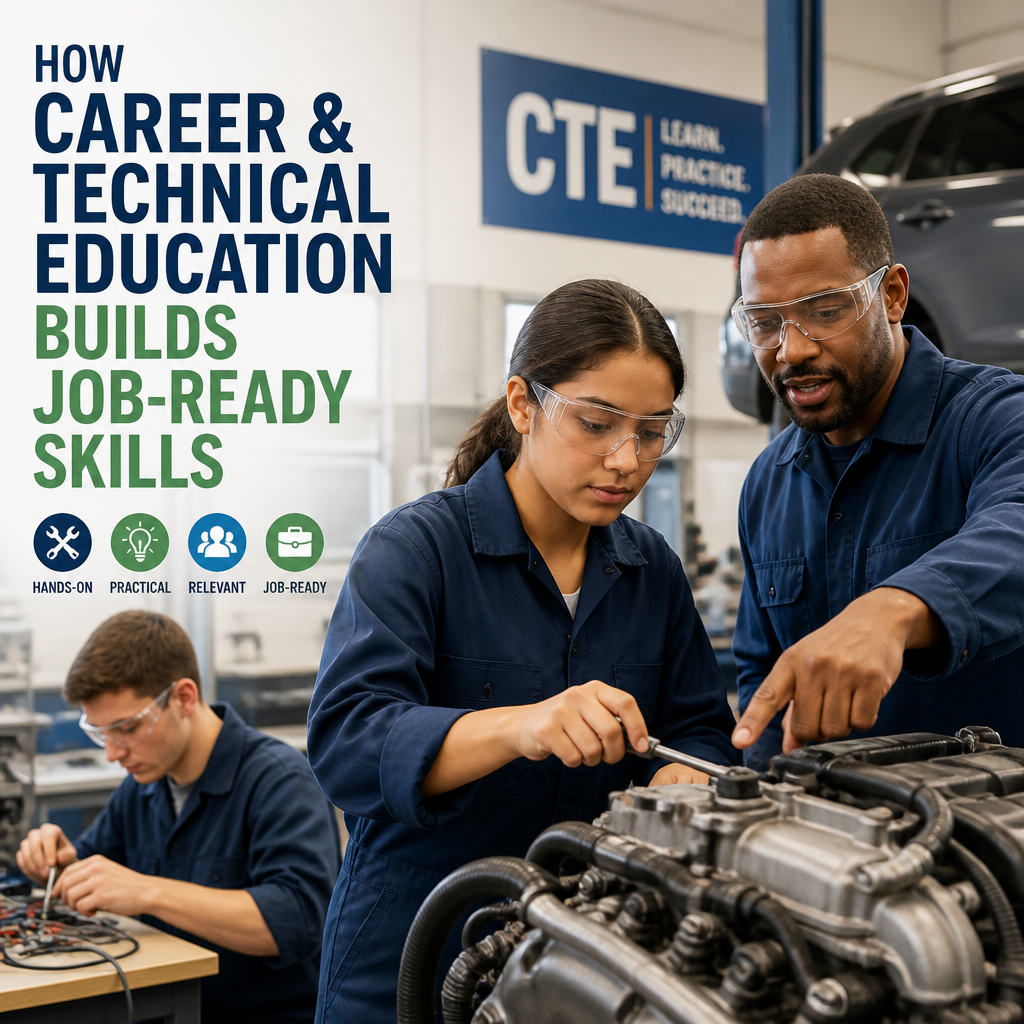
How Career and Technical Education Builds Job-Ready Skills
Career and technical education gives students a hands-on way to learn by doing, helping them develop the skills employers want most. From technical know-how to confidence in the workplace, CTE prepares learners for real careers and long-term success.
By: Jennifer Collins on julho 30, 2026
Career and technical education, often called CTE, is changing how students prepare for the future. Instead of learning only through textbooks and lectures, students in CTE programs gain practical experience that connects directly to real careers. For many learners, that means graduating with stronger technical knowledge, better problem-solving ability, and the confidence to step into the workforce.
As employers continue to look for candidates who can do the work, not just talk about it, career and technical education helps students build job-ready skills that matter in today’s economy. Whether a student is interested in health care, manufacturing, information technology, agriculture, business, or skilled trades, CTE offers a hands-on path toward meaningful employment and long-term growth.
What Is Career and Technical Education?
Career and technical education is a structured learning model that combines academic knowledge with practical, career-focused instruction. Students typically explore a specific field while developing both technical skills and workplace habits.
Unlike programs that focus only on theory, CTE emphasizes application. Students may:
Work with industry-standard tools and equipment
Complete projects tied to real-world tasks
Earn certifications or credentials
Participate in internships, apprenticeships, or work-based learning
Learn from instructors with industry experience
CTE can begin in middle school, continue through high school, and extend into community colleges or technical training programs. It gives students a clearer picture of what different careers require and helps them make more informed choices about their future.
Why Job-Ready Skills Matter More Than Ever
Many employers want new hires who can contribute quickly. That does not mean students need years of experience before applying for a job. It does mean they need a foundation of job-ready skills that help them adapt, communicate, and solve problems from day one.
These skills often include:
Basic technical proficiency
Communication and teamwork
Critical thinking
Time management
Professional behavior
Safety awareness
Problem-solving in real-world settings
Career and technical education helps students develop these abilities naturally because the learning environment mirrors the workplace. Students are not just memorizing information; they are practicing how to use it.
How Career and Technical Education Helps Students Build Job-Ready Skills
Career and technical education helps students build job-ready skills by blending classroom learning with hands-on practice. This approach makes learning more relevant and more memorable. It also gives students a stronger sense of purpose because they can see how their education connects to actual careers.
1. Students Learn by Doing
One of the biggest advantages of CTE is that students learn through experience. In a health science program, for example, students may practice measuring vital signs or learning basic patient care procedures. In an automotive program, they may diagnose engine problems or inspect systems using professional tools.
This kind of learning helps students:
Retain knowledge more effectively
Build confidence with equipment and processes
Understand how tasks work in real settings
Make fewer mistakes when transitioning to a job
Hands-on experience is especially valuable because many careers require skill, not just understanding. CTE gives students a safe place to practice before they enter the workforce.
2. It Connects Academic Learning to Real Careers
Some students struggle to see the value of traditional subjects like math, writing, or science. CTE helps bridge that gap by showing how those subjects apply in the workplace.
For example:
A culinary student uses math to scale recipes and manage inventory
A welding student applies geometry and measurement
A cybersecurity student relies on logic and digital literacy
A healthcare student uses biology and communication skills
This connection often increases student engagement. When learners understand why a skill matters, they are more motivated to master it. That motivation can lead to better outcomes in both school and work.
3. It Builds Technical Skills Employers Need
Each CTE pathway focuses on industry-specific knowledge and tools. These programs often align with current labor market needs, which helps students prepare for occupations where employers are actively hiring.
Examples of technical skills students may gain include:
Using diagnostic tools and software
Operating machinery safely
Reading blueprints or schematics
Applying coding or digital design principles
Following industry procedures and standards
Performing basic maintenance or repair tasks
Because CTE programs are often developed with input from employers and industry partners, students learn skills that reflect current workplace expectations.
4. It Strengthens Soft Skills That Employers Value
Technical ability alone is not enough to succeed in most jobs. Employers also want workers who can communicate clearly, follow directions, collaborate with others, and show responsibility.
Career and technical education helps students practice these soft skills in meaningful ways. In group projects, labs, and work-based learning settings, students learn how to:
Collaborate with teammates
Speak professionally with supervisors and clients
Manage deadlines and responsibilities
Adapt to feedback
Stay organized under pressure
These skills are sometimes called employability skills because they make a candidate more effective and dependable. Students who gain them early often have an easier time entering and keeping a job.
5. It Introduces Students to Workplace Expectations
Many first-time workers need support learning how the professional world operates. CTE programs help students understand expectations related to attendance, dress, communication, and accountability.
For instance, students may learn how to:
Arrive on time and prepared
Follow workplace policies
Use appropriate language and tone
Ask questions professionally
Maintain a safe and respectful environment
This exposure matters because it reduces the gap between school and employment. Instead of discovering workplace norms for the first time on the job, students enter with a better understanding of what employers expect.
6. It Offers Career Exploration and Better Decision-Making
Not every student knows what career path they want to follow. CTE gives them a chance to explore different industries before making a long-term commitment.
A student might discover they enjoy:
Working with people in health care
Solving technical problems in IT
Building things in construction
Designing graphics or digital content
Supporting business operations
This early exposure can save time, money, and frustration. It helps students make smarter decisions about postsecondary education, certifications, and entry-level jobs. When students choose a path based on experience, they are often more confident and more committed.
Common CTE Pathways That Lead to Job-Ready Skills
Career and technical education covers a wide range of fields. While offerings vary by school and region, many programs fall into categories like these:
Health Science
Students may learn basic anatomy, patient care, medical terminology, and safety procedures. These programs can prepare learners for entry-level roles or additional training in nursing, medical assisting, or emergency services.
Information Technology
CTE in IT often covers computer systems, networking, cybersecurity, coding, and digital support. Students gain problem-solving skills and familiarity with tools used in modern offices and tech environments.
Skilled Trades and Construction
Programs in carpentry, plumbing, HVAC, welding, and electrical work teach hands-on technical abilities along with safety standards, measurement, and blueprint reading.
Business and Marketing
Students develop skills in customer service, entrepreneurship, accounting basics, project management, and digital communication.
Agriculture and Environmental Sciences
These programs often include plant science, animal care, food systems, natural resource management, and equipment operation.
Culinary Arts and Hospitality
Students practice food preparation, kitchen safety, sanitation, menu planning, and customer service.
These pathways show how career and technical education helps students build job-ready skills in fields that offer both immediate employment and long-term advancement.
The Role of Certifications and Work-Based Learning
Two features often make CTE especially valuable: industry credentials and hands-on work experience.
Certifications and Credentials
Many CTE programs prepare students for recognized certifications. These credentials can show employers that a student has demonstrated specific skills and knowledge.
Depending on the field, students may earn credentials related to:
Health care support
Microsoft or other digital tools
OSHA safety training
Welding or manufacturing
Food handling
IT support
A certification can strengthen a resume and help students stand out when applying for jobs or apprenticeships.
Work-Based Learning
Internships, job shadows, apprenticeships, and clinical experiences give students a chance to apply what they have learned in real settings. They also help students:
Build professional relationships
Learn from experienced workers
Understand daily routines in a career field
Develop confidence in an actual workplace
This combination of learning and experience can make the transition from school to work much smoother.
How CTE Supports Different Types of Learners
One reason CTE is so effective is that it serves students with different interests, strengths, and goals.
For Students Who Prefer Hands-On Learning
Some learners thrive when they can build, repair, test, or create. CTE programs give them a practical environment where they can stay engaged and succeed.
For Students Who Want a Fast Path to Employment
Not every student wants to follow a traditional four-year college route right away. CTE can help learners enter the workforce sooner with relevant skills and credentials.
For Students Planning College or Advanced Training
CTE is not just for students who want to go straight to work. It can also strengthen preparation for college programs by building discipline, technical understanding, and career direction.
For Students Who Need Motivation and Purpose
When school feels disconnected from real life, motivation can drop. CTE often re-engages students by showing them a clear connection between effort today and opportunity tomorrow.
What Makes a Strong CTE Program?
A high-quality CTE program usually includes several important features:
Relevant, up-to-date curriculum
Skilled instructors with real-world experience
Access to tools, labs, or industry equipment
Career guidance and advising
Partnerships with employers and community organizations
Opportunities for certifications and work-based learning
When these elements come together, students get more than career exposure. They receive practical preparation that can lead to stronger employment outcomes and lifelong learning.
Tips for Students and Families Considering CTE
If you are exploring CTE, it helps to ask a few questions before choosing a program:
What careers does this pathway connect to?
What technical and soft skills will students learn?
Are certifications or credentials available?
Does the program include internships or hands-on learning?
What are the next steps after completing the program?
Families should also consider a student’s interests, learning style, and long-term goals. A strong CTE fit can boost confidence and open doors to both work and further education.
Frequently Asked Questions
What does career and technical education mean?
Career and technical education is a type of learning that combines academic instruction with practical training for specific careers. It helps students build skills in fields such as health care, IT, skilled trades, business, agriculture, and more. CTE programs often include hands-on projects, career exploration, and opportunities for certifications or work-based learning.
How does career and technical education help students get jobs?
CTE helps students develop the technical and workplace skills employers want. Students learn how to use tools and technology, solve problems, work with others, and follow professional expectations. Many programs also include internships, apprenticeships, or industry credentials that can improve job prospects.
Is career and technical education only for students who do not plan to go to college?
No. CTE is useful for students with many different goals. Some go directly into the workforce, while others use CTE to prepare for community college, technical school, or a four-year degree. It can help students explore career options and build a strong foundation for future education.
What kinds of skills do students gain in CTE programs?
Students gain both technical and soft skills. Technical skills depend on the pathway and may include operating equipment, using software, or performing job-specific tasks. Soft skills often include communication, teamwork, time management, professionalism, and problem-solving.
Are CTE programs worth it?
For many students, yes. CTE programs can make learning more relevant, improve engagement, and provide practical experience that translates into the workplace. They can also help students make clearer decisions about careers and postsecondary training. The value depends on whether the program matches the student’s interests and goals.
Career and technical education gives students more than classroom knowledge. It helps them build confidence, gain practical experience, and develop the skills employers value most. By combining academics with hands-on learning, CTE prepares students to step into careers with stronger technical abilities, better communication skills, and a clearer sense of direction.
Whether a student plans to enter the workforce right after high school or continue into college or training, CTE can provide a meaningful advantage. It turns learning into action and helps students connect their education to real opportunities. In a world where adaptability and experience matter, that connection is powerful.
For students, families, and educators looking for a pathway that makes school more relevant and future-focused, career and technical education is worth serious consideration. The right program can spark interest, build momentum, and open doors to rewarding careers.
Jennifer, M.Ed., holds a degree in Higher Education Administration, with
a focus on U.S. college financial aid, admissions policy, and student
support systems. She researches and writes about scholarships, federal
aid programs, and the college planning process to help students and
families make informed, well-supported decisions.