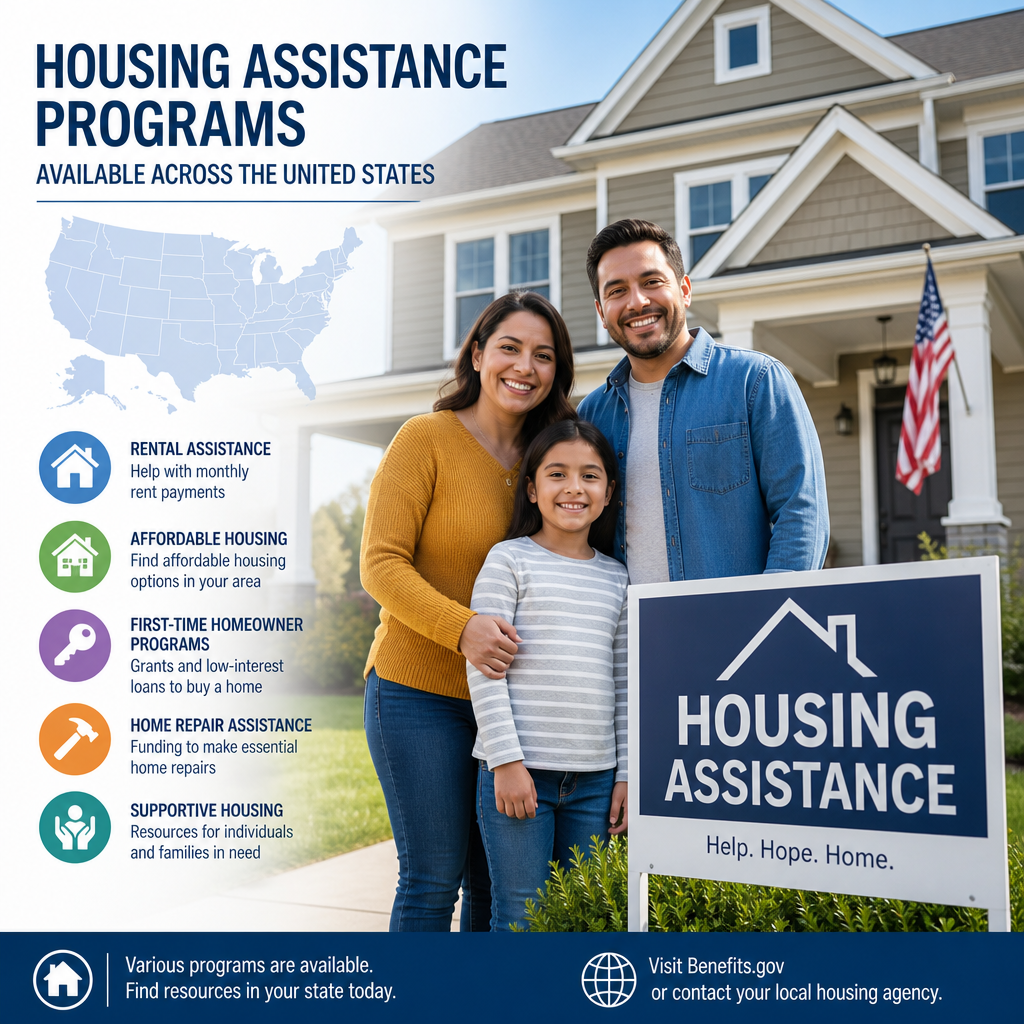
Housing Assistance Programs Available Across the United States
Housing assistance programs can make a major difference for families, seniors, veterans, and anyone struggling to keep up with housing costs. From rental help to homeownership support, these programs offer practical ways to find stability and build a safer future.
By: Emily Adams on julho 31, 2026
Finding safe, stable, and affordable housing can be one of the biggest challenges facing families, seniors, veterans, and individuals with limited income. Fortunately, housing assistance programs are available across the United States to help people lower housing costs, avoid eviction, access rental support, and even move toward homeownership.
These programs come from federal, state, and local agencies, as well as nonprofit organizations and public housing authorities. While each program has its own rules, most are designed to reduce housing insecurity and create a path toward long-term stability. If you are searching for support, understanding how housing assistance programs work is the first step.
What Are Housing Assistance Programs?
Housing assistance programs are public or nonprofit initiatives that help eligible people secure safe and affordable housing. They may provide:
Monthly rental subsidies
Temporary emergency housing support
Eviction prevention assistance
Utility help tied to housing stability
Home repair or accessibility improvements
Down payment assistance for first-time buyers
Supportive housing for people with disabilities or special needs
Some programs help with immediate crises, while others are built for long-term affordability. In many cases, these programs are targeted to low-income households, older adults, veterans, people with disabilities, and families experiencing hardship.
Major Types of Housing Assistance Programs in the U.S.
1. Rental Assistance Programs
Rental assistance is one of the most common forms of housing support. It helps eligible households pay rent when income is not enough to cover monthly housing costs.
Common rental assistance programs include:
Housing Choice Voucher Program (Section 8)
This federal program helps low-income tenants afford private-market rentals. Participants typically pay a portion of their income toward rent, and the voucher covers the rest up to a local payment standard.
Public Housing
These are government-owned or managed apartments and housing units rented at reduced rates to eligible households.
Project-Based Rental Assistance
In this model, the subsidy is tied to a specific property rather than the tenant. If you move, the assistance usually stays with the unit.
Emergency Rental Assistance
Some state and local governments offer short-term help to prevent eviction or homelessness when a household faces a sudden financial crisis.
2. Homelessness Prevention and Emergency Housing
For people at risk of losing housing, emergency programs can be a critical lifeline. These services often include:
Short-term rental help
Shelter placement
Rapid rehousing support
Case management
Security deposit assistance
Funds to catch up on past-due rent or utility bills
Local nonprofits, Continuums of Care, and city housing agencies often administer these services. If you are facing an immediate crisis, contact your local 2-1-1 service, homelessness prevention office, or county social services department as soon as possible.
3. Utility and Energy Support Connected to Housing
Although utility assistance is not always labeled as housing assistance, it plays a major role in keeping households stably housed. Struggling to pay electricity, gas, or water bills can quickly put a family at risk.
Programs may include:
Low Income Home Energy Assistance Program (LIHEAP)
Water bill assistance through local utility relief funds
Weatherization services that reduce energy costs
Arrearage payment plans offered by utilities
For many families, covering energy costs can make the difference between staying in a home and falling behind on housing payments.
4. Housing Help for Seniors and People With Disabilities
Older adults and people with disabilities often need housing that is affordable, accessible, and connected to supportive services. Housing assistance programs for these groups may include:
Subsidized senior housing
Accessible housing modifications
Supportive housing with onsite services
Home repair grants for safety improvements
Rental assistance paired with case management
Some programs also help people age in place by funding ramps, grab bars, widened doorways, or other adaptations that improve mobility and independence.
5. Homeownership and Down Payment Assistance
Not all housing assistance is about renting. Many state housing finance agencies and local governments offer programs that help eligible buyers become homeowners.
These may include:
Down payment assistance
Closing cost grants
Low-interest mortgages
Mortgage credit certificates
First-time homebuyer education
Homeownership programs are often targeted to moderate-income households and may require that the buyer complete a counseling course or live in the home as a primary residence.
Key Federal Housing Assistance Programs
Several federal agencies support housing access directly or through funding to states and local communities. Understanding these core programs can help you identify the right path.
U.S. Department of Housing and Urban Development (HUD)
HUD is the main federal agency responsible for many housing assistance programs in the country. It oversees public housing, rental subsidies, fair housing enforcement, and homelessness initiatives.
Important HUD-related programs include:
Housing Choice Vouchers
Public Housing
Multifamily affordable housing programs
Homeless assistance grants
Housing counseling services
If you qualify, your local Public Housing Agency (PHA) usually manages the application process for vouchers and public housing.
U.S. Department of Agriculture (USDA) Rural Housing Programs
The USDA offers housing support for eligible rural residents. These programs are especially important in small towns and remote areas where affordable housing options may be limited.
USDA housing programs may include:
Single-family direct loans
Loan guarantees
Home repair loans and grants for very low-income homeowners
Rental housing support for rural communities
The USDA is a strong resource for households outside major metropolitan areas.
Veterans Affairs Housing Support
Veterans and service members may qualify for housing help through the Department of Veterans Affairs. These programs can reduce costs and support stable housing after military service.
Examples include:
VA-backed home loans
Supportive housing through HUD-VASH
Assistance for veterans experiencing homelessness
Housing adaptation grants for disabled veterans
If you are a veteran, it is worth checking both federal and local veteran services because additional state benefits may also be available.
How to Qualify for Housing Assistance Programs
Eligibility requirements vary by program, but many housing assistance programs share common criteria. Typically, agencies consider:
Household income
Family size
Citizenship or eligible immigration status, depending on the program
Rental history
Current housing situation
Disability status or age, for some programs
Military or veteran status, when applicable
Some programs use area median income, or AMI, to determine eligibility. Others prioritize applicants who are homeless, fleeing domestic violence, at risk of eviction, or living in substandard housing.
Documents You May Need
When applying, it helps to gather:
Government-issued photo ID
Social Security numbers for household members, if required
Proof of income, such as pay stubs or benefit letters
Tax returns or W-2s
Lease or mortgage documents
Utility bills
Proof of disability or veteran status, if applicable
Documentation of hardship, such as eviction notices or past-due bills
Being organized can speed up the process, especially when waiting lists are long.
Where to Find Housing Assistance Programs Near You
Because housing programs are often managed locally, the best place to start is usually your city, county, or state housing office. Here are practical ways to search.
1. Contact Your Local Public Housing Agency
Public Housing Agencies administer vouchers and public housing applications. They can tell you whether waitlists are open, what documents are required, and how to apply.
2. Search State Housing Finance Agencies
State housing finance agencies often manage homebuyer assistance, rental programs, and foreclosure prevention tools. They also connect residents to local resources.
3. Call 2-1-1
In many communities, dialing 2-1-1 connects you to trained specialists who can provide referrals to emergency shelter, rental help, utility assistance, and other local services.
4. Check Nonprofit Housing Organizations
Community action agencies, legal aid groups, faith-based organizations, and homeless service providers often administer emergency grants or help applicants navigate available programs.
5. Use Official Federal Websites
Federal agencies like HUD, USDA, and VA provide searchable tools and program information that can help you identify eligible resources.
Tips for Applying Successfully
Applying for housing assistance programs can take time, but a few simple steps can improve your chances of getting help sooner.
Stay Organized
Keep a folder with your:
ID
Income records
Lease
Notices from your landlord
Utility bills
Correspondence from housing agencies
Apply Early
Many programs have waiting lists, and some open only at certain times of year. If you need help, apply as soon as possible and keep checking back.
Be Honest and Complete
Provide accurate information and answer every question carefully. Missing documents or inconsistent details can delay your application.
Follow Up Regularly
After applying, ask when you should expect updates and whether additional paperwork is needed. Keep records of names, dates, and phone calls.
Explore Multiple Programs
You may qualify for more than one type of assistance. For example, a family could receive rental help, utility aid, and counseling support at the same time.
Common Challenges Families Face
Even when help exists, access is not always easy. Some of the most common barriers include:
Long waiting lists
Limited program funding
Strict income limits
Incomplete applications
Confusing eligibility rules
Lack of affordable units in certain neighborhoods
These challenges can be frustrating, but persistence matters. If one program is full, another may still be available. Local housing counselors and legal aid attorneys can sometimes help you understand your options.
Practical Example: How Housing Assistance Can Help
Consider a single parent working full-time but struggling after a medical emergency. Rent is due, the utility bill is overdue, and eviction is a real concern. In this situation, the family might qualify for:
Emergency rental assistance from the local government
LIHEAP energy assistance
A Section 8 waitlist application for long-term support
Referrals to a nonprofit housing counselor
This layered approach can stabilize the household in the short term while creating a path toward more affordable housing over time.
Frequently Asked Questions
1. What is the most common housing assistance program in the U.S.?
One of the most widely known programs is the Housing Choice Voucher Program, often called Section 8. It helps eligible renters pay for housing in the private market. Public housing is another major option for low-income households.
2. Can I get housing assistance if I am employed?
Yes. Many programs support working families whose income is still too low to afford market-rate rent. Eligibility usually depends on household size, income level, and local program rules, not just employment status.
3. How long does it take to get approved?
It depends on the program and location. Some emergency programs may respond quickly, while voucher and public housing programs can involve long wait times. In high-demand areas, waitlists may last months or longer.
4. Can seniors or people with disabilities get special housing help?
Yes. There are specific programs for older adults and people with disabilities, including subsidized housing, supportive housing, and home modification assistance. Some programs also provide services that help people remain safely in their homes.
5. Are housing assistance programs only for renters?
No. While many programs help renters, there are also homeownership and home repair programs. These may include down payment help, low-interest loans, and grants for accessibility or safety improvements.
Housing stability affects nearly every part of daily life, from employment and school attendance to physical and mental health. The good news is that housing assistance programs exist in many forms across the United States, giving households access to rental subsidies, emergency relief, utility support, home repair aid, and pathways to homeownership. While the application process can feel overwhelming, understanding the types of help available makes it easier to take the next step.
If you are struggling to afford housing, start by identifying which program fits your situation best. Contact your local housing authority, search state and federal resources, and gather your documents early. Even if waiting lists are long, applying now can put you in position for future assistance. The most important thing is to stay proactive and keep exploring options. With the right information and persistence, you can move closer to safe, stable, and affordable housing.
Emily A, holds a Master's degree in Public Administration (MPA) and has over 7 years of experience researching federal and state assistance programs. She writes educational content focused on government benefits, public policy, and community resources, using information from official agencies to help readers understand available programs and eligibility requirements.