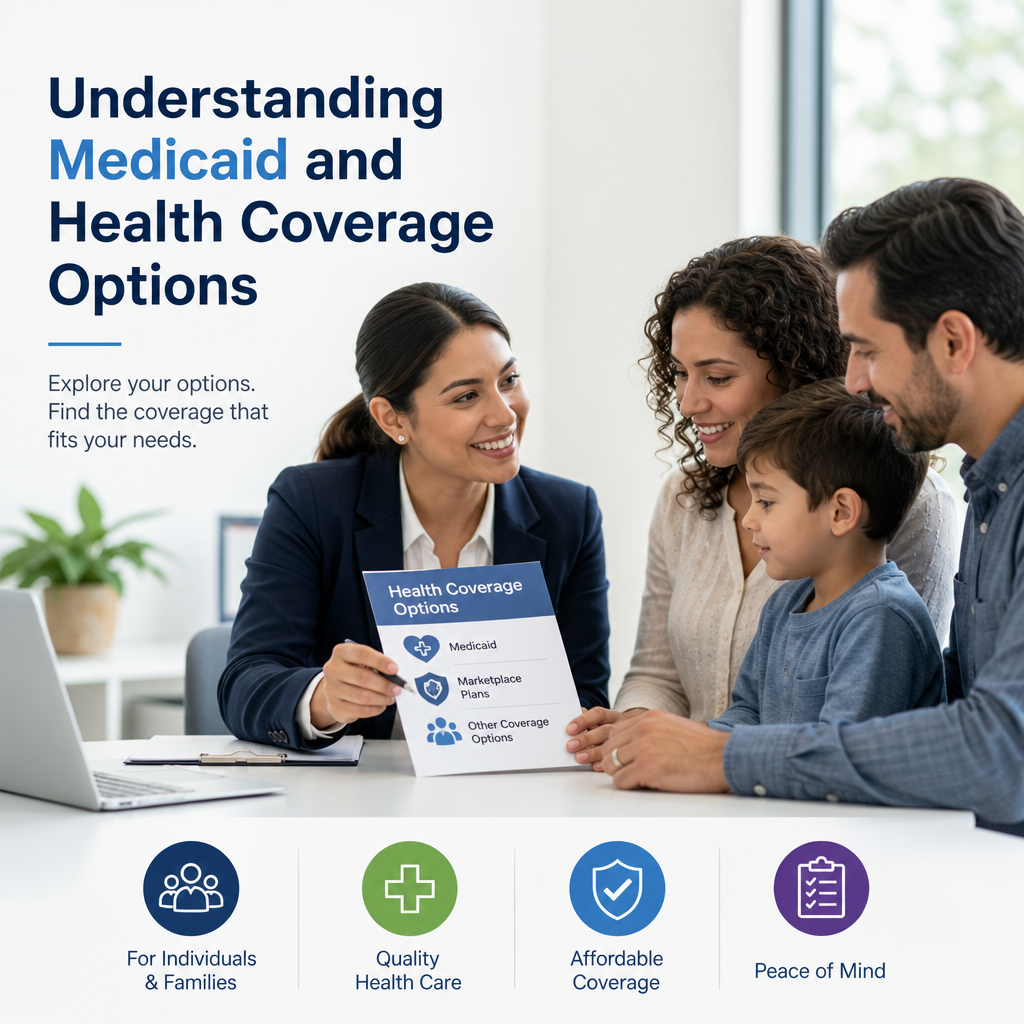
Understanding Medicaid and Health Coverage Options
Understanding Medicaid and health coverage options can help you find insurance that fits your needs, budget, and eligibility. In this guide, you’ll learn how Medicaid coverage options compare with other plans so you can make a more confident choice.
By: Emily Adams on julho 31, 2026
Health insurance can feel overwhelming, especially when you’re comparing plans, eligibility rules, and costs. If you’re trying to make sense of understanding Medicaid and health coverage options, you’re not alone. Many people need coverage that fits their income, family size, health needs, and budget—but figuring out where to start can be confusing.
Medicaid is one of the most important health coverage programs in the United States, but it is not the only option. Depending on your situation, you may also qualify for a Marketplace plan, employer-sponsored coverage, Medicare, or a child-focused program like CHIP. Knowing how these options work can help you avoid gaps in care and choose coverage that actually fits your life.
What Medicaid Is and Who It Helps
Medicaid is a joint federal and state health coverage program that provides free or low-cost insurance to eligible people. It is designed to help individuals and families who meet certain income and eligibility requirements.
Common groups Medicaid may cover
While each state sets some of its own rules, Medicaid often serves:
Low-income adults
Children in qualifying households
Pregnant people
Parents or caregivers in some states
People with disabilities
Older adults who need long-term care support
Because states administer Medicaid within federal guidelines, benefits and eligibility can vary. That means the coverage available in one state may look different from coverage in another.
What Medicaid typically covers
Medicaid generally covers a broad range of medically necessary services, such as:
Doctor visits
Hospital care
Preventive services
Prescription drugs
Lab tests and imaging
Mental health care
Maternity care
Pediatric services
Some long-term services and supports
For many families, Medicaid provides essential access to routine care and emergency treatment without the high premiums or deductibles that come with some private plans.
Understanding Medicaid and Health Coverage Options
When people search for understanding Medicaid and health coverage options, they usually want one clear answer: “What should I choose?” The truth is that the best option depends on your income, household size, work situation, age, disability status, and where you live.
Here are the main paths to consider.
1. Medicaid
If your income is low enough and you meet your state’s eligibility rules, Medicaid may be your best option. It often has very low monthly costs and limited out-of-pocket spending. For many households, it offers the most affordable coverage available.
Medicaid can be especially helpful if you:
Need regular medical care
Have children
Are pregnant
Are living on a fixed income
Need help with long-term care services
2. Children’s Health Insurance Program (CHIP)
If your income is too high for Medicaid but still not enough for private insurance, CHIP may be available for your children. CHIP helps cover children and, in some states, pregnant people as well.
CHIP usually provides:
Doctor visits
Immunizations
Dental and vision care
Emergency services
Prescriptions
Many families look at Medicaid and CHIP together because they are closely related and sometimes overlap in eligibility.
3. Marketplace health plans
If you do not qualify for Medicaid, a Marketplace plan through HealthCare.gov or your state exchange may be the right fit. These plans offer coverage tiers and may qualify you for premium tax credits or cost-sharing reductions based on income.
Marketplace coverage is often a strong option if you:
Work part-time or freelance
Lost employer coverage
Earn too much for Medicaid
Need comprehensive private insurance
4. Employer-sponsored insurance
If your employer offers health insurance, it is worth reviewing carefully. Employer plans may be more affordable than buying coverage on your own, especially if your employer pays part of the premium.
Before enrolling, check:
Monthly premium
Deductible
Copays
Provider network
Coverage for prescriptions and specialists
5. Medicare
Medicare is different from Medicaid and is generally for people age 65 and older, though some younger people with certain disabilities also qualify. Some people qualify for both Medicare and Medicaid, which is sometimes called “dual eligibility.”
Medicaid can help pay Medicare premiums and out-of-pocket costs for eligible individuals.
How to Know If You Might Qualify for Medicaid
Eligibility rules vary by state, but the main factors usually include:
Household income
Household size
Citizenship or immigration status rules
Age
Pregnancy status
Disability status
Whether you need long-term care
In states that expanded Medicaid, more adults qualify based on income alone. In states that did not expand Medicaid, eligibility can be more limited and tied to other factors such as pregnancy, disability, or parenting.
Documents you may need
If you apply, you may need to provide:
Proof of identity
Proof of income
Social Security numbers
Immigration documents if applicable
Proof of state residency
Household information
Having these documents ready can make the application process smoother.
Key Differences Between Medicaid and Private Health Plans
It helps to compare Medicaid with private insurance so you can better understand your choices.
Cost
Medicaid often has very low or no monthly premiums. Many enrollees also pay little or nothing for covered services.
Private plans usually have:
Monthly premiums
Deductibles
Copays
Coinsurance
That said, a private plan may still be a good choice if you need a specific doctor or want a network that Medicaid does not cover in your area.
Provider access
Medicaid provider networks can be smaller than those of some private plans. Always check whether your doctor accepts Medicaid before enrolling.
Private plans may offer broader networks, but they can still have restrictions. Out-of-network care may cost much more or may not be covered at all.
Out-of-pocket costs
Private insurance often comes with more cost-sharing. Medicaid usually protects members from large medical bills, which is one reason it is so important for low-income households.
Benefits and flexibility
Private plans may offer different benefit designs, but Medicaid is often stronger when it comes to affordability and support for people with complex health needs.
How to Apply for Medicaid and Other Coverage
Applying for coverage is easier when you follow a clear process.
Step 1: Check your eligibility
Start by reviewing income guidelines and household rules in your state. You can do this through your state Medicaid agency or the Health Insurance Marketplace.
Step 2: Gather your documents
Have your personal information ready, including proof of income and residency.
Step 3: Apply online, by phone, by mail, or in person
After submitting your application, you may be asked for extra information. Respond quickly to avoid delays.
Step 5: Review your enrollment options
If you are not eligible for Medicaid, you may be directed to CHIP or a Marketplace plan. This is one reason understanding Medicaid and health coverage options matters: one application can help point you toward the right program.
Practical Examples of Choosing Coverage
Sometimes the easiest way to understand your options is through real-life scenarios.
Example 1: A single parent with part-time income
A parent working part-time may qualify for Medicaid if household income falls within the state limit. If not, their child may qualify for CHIP, and the parent might qualify for a Marketplace plan with financial help.
Example 2: A self-employed worker
A freelancer with unpredictable income may find Marketplace coverage useful, especially if their earnings are too high for Medicaid but still modest enough to qualify for subsidies.
Example 3: An older adult on Medicare
Someone age 67 with limited income may have Medicare, but Medicaid could help with premiums, copays, and long-term services if they meet their state’s requirements.
Example 4: A pregnant person
Pregnancy often opens access to Medicaid or CHIP in many states, even when income is slightly above the usual adult threshold. Coverage during pregnancy can make a major difference in prenatal and postpartum care.
Common Mistakes to Avoid
Choosing coverage is easier when you avoid a few common missteps:
Assuming you are not eligible without checking
Forgetting that state rules can differ
Ignoring special enrollment periods
Not updating income changes
Failing to verify whether your doctor is in-network
Choosing a plan based only on premium price
A low monthly premium does not always mean lower total cost. Consider the full picture, including deductibles, prescription coverage, and expected medical needs.
Where to Get Help
If you feel stuck, you do not have to navigate this alone. Trusted help is available from:
State Medicaid offices
Marketplace navigators and enrollment assisters
Local community health centers
SHIP counselors for Medicare-related questions
Hospital financial assistance departments
These resources can help you compare Medicaid and health coverage options, understand deadlines, and submit your application correctly.
Frequently Asked Questions
1. What is the difference between Medicaid and Marketplace insurance?
Medicaid is a public health coverage program for eligible low-income individuals and families. Marketplace insurance is private coverage sold through state or federal exchanges. If you qualify for Medicaid, it is often the most affordable option. If you earn too much for Medicaid, a Marketplace plan may be a better fit, especially if you qualify for subsidies.
2. Can I have both Medicare and Medicaid?
Yes. Some people qualify for both. These individuals are often called “dual eligible.” Medicare is usually the primary coverage, while Medicaid may help pay for premiums, deductibles, copays, and services that Medicare does not fully cover.
3. Does Medicaid cover children?
Yes, Medicaid covers many children, and children whose families earn too much for Medicaid may qualify for CHIP. Coverage for children often includes preventive care, checkups, immunizations, dental care, and more.
4. How do I find out if I qualify for Medicaid in my state?
You can check eligibility by visiting your state Medicaid website or using the Health Insurance Marketplace. Because Medicaid rules vary by state, the income threshold and qualifying categories may be different depending on where you live.
5. What if I lose Medicaid coverage?
If you lose Medicaid, do not go without coverage if you can avoid it. You may qualify for a Marketplace special enrollment period, CHIP, or employer coverage. Acting quickly helps reduce the risk of a gap in care.
Understanding Medicaid and health coverage options is about more than picking an insurance card. It is about finding coverage that supports your health, fits your income, and protects you from unexpected medical costs. Medicaid can be a lifeline for eligible adults, children, pregnant people, seniors, and individuals with disabilities. But it is only one part of the larger coverage landscape, which also includes CHIP, Marketplace plans, employer insurance, and Medicare.
The best choice depends on your circumstances, so it pays to compare carefully. Check eligibility, review costs, confirm provider networks, and use trusted enrollment resources when needed. If your situation changes, revisit your coverage options right away so you do not miss a better fit.
By taking the time to understand your choices now, you can make a more confident decision and get the care you need without unnecessary financial strain. Stay informed, ask questions, and use official resources to guide your next step.
Emily A, holds a Master's degree in Public Administration (MPA) and has over 7 years of experience researching federal and state assistance programs. She writes educational content focused on government benefits, public policy, and community resources, using information from official agencies to help readers understand available programs and eligibility requirements.