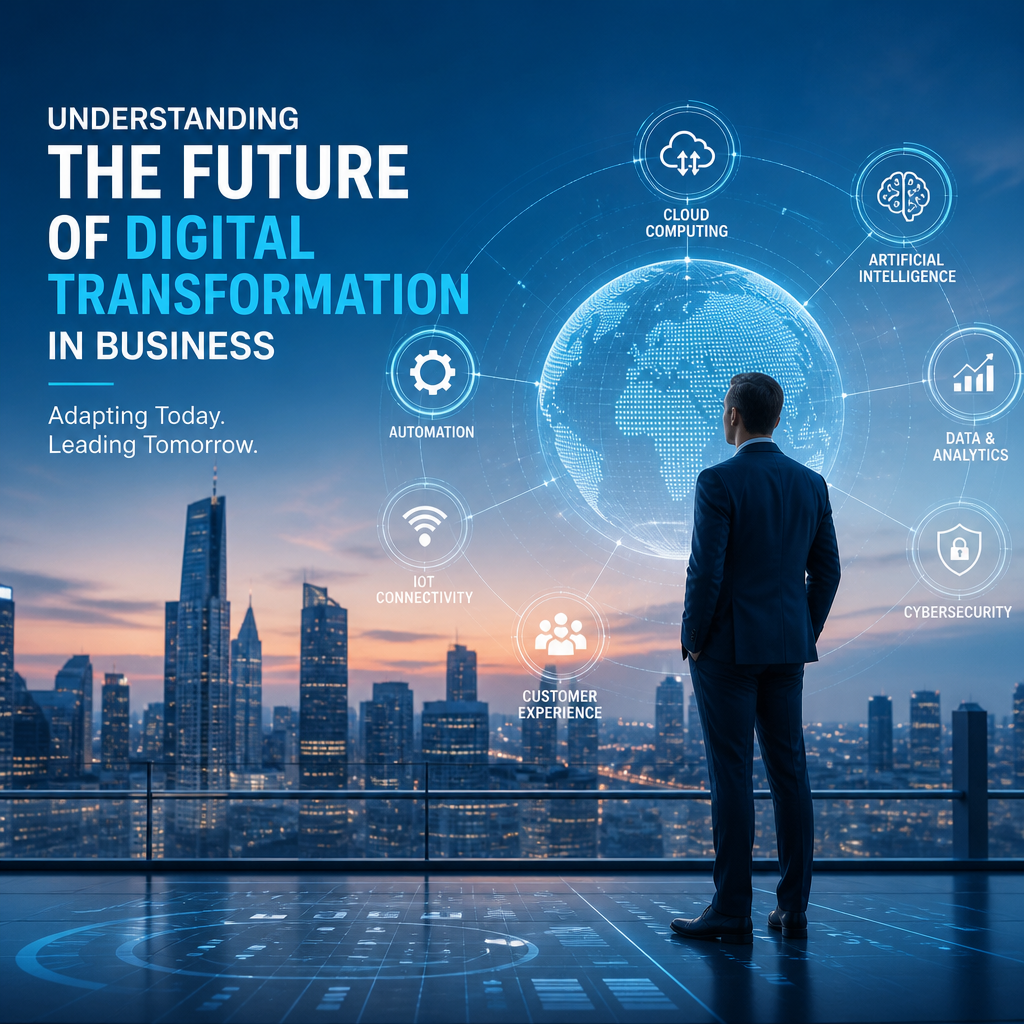
Understanding the Future of Digital Transformation in Business
The future of digital transformation is about more than adopting the latest tools—it’s about building smarter, more flexible organizations that can adapt quickly and deliver real value. As AI, automation, and data analytics evolve, businesses that embrace continuous change will be best positioned to thrive.
By: Peter B on julho 30, 2026
Digital transformation is no longer a side project or a buzzword reserved for tech companies. It has become a core business strategy that shapes how organizations operate, compete, and serve customers. As tools like cloud computing, artificial intelligence, automation, and data analytics continue to evolve, the future of digital transformation will depend on more than adopting new technology. It will require smarter decisions, stronger leadership, and a clear focus on value.
For businesses of every size, digital transformation is about using technology to improve processes, experiences, and outcomes. But the next phase looks very different from the last one. Instead of simply digitizing paper forms or moving systems to the cloud, organizations will need to build flexible, intelligent, and resilient operations that can adapt quickly. Understanding the future of digital transformation helps leaders prepare for what comes next and make better long-term investments.
What Digital Transformation Means Today
Digital transformation refers to the use of digital technologies to change how an organization works and delivers value. That can include customer-facing improvements, internal workflow changes, and entire business model shifts.
Common examples include:
Moving operations to cloud-based platforms
Using automation to reduce manual work
Applying analytics to make better decisions
Improving customer experiences through digital channels
Connecting systems and teams through integrated software
In the past, many companies approached transformation as a one-time upgrade. Today, it is more accurate to think of it as an ongoing process. Technology changes quickly, customer expectations keep rising, and competition often comes from unexpected places. That is why the future of digital transformation is less about implementation and more about continuous adaptation.
Key Drivers Shaping the Future of Digital Transformation
Artificial Intelligence and Machine Learning
AI is one of the most important forces influencing the future of digital transformation. Businesses are using AI to improve customer support, predict demand, detect fraud, streamline operations, and personalize experiences.
Machine learning models help companies identify patterns in large datasets that humans might miss. For example, a retailer might use AI to recommend products based on browsing behavior, while a manufacturer might use predictive maintenance tools to reduce equipment downtime.
The biggest value of AI is not just efficiency. It is decision support. Organizations that use AI well can move faster, respond earlier, and make more informed choices.
Cloud-Native Infrastructure
Cloud technology has already changed how businesses store data and run applications. The next stage focuses on cloud-native design, which makes systems more scalable, flexible, and easier to update.
Instead of relying on rigid legacy platforms, companies are shifting toward:
Microservices architectures
Containerized applications
Platform engineering
Hybrid and multi-cloud environments
This shift matters because it supports innovation. Teams can roll out improvements faster, test new ideas with less risk, and scale services as demand changes. In the future of digital transformation, cloud-native systems will be the foundation for agility.
Automation and Intelligent Workflows
Automation is moving beyond repetitive tasks. Businesses are now combining automation with AI to create intelligent workflows that learn and adapt.
Examples include:
Automatically routing customer support tickets
Extracting data from invoices and forms
Triggering alerts when systems detect unusual activity
Syncing data across departments without manual input
This does more than save time. It reduces errors, improves consistency, and frees employees to focus on higher-value work. The future of digital transformation will favor companies that design workflows around speed, accuracy, and collaboration.
Data as a Strategic Asset
Data has become one of the most valuable resources in modern business, but only if organizations can use it effectively. Many companies collect massive amounts of data without turning it into insight.
Future-ready organizations will treat data as a strategic asset by:
Improving data quality and governance
Creating a single source of truth
Using real-time analytics
Training teams to interpret data responsibly
When data is reliable and accessible, leaders can make better decisions faster. This is one reason data management remains central to the future of digital transformation.
Why the Human Side Matters More Than Ever
Technology alone does not create transformation. People do. One of the biggest lessons from past digital efforts is that even excellent tools fail when employees do not understand them, trust them, or know how to use them.
Change Management Will Define Success
Successful transformation requires clear communication, training, and support. Employees need to know not just what is changing, but why it matters and how it affects their work.
Strong change management often includes:
Early stakeholder involvement
Clear goals and expected outcomes
Ongoing training and coaching
Leadership support at every level
Feedback loops to catch issues quickly
Organizations that invest in change management are more likely to see real adoption and long-term value. In the future of digital transformation, the pace of change will only increase, making people-centered planning essential.
Digital Skills Will Be in Higher Demand
As automation and AI take on more routine tasks, workers will need skills that complement technology. These include problem-solving, critical thinking, collaboration, and digital fluency.
Companies should focus on:
Upskilling current employees
Building cross-functional teams
Creating learning pathways for new tools
Encouraging experimentation and continuous improvement
This is not just an HR issue. It is a business survival issue. Organizations that develop talent internally will be better prepared for the future of digital transformation than those that depend only on external hiring.
The Role of Customer Experience in Transformation
Customers now expect fast, personalized, and seamless interactions across every channel. They compare experiences across industries, not just within one sector. A poor digital experience can push them toward a competitor quickly.
Personalization at Scale
The next generation of customer experience will rely on data and AI to deliver more relevant interactions. This might include personalized recommendations, dynamic content, or support tailored to user history.
A financial services company, for example, might use digital tools to recommend budgeting resources based on a customer’s behavior. A healthcare provider might use patient portals and reminders to improve follow-up care.
The goal is not to automate everything. It is to make interactions feel easier, smarter, and more helpful.
Omnichannel Expectations
Customers expect to move from one channel to another without starting over. They may browse online, ask a question through chat, then complete a purchase in person or through mobile.
To support this, organizations need connected systems and shared data across touchpoints. This is one of the clearest signs of the future of digital transformation: businesses will need to design around the customer journey, not internal silos.
Cybersecurity and Trust Will Be Non-Negotiable
As companies become more digital, they also become more exposed to cyber risks. More data, more connected systems, and more remote access all create new vulnerabilities.
Security by Design
Security can no longer be an afterthought. It must be built into digital systems from the beginning. That means:
Access controls
Encryption
Multi-factor authentication
Regular updates and patching
Monitoring for unusual activity
Organizations that ignore security risk losing trust, money, and operational stability. In the future of digital transformation, trust will be a competitive advantage. Customers and partners are more likely to work with businesses that show they take security seriously.
Compliance and Governance Will Matter More
Regulations continue to evolve around privacy, data protection, and AI use. Companies need governance frameworks that help them stay compliant while still moving quickly.
That includes:
Clear data handling policies
Responsible AI oversight
Documented decision-making processes
Vendor risk assessment
Auditable workflows
Good governance does not slow transformation down. It makes it more sustainable.
Industry-Specific Transformation Will Accelerate
Digital transformation will not look the same in every sector. The tools may overlap, but the use cases will vary based on business needs, regulations, and customer expectations.
Healthcare
Healthcare organizations are using digital tools to improve scheduling, patient engagement, telehealth, and record management. The focus is on better access, more efficient operations, and safer care.
Manufacturing
Manufacturers are investing in connected equipment, predictive maintenance, robotics, and supply chain visibility. These tools help improve output, reduce waste, and respond to disruptions more quickly.
Retail
Retailers are using digital transformation to improve e-commerce, inventory management, personalized marketing, and omnichannel fulfillment.
Financial Services
Banks and financial institutions are using automation, digital onboarding, fraud detection, and mobile experiences to improve speed and trust.
The future of digital transformation will be shaped by how each industry balances innovation with practical constraints.
How Businesses Can Prepare for What Comes Next
Organizations do not need to transform everything at once. In fact, trying to do too much too quickly often leads to confusion and poor results.
Start with Business Goals
Technology should support strategy, not replace it. Before investing in new tools, leaders should ask:
What problem are we trying to solve?
Which processes need the most improvement?
Where will digital tools create measurable value?
What risks or barriers could slow adoption?
This keeps transformation focused and prevents wasted effort.
Build Flexible Systems
The future rewards adaptability. Companies should avoid locking themselves into systems that are hard to update or integrate. Flexible platforms make it easier to respond to market changes and adopt new technologies.
Measure Outcomes, Not Just Activity
It is easy to track implementation milestones, but transformation success should be measured by results. Useful metrics might include:
Reduced process time
Faster customer response
Higher employee adoption
Better data accuracy
Improved customer satisfaction
A strong measurement strategy helps leaders understand whether digital transformation is actually working.
Keep Testing and Learning
The future of digital transformation will reward organizations that experiment wisely. Pilot projects, feedback loops, and iterative improvements help teams learn what works before scaling up.
This approach reduces risk and makes change more manageable.
Common Mistakes to Avoid
Even with the best intentions, many transformation efforts run into the same problems.
Focusing Too Much on Tools
Buying software does not equal transformation. Without process redesign and user adoption, new tools often create more complexity instead of less.
Ignoring Legacy Systems Too Long
Legacy systems can slow progress, but replacing everything at once is not always realistic. A smart strategy often involves phased modernization.
Overlooking Employee Experience
If new systems frustrate employees, adoption will suffer. Tools should make work easier, not harder.
Failing to Plan for Change
Transformation requires time, communication, and support. Skipping those steps usually creates resistance and delays.
Avoiding these mistakes can make the future of digital transformation more manageable and more successful.
Frequently Asked Questions
1. What is the future of digital transformation in business?
The future of digital transformation in business involves smarter use of AI, cloud systems, automation, and data to improve efficiency, customer experience, and decision-making. It will also place more emphasis on flexibility, security, and employee skills rather than just technology adoption.
2. Why is digital transformation important for long-term growth?
Digital transformation helps businesses adapt to changing customer expectations, improve operations, and remain competitive. It supports long-term growth by making companies more agile, data-driven, and capable of responding to market shifts.
3. How does AI affect the future of digital transformation?
AI will play a major role by automating tasks, improving predictions, personalizing experiences, and supporting better decisions. It will help organizations do more with their data and make operations more efficient and responsive.
4. What skills will matter most in the future of digital transformation?
Important skills include digital literacy, data interpretation, problem-solving, communication, adaptability, and collaboration. Employees who can work effectively with technology and adapt to change will be especially valuable.
5. How can small businesses prepare for digital transformation?
Small businesses can start by identifying one or two priority areas, such as customer service, accounting, or marketing. They should choose affordable tools that solve real problems, train employees, and measure results before expanding further.
The future of digital transformation will be shaped by more than the latest tools. It will depend on how well organizations combine technology, people, and strategy to create lasting value. AI, cloud-native systems, automation, and data analytics will continue to expand what is possible, but success will come from thoughtful implementation, strong leadership, and a commitment to continuous learning.
Businesses that treat transformation as an ongoing process will be better positioned to adapt, innovate, and serve customers effectively. Just as important, they will build the skills, systems, and trust needed to thrive in a changing environment. Whether you lead a small business or a large enterprise, the smartest next step is to focus on the areas where digital change can create the most meaningful impact. Start with a clear goal, involve the right people, and measure progress along the way. That is how organizations move from reacting to change to leading it.
Peter B holds a degree in Journalism and has 5 years of experience covering U.S. economic policy, labor markets, and financial news. He writes data-driven news content on topics like inflation, interest rates, and employment trends.