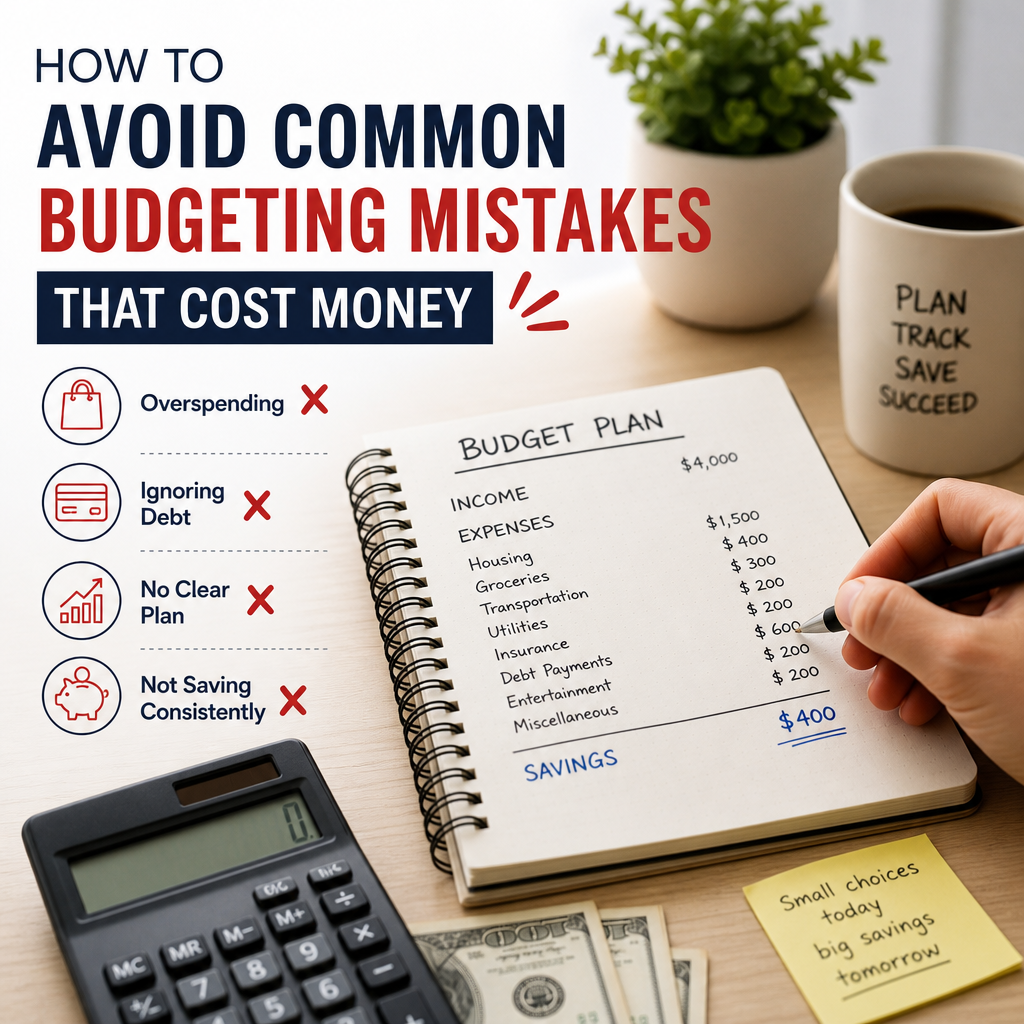
How to Avoid Common Budgeting Mistakes That Cost Money
Budgeting mistakes can quietly drain your money, but the right plan makes it much easier to stay in control. Learn the most common slip-ups and how to avoid them so your budget actually works for your goals.
By: Mary Mitchell on julho 28, 2026
Última atualização em: julho 31, 2026
Budgeting sounds simple on paper: track what you earn, plan what you spend, and save the rest. In real life, though, many people run into budgeting mistakes that quietly drain their money and make financial goals harder to reach. Whether you’re trying to get out of debt, build an emergency fund, or just stop living paycheck to paycheck, learning how to avoid common budgeting mistakes can make a big difference.
A good budget is not about restriction for its own sake. It’s a practical tool that helps you make smarter decisions with your money. The problem is that many budgets fail because they’re built on guesswork, unrealistic expectations, or habits that don’t reflect actual spending behavior. The good news is that most budgeting mistakes are fixable once you know what to look for.
Why Budgeting Mistakes Matter
Budgeting mistakes are more than minor annoyances. They can lead to overdraft fees, credit card balances, missed savings goals, and unnecessary stress. Over time, even small errors can add up to significant financial loss.
A strong budgeting system should do three things:
Help you understand where your money goes
Support your short-term needs and long-term goals
Adapt when your life or income changes
When your budget fails at any of those, money tends to disappear faster than expected. That’s why avoiding common budgeting mistakes is so important.
Common Budgeting Mistakes That Cost You Money
1. Not Tracking Every Expense
One of the biggest budgeting mistakes is forgetting to account for small purchases. Coffee runs, app subscriptions, takeout, parking fees, and convenience store stops often seem harmless individually. But together, they can seriously affect your monthly cash flow.
If you only budget for rent, groceries, and bills, you may think you have more money left than you actually do.
How to avoid it:
Review bank and credit card statements weekly
Use a budgeting app or spreadsheet to log expenses
Separate fixed costs from variable spending
Check for recurring charges you no longer use
A realistic budget includes the “little” expenses because those are often the ones that sneak up on you.
2. Creating a Budget That Is Too Strict
A budget that cuts out every treat, every convenience, and every bit of flexibility usually doesn’t last. When people try to make their budget too restrictive, they often rebel against it and overspend later.
This is one of the most common budgeting mistakes because it feels responsible at first. But a budget that leaves no room for enjoyment or unexpected needs is hard to maintain.
A better approach:
Include a category for discretionary spending
Allow small, planned purchases without guilt
Build in a buffer for irregular expenses
Focus on sustainable habits instead of perfection
A budget should guide your money, not punish you for being human.
3. Ignoring Irregular and Annual Expenses
Many people remember rent and groceries but forget about expenses that do not happen every month. Car registration, holiday gifts, insurance premiums, school supplies, memberships, and annual subscriptions can throw off even a well-planned budget.
If these costs are ignored, they usually end up on credit cards or in savings withdrawals, which creates a financial setback.
What to do instead:
Make a list of all non-monthly expenses
Divide annual costs by 12 and save monthly
Create a sinking fund for predictable future expenses
Review your calendar for seasonal spending
This simple shift can prevent the frustration of being “surprised” by bills that happen every year.
4. Underestimating Variable Spending
Groceries, gas, dining out, entertainment, and household supplies are easier to underestimate than fixed bills because they change from month to month. If you use a budget based on one unusually low month, you may set yourself up for failure.
For example, a month with fewer social events or lower gas prices can make your spending look better than it really is. Then when normal life returns, your budget breaks down.
To avoid this mistake:
Look at several months of spending history
Set realistic averages rather than best-case numbers
Leave a margin for price changes
Revisit variable categories regularly
Accurate estimates make budgeting more useful and less frustrating.
5. Forgetting to Pay Yourself First
A budget should include saving, not just spending. Many people wait until the end of the month to save whatever is left over, but that often turns into nothing. This is one of the most costly budgeting mistakes because it keeps you stuck in a cycle of short-term thinking.
Paying yourself first means moving money into savings before it gets spent elsewhere.
Ways to make this work:
Set up automatic transfers to savings
Contribute to retirement through payroll deductions
Treat savings like a fixed expense
Start small if necessary, then increase over time
Even modest, consistent savings can help you build momentum and reduce financial stress.
Budgeting Mistakes That Come from Poor Planning
6. Not Having Clear Financial Goals
Without a goal, a budget can feel like busywork. People are more likely to follow a plan when they know what they’re working toward. Whether your goal is paying off credit card debt, building an emergency fund, or saving for a house, your budget should reflect that priority.
When your budget has no purpose, it’s easier to ignore it.
Set goals that are:
Specific
Measurable
Time-bound
Realistic
For example, instead of saying, “I want to save more,” try, “I want to save $1,500 for emergencies in six months.” Clear goals make your budgeting decisions easier.
7. Not Reviewing and Adjusting the Budget Regularly
A budget is not something you create once and forget. Income changes, bills rise, subscriptions renew, and goals shift. If you never review your plan, you may continue following a budget that no longer fits your life.
This is a common budgeting mistake because people assume the original plan should stay the same forever.
Make reviews part of your routine:
Check your budget weekly or biweekly
Compare planned spending to actual spending
Adjust categories as needed
Update your budget after major life changes
Regular reviews help you catch problems early and keep your budget realistic.
8. Relying on Guesswork Instead of Real Numbers
Many budgets fail because they are built from memory rather than actual data. If you estimate your spending without checking statements, you’re likely to miss key expenses or underestimate recurring costs.
Guessing can work for a rough draft, but it should not be your final system.
Better strategy:
Collect at least three months of financial records
Categorize your spending honestly
Use actual averages to build your budget
Reassess after the first month of use
The more accurate your numbers, the more reliable your budget becomes.
Behavioral Budgeting Mistakes to Watch For
9. Treating Credit Cards Like Extra Income
Credit cards are useful tools, but they are not income. One of the most dangerous budgeting mistakes is assuming you have more spending power than you really do because a card is available.
This can lead to high balances, interest charges, and a budget that no longer reflects reality.
How to stay on track:
Budget based on cash flow, not available credit
Use cards only if you can pay the balance in full
Avoid using credit to cover regular expenses you can’t afford
Monitor balances often
A credit card should support your budget, not replace it.
10. Failing to Build an Emergency Cushion
Unexpected expenses happen. Car repairs, medical copays, broken appliances, and last-minute travel can all disrupt a budget. If you have no emergency cushion, even one surprise bill can force you into debt.
This is one of the most expensive budgeting mistakes because it creates a chain reaction: one emergency turns into a borrowed expense, then interest, then more financial strain.
Start small:
Aim for an initial emergency fund of $500 to $1,000
Keep it in a separate savings account
Add to it regularly until you reach a larger buffer
Use it only for true emergencies
Emergency savings can protect your budget from turning into financial chaos.
11. Trying to Make the Budget Work Without Changing Habits
A budget alone cannot fix spending habits that are out of control. If you keep ordering delivery, shopping impulsively, or ignoring subscription costs, the numbers will not improve on their own.
Budgeting mistakes often happen when people focus only on the spreadsheet and ignore behavior.
Helpful habit changes include:
Waiting 24 hours before non-essential purchases
Removing saved payment methods from shopping apps
Planning meals to reduce food waste and takeout spending
Setting spending limits for flexible categories
Real progress comes from aligning your habits with your budget.
Practical Steps to Build a Better Budget
If you want to avoid common budgeting mistakes, focus on creating a system that is simple, flexible, and grounded in reality.
Use a Simple Budgeting Method
You do not need a complicated financial system to succeed. In fact, simpler methods are easier to maintain. Popular approaches include:
The 50/30/20 rule
Zero-based budgeting
Envelope-style budgeting
Paycheck budgeting
Choose the method that fits your income pattern and personality.
Automate What You Can
Automation reduces the risk of missed payments and inconsistent saving. Set up automatic transfers for:
Savings
Retirement contributions
Bill payments
Debt payments
Automation helps remove emotion from the process and keeps your budget moving forward.
Give Every Dollar a Job
A dollar without a purpose is easier to spend. Assigning every dollar a role helps you stay intentional and reduces waste.
Your money should be directed toward things like:
Needs
Savings
Debt repayment
Planned discretionary spending
Future goals
Leave Room for Flexibility
Even the best budget needs breathing room. Build in a small “miscellaneous” or “buffer” category so minor surprises don’t derail your entire plan.
Flexibility is not a sign of weak discipline. It is one of the reasons a budget survives real life.
Example: A Smarter Monthly Budget
Here’s a simple example of how a practical budget might look for someone who earns a steady monthly income:
Housing and utilities: fixed amount
Groceries and household items: realistic monthly average
Transportation: gas, maintenance, parking
Savings: automatic transfer
Debt repayment: fixed monthly amount
Personal spending: planned discretionary category
Annual expenses: monthly sinking fund contribution
Emergency fund: consistent contribution
This setup works better than a vague plan because it includes both expected and unexpected costs. It also reduces the temptation to treat leftover money as free money.
Frequently Asked Questions
What is the most common budgeting mistake?
One of the most common budgeting mistakes is underestimating regular spending, especially small purchases and variable costs. Many people also forget annual expenses or fail to build in savings, which makes the budget feel tighter than expected.
How do I make my budget more realistic?
Use real spending data from the last few months instead of guessing. Include irregular expenses, give yourself a small amount of flexibility, and review the budget after using it for at least one month. A realistic budget reflects your actual life, not an ideal version of it.
Why do budgets usually fail?
Budgets often fail because they are too strict, too complicated, or not updated over time. They may also fail when people don’t track spending closely or rely on credit cards to cover gaps. A budget needs to match both your income and your habits.
How much should I save in an emergency fund?
A common first goal is to save $500 to $1,000 for small emergencies. From there, many people work toward a larger fund that covers several months of essential expenses. The right amount depends on your income stability, family situation, and financial obligations.
How often should I review my budget?
Review your budget at least once a week or once every two weeks. A monthly review is also useful for making larger adjustments. Frequent check-ins help you catch overspending early and keep your plan aligned with your goals.
Avoiding common budgeting mistakes is less about strict rules and more about building a system that works in everyday life. When you track real expenses, account for irregular costs, save automatically, and give yourself room to adjust, your budget becomes a tool you can actually use—not just a plan that looks good for a week and then falls apart.
The most effective budgets are simple, honest, and adaptable. They reflect your priorities, help you prepare for surprises, and keep you focused on what matters most. If you’ve struggled with budgeting before, that does not mean you’re bad with money. It usually means the budget was not designed with enough realism or flexibility.
Start by fixing one or two mistakes, not everything at once. Review your spending, choose a clearer goal, and make one practical change this week. Over time, those small improvements can save you money, reduce stress, and give you more control over your financial future.
Mary S, CFP®, is a Certified Financial Planner with over 12 years of experience in personal finance, retirement planning, and wealth management. She writes educational content that helps readers understand financial concepts and make informed decisions based on reliable information.