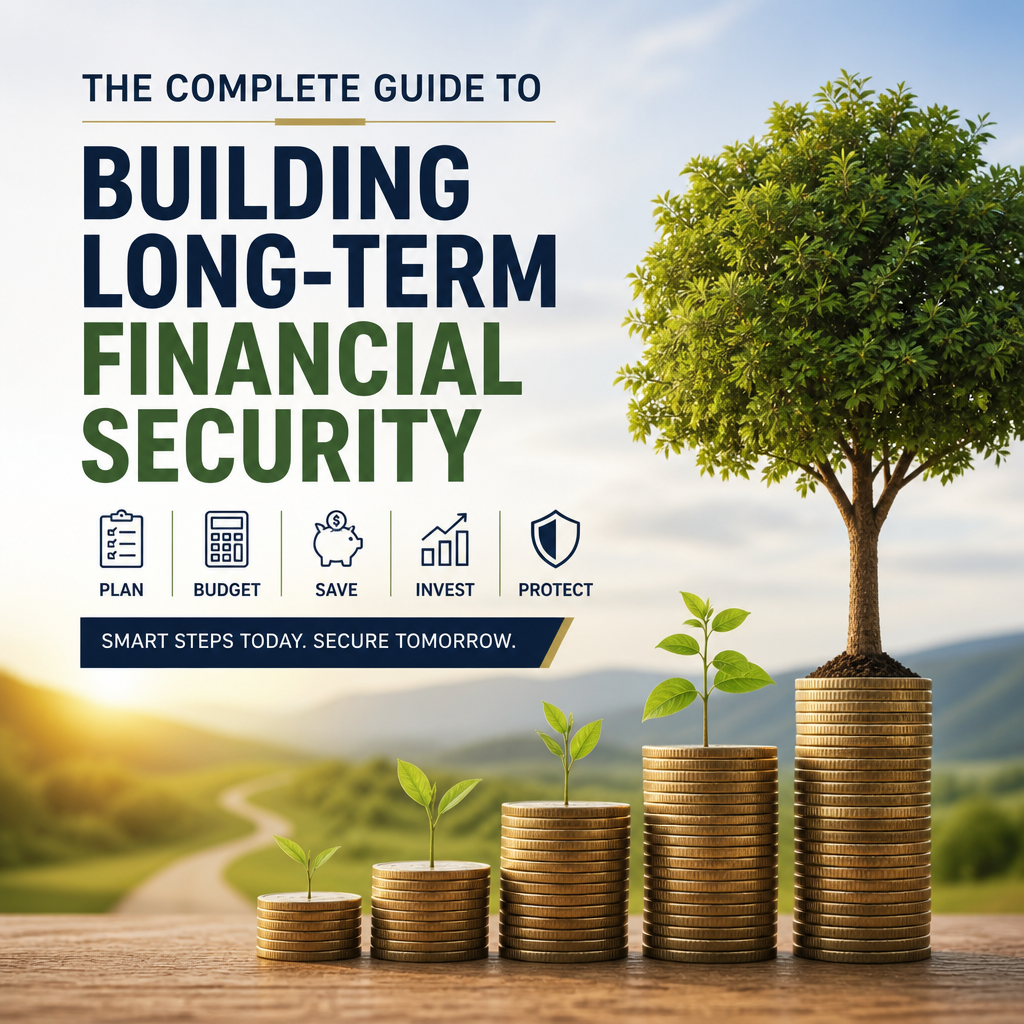
The Complete Guide to Building Long-Term Financial Security
Long-term financial security isn’t built overnight—it starts with simple habits like spending wisely, saving consistently, and protecting yourself from surprises. This guide shows how to create a stable plan that supports your goals today and gives you more confidence for the future.
By: Mary Mitchell on julho 31, 2026
Building long-term financial security is not about getting rich overnight. It is about creating a stable, flexible financial life that can handle emergencies, support your goals, and give you more choices over time. Whether you are starting from scratch or trying to improve an existing plan, financial security comes from consistent habits, smart decisions, and a clear strategy.
Many people think financial security only means having a large income or a big savings account. In reality, it is a combination of cash flow, debt management, protection, investing, and planning. When these pieces work together, you can better absorb setbacks and move toward a more confident future.
What Long-Term Financial Security Really Means
Long-term financial security means your money supports both your present life and your future needs. It gives you the ability to handle unexpected expenses, stay on track during career changes, and prepare for major goals like homeownership, retirement, or helping family members.
It is also deeply personal. For one person, financial security may mean eliminating debt and building an emergency fund. For another, it may mean reaching a point where investment income covers a portion of living expenses. The path can look different, but the foundation is usually the same:
Spend less than you earn
Save consistently
Protect against financial shocks
Invest for the future
Review and adjust regularly
When these habits become part of your routine, long-term financial security becomes much more realistic.
Start With a Clear Financial Snapshot
Before you can improve your finances, you need to understand where you stand today. A realistic snapshot helps you identify strengths, problem areas, and priorities.
List your income and expenses
Write down all sources of income, including your salary, side income, freelance work, or other regular cash flow. Then track your monthly expenses. Be sure to include:
Housing
Utilities
Groceries
Transportation
Insurance
Debt payments
Subscriptions
Entertainment
Savings and investments
This exercise often reveals spending patterns that are easy to overlook. For example, you may notice that small recurring charges add up more than expected.
Calculate your net worth
Your net worth is your assets minus your liabilities. In simple terms:
Assets: Cash, retirement accounts, investments, home equity, valuable property
Liabilities: Credit card balances, student loans, auto loans, mortgage debt, personal loans
A net worth snapshot does not judge your situation. It simply gives you a baseline so you can measure progress over time.
Build a Budget That Supports Your Goals
A budget is one of the most practical tools for building long-term financial security. It helps you make intentional choices instead of reacting to every bill or impulse purchase.
Choose a budgeting method that fits your life
There is no single “best” budget. The right system is the one you can actually follow.
Popular approaches include:
Zero-based budgeting
Every dollar gets assigned a job, including spending, saving, and debt payments.
50/30/20 rule
This method divides income into needs, wants, and savings/debt goals.
Envelope or category budgeting
You set spending limits for specific categories and track them closely.
Pay-yourself-first budgeting
You automatically direct money to savings and investments before spending the rest.
The best budget is one that reflects your priorities and leaves room for real life.
Focus on consistency, not perfection
A budget is not meant to make you feel restricted every day. Instead, it should help you stay aware of where your money goes and make course corrections when needed. If you overspend in one category, adjust the next one rather than giving up entirely.
Create an Emergency Fund
An emergency fund is one of the most important building blocks of financial security. It protects you from relying on credit cards or loans when life gets unpredictable.
Why it matters
Unexpected costs happen to almost everyone. A car repair, medical bill, job interruption, or home expense can create stress quickly if you do not have a cash cushion.
An emergency fund can help you:
Avoid high-interest debt
Cover essential expenses during a crisis
Feel less anxious about sudden changes
Protect long-term investments from early withdrawals
How much to save
A common target is three to six months of essential expenses, but even a smaller amount can make a meaningful difference. If that goal feels too large, start with a first milestone like $500 or $1,000.
Where to keep it
Store emergency savings in a separate, accessible account such as a high-yield savings account. The money should be easy to reach when needed, but not so easy that you spend it casually.
Pay Down Debt Strategically
Debt can slow long-term financial security by increasing monthly obligations and limiting your flexibility. Not all debt is equally harmful, but high-interest balances deserve attention.
Prioritize high-interest debt first
Credit card debt and some personal loans can be especially expensive over time. Reducing these balances frees up cash flow and lowers financial stress.
Two common repayment strategies include:
Avalanche method: Pay extra on the highest-interest debt first
Snowball method: Pay extra on the smallest balance first for motivation
Both can work. Choose the one you are most likely to stick with.
Avoid replacing old debt with new debt
It is easy to feel progress when you move debt around, but long-term security improves when balances actually shrink. If you consolidate debt, be sure the new terms truly help you lower costs and stay disciplined.
Save and Invest for the Future
Saving is essential for stability. Investing is what helps your money grow over time. Both matter when building long-term financial security.
Save for short- and medium-term goals
Keep money you may need in the near future in savings, not in volatile investments. Examples include:
Vacation funds
Down payment savings
Car replacement funds
Planned home repairs
Education expenses
This separation helps you avoid selling investments at the wrong time.
Invest for long-term growth
If you want to build wealth over many years, investing is often necessary. While investing always involves risk, a long-term approach allows your money more time to recover from market fluctuations.
Useful principles include:
Start early if possible
Contribute regularly
Diversify across asset types
Keep fees reasonable
Match investments to your risk tolerance and timeline
For many people, low-cost diversified funds such as index funds or target-date funds offer a practical way to get started.
Take advantage of tax-advantaged accounts
Retirement accounts such as 401(k)s, 403(b)s, Traditional IRAs, and Roth IRAs can support long-term financial security because they offer tax advantages. If your employer provides matching contributions, try to contribute enough to capture the full match whenever possible. That match is often one of the most valuable parts of workplace retirement savings.
Protect Your Finances With Insurance and Planning
Financial security is not only about growing money. It is also about reducing the impact of risks that could derail your progress.
Review essential insurance coverage
Depending on your situation, important coverage may include:
Health insurance
Auto insurance
Renters or homeowners insurance
Disability insurance
Life insurance, especially if others depend on your income
The right insurance does not eliminate all risk, but it can prevent one major event from causing lasting financial damage.
Create basic estate planning documents
Even if you are young or do not consider yourself wealthy, simple estate planning can help protect your wishes and your family. Common documents include:
Will
Beneficiary designations
Power of attorney
Health care directive
These documents help ensure that your assets and decisions are handled according to your preferences.
Increase Your Income Over Time
Cutting expenses has limits. At some point, increasing income can have a bigger effect on long-term financial security.
Practical ways to raise income
You may be able to:
Ask for a raise based on performance and market value
Pursue a promotion
Learn skills that increase your earning potential
Start freelance or side work
Change employers for better pay and benefits
Build a business or consulting service
Even modest income growth can accelerate savings, debt repayment, and investing.
Focus on earning power, not just salary
A higher salary helps, but long-term security often comes from a combination of income, benefits, stability, and flexibility. A job with retirement matching, strong insurance, and room for advancement can be more valuable than a slightly higher paycheck with weaker support.
Set Financial Goals That Actually Guide You
Goals turn good intentions into a plan. Without them, it is easy to save or spend randomly without making meaningful progress.
Use specific, measurable goals
Instead of saying, “I want to be better with money,” try goals like:
Save $3,000 for emergencies
Pay off one credit card within 12 months
Max out an IRA this year
Increase retirement contributions by 2%
Build a home down payment fund
Specific goals make it easier to track progress and stay motivated.
Break big goals into smaller steps
Large goals can feel overwhelming. Break them into monthly or quarterly actions. For example, if your goal is to save $12,000 in a year, that becomes $1,000 per month. From there, you can review your budget and make the goal more realistic.
Review and Adjust Your Plan Regularly
Long-term financial security is not a one-time project. It requires ongoing attention as your life changes.
Schedule regular check-ins
Review your finances monthly or quarterly. During each check-in, ask:
Did I stay within my budget?
Is my emergency fund growing?
Am I making progress on debt?
Are my investments aligned with my goals?
Has anything changed in my income or expenses?
Adjust when life changes
Major events such as marriage, children, job changes, moves, illness, or a new home can all affect your financial plan. Updating your strategy during these moments helps keep your plan useful and realistic.
Common Mistakes That Undermine Financial Security
Even well-intentioned people can make choices that weaken their financial foundation. Watch out for these common issues:
Spending without tracking
Relying on credit cards for routine expenses
Skipping emergency savings
Delaying retirement contributions too long
Failing to diversify investments
Ignoring insurance needs
Not updating beneficiaries and estate documents
Assuming income growth will solve every problem
Avoiding these mistakes can make your financial plan stronger and simpler to maintain.
A Simple Framework to Get Started
If you want a straightforward way to begin building long-term financial security, use this sequence:
Track income and expenses for one month
Build a starter emergency fund
Eliminate high-interest debt
Begin or increase retirement contributions
Review insurance coverage
Set one or two clear financial goals
Revisit your plan every few months
This sequence works because it balances stability, debt reduction, and long-term growth.
Frequently Asked Questions
What is the first step toward long-term financial security?
The first step is understanding your current financial situation. Track your income, expenses, debts, and savings so you can see where your money is going and what needs attention. Once you have that snapshot, you can create a realistic plan.
How much should I save in an emergency fund?
A common target is three to six months of essential expenses, but the right amount depends on your situation. If you have unstable income or dependents, you may want a larger cushion. If you are just starting, even a small starter fund can help.
Should I pay off debt or invest first?
In many cases, it makes sense to do both. At a minimum, aim to contribute enough to get any employer retirement match while also attacking high-interest debt. If your debt carries a very high interest rate, paying it down aggressively may deserve more focus before investing extra money.
What kind of investments are best for long-term security?
There is no single best investment for everyone. For many people, diversified low-cost index funds or target-date funds are practical choices for long-term goals. The key is to match investments to your timeline, risk tolerance, and financial goals.
How can I stay motivated with long-term financial goals?
Break large goals into smaller milestones and celebrate progress along the way. Automating savings, tracking wins, and reviewing your numbers regularly can help keep motivation high. It also helps to connect each goal to a personal reason, such as peace of mind, flexibility, or future freedom.
Building long-term financial security is less about chasing quick wins and more about creating reliable systems that protect your future. When you understand your financial picture, budget with intention, build an emergency fund, manage debt wisely, and invest consistently, you create a stronger base for every stage of life. Add proper insurance, clear goals, and regular check-ins, and your plan becomes even more resilient.
The most important part is to start where you are. You do not need a perfect income, a flawless budget, or expert-level investing knowledge to make progress. Small, repeated actions can lead to meaningful change over time. If you track your money, automate good habits, and adjust as your life evolves, you will put yourself in a much better position to handle challenges and pursue opportunities.
Long-term financial security is a journey, not a destination. The earlier you begin, the more options you give yourself later. Take the next step today by choosing one area to improve and making it part of your routine.
Mary S, CFP®, is a Certified Financial Planner with over 12 years of experience in personal finance, retirement planning, and wealth management. She writes educational content that helps readers understand financial concepts and make informed decisions based on reliable information.