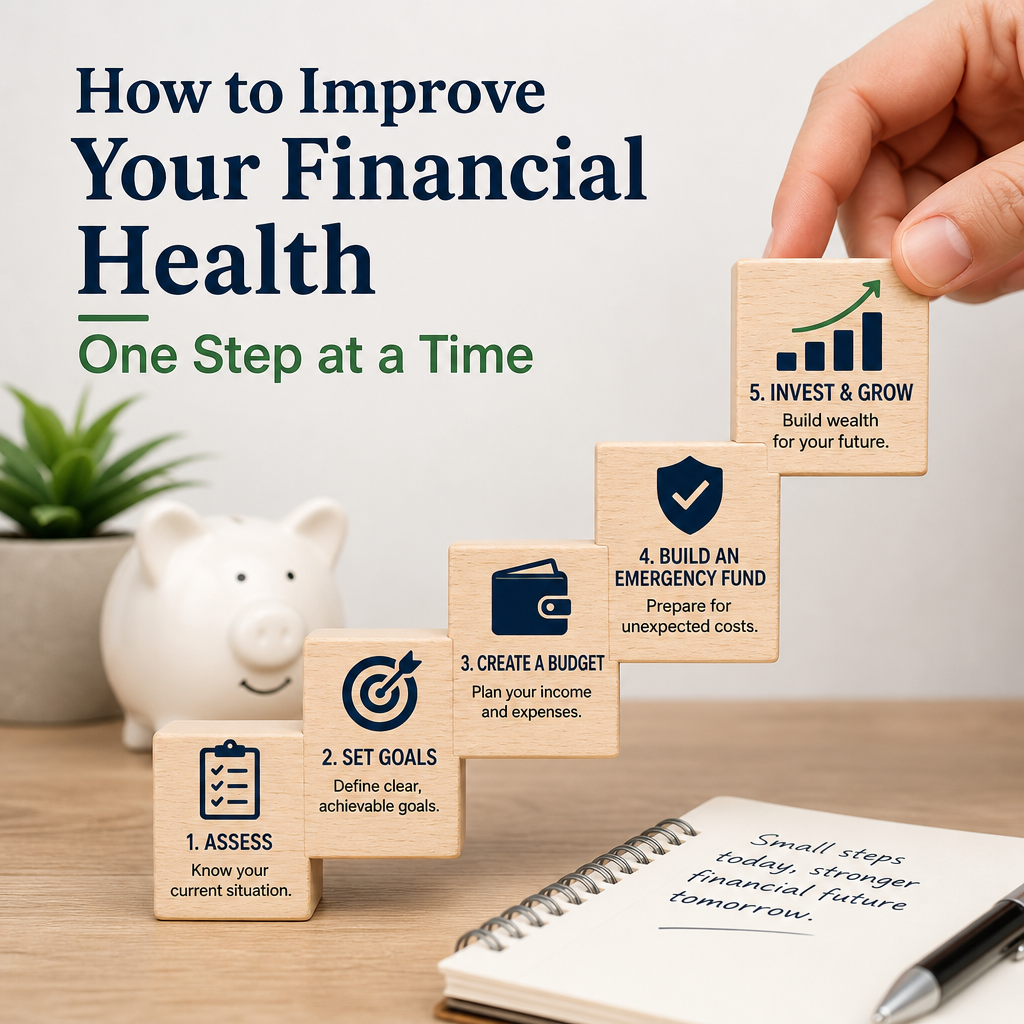
How to Improve Your Financial Health One Step at a Time
Improving your financial health starts with small, consistent steps that make your money work better for you. From tracking spending to building savings, simple habits can add up to real progress over time.
By: Mary Mitchell on julho 31, 2026
Improving your financial health does not require a perfect budget, a six-figure salary, or a dramatic life overhaul. In most cases, it starts with small, repeatable actions that help you spend more intentionally, save more consistently, and make better decisions with the money you already have.
Think of financial health like physical health. You do not get stronger from one workout, and you do not get financially stable from one smart money decision. Progress comes from building habits that are simple enough to keep doing. If you have ever felt overwhelmed by debt, irregular income, rising expenses, or uncertainty about the future, the good news is that you can improve your financial health one step at a time.
What Financial Health Really Means
Financial health is more than just having money in the bank. It reflects how well your finances support your daily life, long-term goals, and ability to handle surprises.
A financially healthy person usually has:
A clear sense of where money is going
Savings for emergencies and future goals
Manageable debt
A realistic budget or spending plan
The ability to cover basic living expenses without constant stress
It also means having enough flexibility to handle unexpected costs, like a car repair or medical bill, without falling into a cycle of debt.
Start by Understanding Your Current Situation
Before you can improve your financial health, you need a clear picture of where you stand. Avoid guessing. Even a basic snapshot can reveal patterns that are costing you money.
List Your Income, Bills, and Debt
Write down:
Monthly take-home pay
Fixed bills such as rent, insurance, and loan payments
Variable expenses like groceries, gas, dining out, and subscriptions
Outstanding debts and minimum payments
Current savings and checking account balances
This step is not about judgment. It is about awareness. Once you know your numbers, you can make decisions based on facts instead of stress.
Track Spending for 30 Days
If your money seems to disappear, track every expense for one month. Use:
A budgeting app
A spreadsheet
A notebook
Your bank and credit card statements
Look for patterns such as:
Frequent small purchases that add up
Duplicate subscriptions
Impulse spending
High spending in certain categories
Even one month of tracking can show you where your money is quietly leaking.
Build a Simple Budget You Can Actually Follow
A budget should help you use money with purpose, not feel like a punishment. The best budget is one you can stick to.
Zero-based budget: Every dollar gets assigned a job
Envelope-style budgeting: Set spending limits by category
You do not need a complex system. If you are new to budgeting, start with something easy to understand and adjust as needed.
Focus on the Biggest Categories First
Rather than tracking every penny perfectly, begin with the areas that matter most:
Housing
Transportation
Food
Debt payments
Savings
These categories usually have the biggest impact on financial health.
Create a Small Emergency Fund
One of the fastest ways to strengthen financial health is to build a cushion for the unexpected. An emergency fund helps you avoid debt when life throws you a curveball.
Start With a First Goal of $500 to $1,000
You do not need a huge amount right away. A starter emergency fund can cover many common surprises, such as:
Minor car repairs
Prescription costs
A higher-than-usual utility bill
A small home repair
Once you reach that first goal, keep going until you have enough to cover at least one to three months of essential expenses.
Keep the Money Easy to Access
Store your emergency fund in a separate savings account so it is not mixed with everyday spending. You want easy access, but not so much convenience that you spend it on non-emergencies.
Reduce Debt One Step at a Time
Debt can weigh heavily on your financial health, especially if high interest keeps your balances growing. The key is to start with a method you can maintain.
Pick a Repayment Strategy
Two popular approaches are:
Debt snowball: Pay off the smallest balance first for quick wins
Debt avalanche: Pay off the highest-interest debt first to reduce total interest over time
Both methods work. The best one is the one you will follow consistently.
Make Extra Payments When Possible
Even small extra payments can help reduce debt faster. You might use:
Tax refunds
Bonuses
Side income
Money saved from cutting subscriptions or dining out
If extra payments are not possible right now, focus on making all minimum payments on time to protect your credit and avoid penalties.
Cut Expenses Without Feeling Deprived
Improving financial health does not always mean earning more. Sometimes it means spending less on things you do not truly value.
Look for Easy Wins
Start with low-effort changes such as:
Canceling unused subscriptions
Swapping takeout for a few home-cooked meals
Reviewing insurance coverage
Shopping with a list
Comparing prices before making larger purchases
These changes may seem small, but together they can free up meaningful cash.
Spend on What Matters Most
Cutting expenses becomes easier when you focus on what you actually enjoy. For example, you might decide to spend more on family activities and less on delivery fees or impulse shopping. That approach makes your budget feel more sustainable.
Increase Income if You Need More Breathing Room
Sometimes the issue is not overspending but simply not having enough income to meet your goals. If your budget is already lean, look for ways to increase earnings gradually.
Consider Practical Ways to Earn More
Options may include:
Asking for a raise
Applying for a better-paying role
Taking on freelance work
Selling unused items
Offering a skill-based side service
Even a modest increase in income can support debt repayment, savings, or more flexible monthly planning.
Invest in Skills That Strengthen Earning Power
Long-term financial health often improves when you build marketable skills. That could mean:
Completing a certification
Learning basic digital tools
Improving communication skills
Gaining experience in a growing field
You do not need to make a dramatic career change overnight. Small investments in your earning potential can pay off over time.
Make Saving a Habit, Not a Leftover
Many people save only if money remains at the end of the month. In practice, that often means saving nothing at all. A better approach is to save automatically and consistently.
Automate Your Savings
Set up automatic transfers from checking to savings right after payday. Even a small transfer can help you build momentum. Treat savings like a fixed expense rather than an optional extra.
Save for Multiple Goals
Different goals deserve different savings buckets:
Emergency fund
Vacation
Car maintenance
Home repairs
Retirement
When savings has a purpose, it feels more motivating. You are less likely to spend it casually.
Protect Your Credit and Financial Identity
Good financial health includes protecting the systems that support your money life. Your credit and identity affect your ability to borrow, rent, and sometimes even get certain jobs or insurance rates.
Check Your Credit Reports
Review your credit reports regularly for errors or suspicious activity. You can access free reports through the official U.S. credit reporting channels. If you spot mistakes, dispute them quickly.
Use Credit Wisely
A few helpful habits include:
Paying bills on time
Keeping credit card balances manageable
Avoiding unnecessary applications for new credit
Reviewing statements for fraud
Strong credit is not just about borrowing. It can also provide more options when you need them.
Plan for Irregular or Seasonal Expenses
A common reason people struggle financially is that they only budget for monthly bills and forget about costs that show up less often.
Build Sinking Funds for Predictable Costs
A sinking fund is savings set aside for known future expenses. Examples include:
Car registration
Holiday spending
Insurance premiums
School supplies
Annual memberships
Instead of being surprised later, save a little each month so these costs feel manageable when they arrive.
Review the Whole Year, Not Just the Month
A monthly budget can look fine until a quarterly or annual bill shows up. Reviewing expenses across the year gives you a more realistic view of your financial health.
Use Small Habits to Stay on Track
Big financial improvements usually come from ordinary habits repeated over time. The more routine your money management becomes, the easier it is to stay consistent.
Try These Weekly Money Habits
Review account balances
Check upcoming bills
Compare spending to your budget
Move money into savings
Pay attention to subscription renewals
Try These Monthly Money Habits
Reconcile your budget
Review debt balances
Update savings goals
Adjust spending categories if needed
Celebrate progress, even if it is small
These habits take little time, but they can prevent bigger problems later.
Stay Motivated by Tracking Progress
Financial progress can feel slow, which is why it helps to measure it. If you only focus on what still needs fixing, you may miss how far you have already come.
Track a Few Meaningful Metrics
Consider monitoring:
Savings balance
Total debt balance
Credit score changes
Monthly spending trends
Number of months with a fully funded budget
Seeing improvement in black and white helps reinforce good behavior.
Celebrate Small Wins
Did you save $50 this month? Pay off a credit card? Avoid using debt for an emergency? Those are real wins. Acknowledging progress makes it easier to keep going.
Frequently Asked Questions
1. What is the first step to improving financial health?
The first step is understanding your current financial situation. List your income, bills, debt, and savings, then track spending for at least one month. Once you know where your money is going, it becomes much easier to make a practical plan.
2. How much should I save for an emergency fund?
A good starting point is $500 to $1,000. That amount can cover many small emergencies and help you avoid using credit for unexpected expenses. Over time, aim for one to three months of essential living expenses, or more if your income is irregular.
3. Should I pay off debt or save first?
In many cases, it helps to do both. Start with a small emergency fund, then direct extra money toward debt repayment while continuing to save modestly. This balance gives you some protection while also reducing long-term interest costs.
4. What if my income is too low to save much?
Even very small amounts matter. If you can save $10 or $25 per paycheck, start there. At the same time, look for ways to reduce fixed expenses or increase income through extra work, a raise, or a side job. Progress often begins with small numbers.
5. How long does it take to improve financial health?
There is no fixed timeline. Some changes, like cutting subscriptions or creating a budget, can help within days. Bigger goals such as debt reduction, credit improvement, and building strong savings usually take months or years. The key is consistency, not speed.
Improving your financial health does not have to feel overwhelming. The most effective approach is usually the simplest one: understand where your money is going, create a budget that fits your real life, build a small emergency fund, reduce debt steadily, and save automatically whenever possible. You do not need to do everything at once. In fact, trying to change too much too quickly often leads to burnout.
Instead, focus on one step you can take today. Maybe that means tracking your spending for a week, canceling an unused subscription, or setting up a small automatic transfer to savings. Small actions may not feel dramatic, but they build momentum. Over time, those habits can reduce stress, improve stability, and give you more control over your future.
Financial health is not about perfection. It is about progress, resilience, and making informed choices with the money you have. Start where you are, use what you know, and keep going one step at a time.
Mary S, CFP®, is a Certified Financial Planner with over 12 years of experience in personal finance, retirement planning, and wealth management. She writes educational content that helps readers understand financial concepts and make informed decisions based on reliable information.