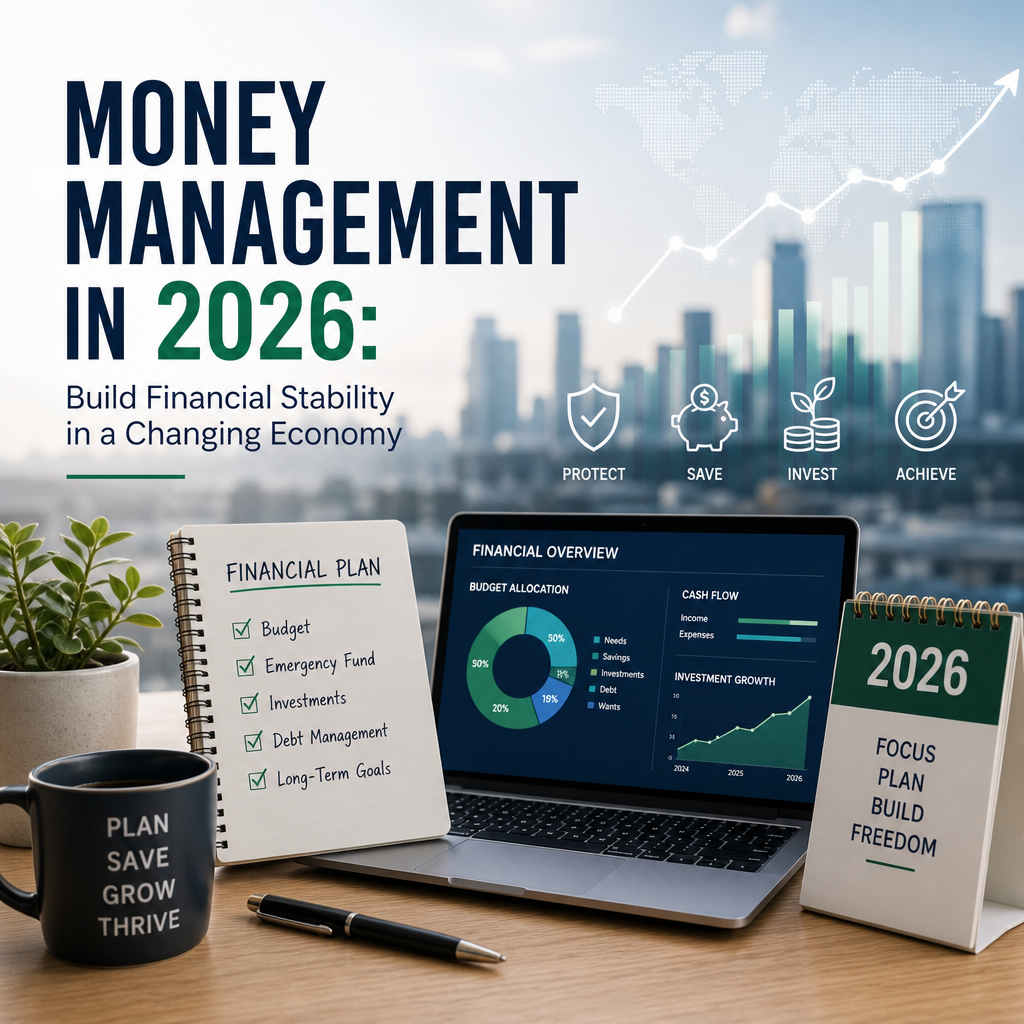
Money Management in 2026: Build Financial Stability in a Changing Economy
Money management in 2026 starts with knowing where your money is going, then building a plan that can flex with rising costs, shifting rates, and unexpected changes. With the right habits, you can create stability, reduce stress, and make smarter choices for the future.
By: Mary Mitchell on julho 31, 2026
Money Management in 2026: Building Financial Stability in a Changing Economy
Money management in 2026 looks different than it did just a few years ago. Rising living costs, shifting interest rates, rapid changes in the job market, and the growing role of digital finance have made personal financial planning more important than ever. Whether you are trying to reduce debt, grow savings, or simply feel more in control, a strong money management strategy can help you build financial stability in a changing economy.
The good news is that the basics still work. A realistic budget, an emergency fund, smart debt decisions, and long-term investing habits remain the foundation of healthy finances. What changes in 2026 is the need to stay flexible, informed, and intentional. Financial resilience is no longer just about earning more—it is about making your money work harder and adapting when conditions shift.
Why Money Management Matters More in 2026
Economic uncertainty has become part of everyday life. Many households are dealing with higher costs for essentials, unpredictable expenses, and pressure to make financial decisions quickly. At the same time, technology has created new opportunities through digital banking, automated investing, and budgeting tools.
Strong money management helps you:
Handle unexpected expenses without panic
Stay on track during income changes
Avoid high-interest debt
Save for future goals with less stress
Make informed choices instead of reactive ones
In a changing economy, stability comes from preparation. When you manage money well, you give yourself more choices, more confidence, and more room to recover from setbacks.
Start with a Clear Picture of Your Finances
Before you can improve your finances, you need to know where your money is going. This step sounds simple, but many people skip it because it feels overwhelming. In reality, it is one of the most powerful money management habits you can build.
Track income and spending
Start by reviewing:
Monthly take-home pay
Fixed expenses such as rent or mortgage
Variable expenses like groceries, gas, and dining out
Debt payments
Savings contributions
Subscriptions and recurring charges
You can use a budgeting app, a spreadsheet, or even a notebook. The format matters less than the habit. Once you see the full picture, patterns become easier to spot.
Separate needs from wants
This is one of the most useful exercises in personal finance. Ask yourself:
What expenses are essential?
Which costs improve my life but are optional?
What spending habits are automatic rather than intentional?
That distinction helps you cut waste without feeling deprived. For example, reducing unused subscriptions or lowering takeout frequency may free up cash for savings or debt repayment.
Build a Budget That Fits Real Life
A good budget is not restrictive. It is a plan that reflects your actual priorities. In 2026, the best budgets are flexible enough to handle surprises while still keeping you accountable.
Choose a method that works for you
Popular budgeting approaches include:
The 50/30/20 method
Allocate roughly 50% of income to needs, 30% to wants, and 20% to savings and debt repayment.
Zero-based budgeting
Assign every dollar a purpose so your income minus expenses equals zero.
Envelope-style budgeting
Limit spending categories with separate cash or digital envelopes.
Pay-yourself-first budgeting
Move money into savings, retirement, or investments before spending on anything else.
There is no single best system. The right approach is the one you can follow consistently.
Leave room for flexibility
A rigid budget often fails when life changes. Instead, build in categories for:
Emergency repairs
Seasonal expenses
Annual bills
Irregular medical or travel costs
This creates a buffer so one surprise does not throw off your entire month.
Strengthen Your Emergency Fund
An emergency fund is one of the most important tools for financial stability. It protects you from relying on credit cards or loans when life gets expensive.
How much should you save?
A common goal is to save three to six months of essential expenses. If that feels unrealistic, start smaller. Even $500 to $1,000 can make a difference during a minor emergency.
How to build it faster
Try these strategies:
Set up automatic transfers after payday
Save tax refunds, bonuses, or side income
Put windfalls directly into a high-yield savings account
Reduce one or two discretionary expenses temporarily
The key is consistency. A smaller fund built steadily is better than a large target you never reach.
Keep the money accessible
Your emergency fund should be easy to access but separate from everyday spending. A high-yield savings account is often a practical option because it keeps the money liquid while earning some interest.
Manage Debt With a Strategy, Not Stress
Debt can limit your flexibility and add pressure to your monthly budget. In 2026, rising borrowing costs make debt management even more important.
Prioritize high-interest debt
Credit card debt is especially costly because interest can pile up quickly. If possible, focus extra payments on high-interest balances while still making minimum payments on everything else.
Two common payoff methods are:
Avalanche method: Pay off the highest-interest debt first
Snowball method: Pay off the smallest balance first for quick wins
The avalanche method may save more money in interest. The snowball method can build momentum. Choose the one that helps you stay committed.
Avoid adding new debt unnecessarily
Before using credit, ask:
Is this purchase essential?
Can I wait and save for it?
Will this debt fit comfortably into my budget?
Am I using credit to solve a short-term emotional problem?
These questions can prevent impulsive borrowing and keep your finances stable.
Make Saving and Investing Part of Your Monthly Routine
Money management in 2026 is not only about defense. It is also about building future growth. Saving and investing create long-term security and help your money keep pace with goals like retirement, homeownership, or education.
Save for goals with purpose
When savings have a specific job, they are easier to maintain. Consider separate accounts for:
Emergency savings
Travel
Home repairs
Car replacement
Major purchases
Short-term goals
Naming accounts can make saving feel more meaningful and reduce the temptation to spend casually.
Invest consistently for the long term
If you have access to a retirement plan like a 401(k), 403(b), or IRA, contributing regularly can help you build wealth over time. The exact investment mix depends on your age, goals, and risk tolerance, but a consistent habit matters more than trying to time the market.
Helpful practices include:
Contributing enough to receive an employer match, if available
Increasing contributions gradually over time
Diversifying across asset types
Avoiding emotional decisions during market swings
Long-term investing is about patience, not prediction.
Use Technology Wisely
Digital tools can make money management easier, but they can also encourage overspending if you are not careful. In 2026, financial apps, mobile banking, and automated transfers are powerful tools when used intentionally.
Helpful ways to use tech
Consider using technology to:
Track spending in real time
Set bill reminders
Automate savings transfers
Monitor credit reports and score changes
Compare rates for savings accounts or loans
Automation removes friction and helps good habits happen consistently.
Watch for hidden spending traps
Technology can also make spending feel too easy. One-click checkout, buy-now-pay-later offers, and app-based food delivery can slowly strain your budget. Review these conveniences regularly and ask whether they truly support your goals.
Protect Yourself With Strong Financial Habits
Financial stability is not just about building wealth. It is also about reducing risk. A changing economy can expose gaps in your plans, so protection matters.
Review insurance coverage
Make sure you have the coverage you need for:
Health
Auto
Home or renters
Disability, if appropriate
Life insurance, especially if others depend on your income
Underinsured households often face larger setbacks after a crisis. Reviewing coverage once a year can prevent costly surprises.
Monitor your credit
Your credit report affects borrowing, housing, and sometimes even employment opportunities. Check your credit reports regularly for errors or unfamiliar activity. Good credit management can save money on loans and improve financial options.
Keep important documents organized
Store account information, insurance details, passwords, and legal documents securely. In an emergency, organization saves time and reduces stress.
Adjust Your Plan When Life Changes
A major lesson in personal finance is that no budget or strategy should stay frozen forever. Money management works best when you review and adjust it regularly.
Revisit your plan after major events
Update your finances after:
Job changes
Income increases or decreases
Moving
Marriage or divorce
Having a child
Health changes
New debt or major purchases
These events can change your priorities quickly.
Set a monthly money check-in
A simple 20- to 30-minute review each month can keep your plan on track. During your check-in, ask:
Did I stay within budget?
What surprised me this month?
Did I save and invest as planned?
Are any bills or subscriptions overdue for review?
What should I change next month?
This habit keeps small problems from turning into large ones.
Money Management Habits That Build Financial Stability
Good money management in 2026 depends on repeatable habits. You do not need to be perfect. You need a system that supports steady progress.
High-impact habits to adopt
Pay yourself first
Automate savings and bill payments
Keep a written or digital budget
Review spending weekly
Build an emergency fund
Pay down high-interest debt
Increase retirement contributions when possible
Avoid lifestyle inflation after income increases
These habits may seem simple, but they create durable financial resilience over time.
Example: A practical monthly system
Imagine a household that receives paychecks twice a month. A realistic system might look like this:
Direct deposit income into checking.
Automatically transfer a fixed amount to savings.
Pay bills on the same day each month.
Review spending every Friday.
Move any leftover money to debt payoff or savings.
This kind of structure reduces decision fatigue and makes financial stability easier to maintain.
Frequently Asked Questions
1. What is the most important part of money management in 2026?
The most important part is having a plan that adapts to change. A budget, emergency fund, debt strategy, and savings habit all matter, but consistency is what creates stability. In a changing economy, flexibility and discipline work best together.
2. How much money should I keep in an emergency fund?
A common goal is three to six months of essential expenses, but any amount is helpful if you are starting from zero. Even a small emergency fund can protect you from credit card debt when an unexpected expense comes up.
3. Is budgeting still useful if my income changes often?
Yes. In fact, budgeting is especially useful when income is irregular. Focus on your average monthly income, prioritize essentials, and keep a buffer in savings. A flexible budget can help you handle busy months and slower periods more confidently.
4. Should I pay off debt or save first?
In most cases, do both. Build a small emergency fund first so you can handle surprises, then focus on high-interest debt while continuing to save regularly. This balanced approach helps you avoid setbacks without ignoring debt costs.
5. What are the best tools for money management?
The best tools are the ones you will actually use. Many people benefit from a budgeting app, automatic transfers, online bill pay, and a simple spreadsheet. Technology should support your habits, not replace them.
Money management in 2026 is about more than cutting spending or chasing the latest financial trend. It is about building a system that helps you stay steady when the economy shifts. That means knowing where your money goes, creating a budget you can actually follow, preparing for emergencies, handling debt strategically, and saving and investing with purpose.
The most effective financial plans are not complicated. They are consistent, realistic, and designed to evolve with your life. If your income changes, your expenses rise, or new goals appear, your money plan should adjust too. Small actions taken regularly—like automating savings, reviewing your budget, or paying extra on high-interest debt—can create real momentum over time.
Financial stability does not happen all at once. It grows through habits, awareness, and patience. Start with one improvement today, then build from there. The sooner you take control of your money, the more prepared you will be for whatever comes next.
Mary S, CFP®, is a Certified Financial Planner with over 12 years of experience in personal finance, retirement planning, and wealth management. She writes educational content that helps readers understand financial concepts and make informed decisions based on reliable information.