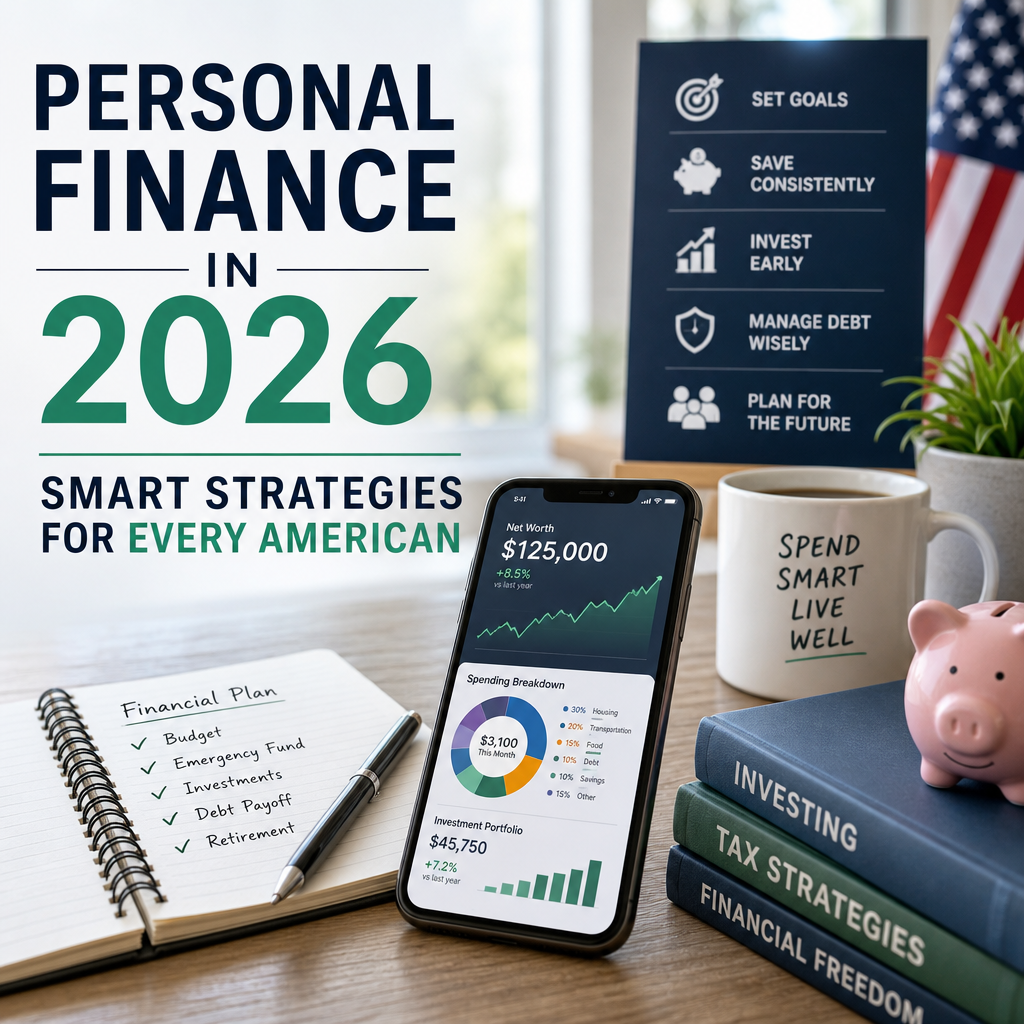
Personal Finance in 2026: Smart Strategies for Every American
Personal finance in 2026 is all about building flexible, practical money habits that can handle higher costs, changing interest rates, and unexpected life shifts. With the right plan, you can stay in control, save more confidently, and make steady progress toward your goals.
By: Mary Mitchell on julho 31, 2026
Personal finance in 2026 looks different from what it did just a few years ago. Rising living costs, changing interest rates, new digital banking tools, and an increasingly uncertain job market have made financial planning more important than ever. The good news is that strong money habits still work. Whether you are trying to build savings, pay down debt, invest for the future, or simply feel more in control, the right approach to personal finance in 2026 can help you make steady progress.
The best strategies are not flashy. They are practical, repeatable, and tailored to your life. In this guide, you will find realistic ways to manage money, protect your financial health, and prepare for whatever comes next.
Why Personal Finance in 2026 Requires a New Mindset
The basics of money management have not changed, but the environment around them has. Many Americans are balancing higher everyday expenses with the need to save for emergencies, retirement, and major life goals. That means personal finance in 2026 is less about chasing perfect outcomes and more about building flexibility.
What has changed for consumers
A few trends are shaping how people manage money today:
More people are using digital-first banking and budgeting tools
Emergency savings remain a priority because expenses can shift quickly
Debt management matters more when interest rates are high
Retirement planning now needs to account for longer lifespans and healthcare costs
Side income and freelance work are increasingly part of household budgets
A smart strategy in 2026 is one that helps you adapt. Instead of relying on one financial move, focus on a system that covers spending, saving, investing, and risk protection.
Build a Strong Financial Foundation First
Before you worry about investing, advanced tax strategies, or complex wealth-building tools, make sure your financial base is stable. Strong personal finance in 2026 starts with simple fundamentals.
Create a realistic monthly budget
A budget is still one of the most powerful tools for personal money management. The difference in 2026 is that your budget should be flexible, not rigid.
Goals: emergency savings, retirement, investing, extra debt payoff
If you have never used a formal budget, begin with a 30-day spending review. Look at your bank and card statements, then identify where your money actually goes. That often reveals easy cuts, like unused subscriptions or frequent impulse purchases.
Use automation to stay consistent
Automation reduces decision fatigue. Set up:
Automatic transfers to savings
Direct deposit into retirement accounts if available
Bill pay for fixed monthly expenses
Alerts for low balances, due dates, and unusual charges
When money moves automatically, you are less likely to miss important financial goals.
Personal Finance in 2026: Prioritize Emergency Savings
An emergency fund remains one of the most important parts of personal finance in 2026. Even a solid income can be disrupted by job changes, medical bills, car repairs, or family emergencies.
How much should you save?
A common goal is three to six months of essential expenses, but the right number depends on your situation. You may want a larger cushion if you are self-employed, have an irregular income, or support dependents.
Where to keep your emergency fund
Your emergency savings should be:
Easy to access
Separate from everyday spending
Low risk
A high-yield savings account is often a practical choice. It keeps money liquid while earning more interest than a standard checking account.
Start small if needed
If a full emergency fund feels overwhelming, begin with a starter goal of $500 or $1,000. Hitting an early milestone builds confidence and gives you a buffer against small shocks.
Manage Debt with a Clear Payoff Strategy
Debt is one of the biggest obstacles to financial progress. Credit cards, personal loans, student loans, and auto loans can all shape your monthly cash flow. In 2026, successful personal finance means being intentional about how you handle debt.
Know your debt types
Not all debt is equal. Some debt has lower rates and more manageable terms, while other debt can become expensive quickly.
Focus on:
High-interest credit card balances
Variable-rate debt that may become more expensive
Loans with fees or penalties that make repayment harder
Choose a payoff method that fits your personality
Two common strategies work well:
Debt avalanche: pay minimums on all debts, then attack the highest interest rate first
Debt snowball: pay minimums on all debts, then eliminate the smallest balance first for quick wins
The best method is the one you will stick with. If motivation matters more to you, the snowball approach may help. If saving money on interest is your top priority, choose the avalanche method.
Avoid new debt where possible
A payoff plan only works if you stop the cycle. Before using credit, ask:
Is this purchase necessary?
Can I wait and save?
Can I pay the full balance when the bill arrives?
That kind of pause can prevent short-term convenience from becoming long-term stress.
Invest for the Long Term, Not the Headlines
Investing is still one of the best ways to build wealth over time, but personal finance in 2026 should focus on discipline over prediction. Markets change. No one can consistently forecast the next big winner. A long-term plan usually works better than trying to time the market.
Start with retirement accounts
For many Americans, retirement accounts are the best place to begin investing. Consider options such as:
401(k) plans through an employer
Traditional IRA accounts
Roth IRA accounts
Roth 401(k) plans, if offered
If your employer offers a match, try to contribute enough to capture the full match. That is often one of the strongest financial moves you can make.
Keep fees and risk in check
Investment fees can eat into returns over time. Look for:
Low-cost index funds or ETFs
Broad diversification across sectors and regions
Asset allocation that matches your time horizon and risk tolerance
For many people, a simple diversified portfolio is more effective than frequent trading.
Don’t ignore taxes
Tax strategy matters in personal finance in 2026. The way you invest can affect how much you keep. For example, tax-advantaged accounts may help you reduce current or future tax burdens depending on the account type and your situation. When in doubt, review your plan with a qualified tax professional.
Strengthen Your Income, Not Just Your Spending Habits
Cutting expenses can help, but income growth often has a bigger long-term impact. One of the smartest personal finance strategies in 2026 is to raise your earning power.
Ways to increase income
Consider practical options like:
Asking for a raise based on performance and market value
Learning new skills through certifications or training
Moving into a higher-paying role
Starting a side hustle aligned with your skills
Freelancing or consulting part-time
Protect your core career value
In a changing economy, job security is partly about adaptability. Keep your resume current, build professional relationships, and stay aware of trends in your industry. If you can become the person who solves valuable problems, your income potential improves.
Use Credit Wisely and Protect Your Financial Reputation
Credit still matters in personal finance in 2026. It affects loan approvals, interest rates, apartment applications, and sometimes even insurance pricing. Good credit can save you money, while poor credit can make daily life more expensive.
Healthy credit habits
To build and protect your credit profile:
Pay bills on time
Keep credit card balances low
Review your credit reports regularly
Avoid opening unnecessary accounts
Check for errors and dispute them promptly
Watch for fraud and identity theft
With more financial activity happening online, fraud prevention is essential. Use strong passwords, enable two-factor authentication, and monitor your accounts. If you notice suspicious activity, act quickly.
A few simple habits can reduce risk:
Set account alerts
Freeze your credit if appropriate
Use secure Wi-Fi for banking tasks
Review statements every month
Plan for the Unexpected: Insurance and Risk Management
A strong financial plan is not just about growth. It is also about protection. Personal finance in 2026 should include a review of the risks that could derail your progress.
Key insurance coverages to review
Depending on your situation, make sure you have appropriate:
Health insurance
Auto insurance
Homeowners or renters insurance
Disability insurance
Life insurance, if others depend on your income
Why risk protection matters
Without adequate insurance, one major event can wipe out years of progress. Even if premiums feel like an extra expense, they can protect your budget from a much larger financial shock.
If your life has changed recently—such as marriage, homeownership, parenthood, or a career move—review your coverage to make sure it still fits.
Make a Simple Financial Plan for the Year
You do not need a complex spreadsheet to improve your finances. In fact, a simple annual plan is often more effective.
A practical 2026 money checklist
Use this framework to stay on track:
Review your monthly cash flow
Build or refill your emergency fund
Pay down high-interest debt
Increase retirement contributions if possible
Check your credit reports
Update insurance coverage
Set one income growth goal
Revisit your tax withholding and savings plan
This checklist gives your personal finance in 2026 strategy a clear structure without becoming overwhelming.
Review your plan every quarter
Life changes quickly. A quarterly check-in helps you adjust for:
Pay raises
Job changes
New bills
Family needs
Shifts in goals
A plan that gets updated regularly is more useful than one that looks perfect but sits untouched.
Smart Financial Habits for Families, Singles, and Retirees
Personal finance in 2026 is not one-size-fits-all. Different life stages call for different priorities.
For young adults and early-career workers
Focus on:
Avoiding high-interest debt
Starting retirement contributions early
Building an emergency fund
Learning core money skills
For families
Prioritize:
Cash flow management
Childcare and education planning
Insurance coverage
Long-term savings goals
For retirees or near-retirees
Pay attention to:
Withdrawal strategy
Healthcare costs
Required minimum distributions, if applicable
Estate planning and beneficiary updates
The right financial strategy depends on your age, responsibilities, and timeline.
Frequently Asked Questions
1. What is the most important part of personal finance in 2026?
The most important part is having a flexible, realistic system. That usually means budgeting, building an emergency fund, avoiding expensive debt, and investing consistently for the long term. A strong foundation matters more than chasing trends.
2. How much emergency savings should I have?
A good target is three to six months of essential expenses, but your ideal amount depends on your income stability, family needs, and job security. If that feels out of reach, start with a smaller goal and build from there.
3. Should I pay off debt or invest first?
It depends on the interest rate and your situation. Many people benefit from doing both: contribute enough to get any employer 401(k) match, then focus extra money on high-interest debt. Once debt is under control, you can increase investing.
4. Is a budget still necessary if I use budgeting apps?
Yes. Apps can make tracking easier, but they do not replace decision-making. A budget helps you assign a purpose to your money and keep your spending aligned with your goals.
5. What is the best way to start improving my finances this year?
Begin with one clear action: review your spending, set up automatic savings, or pay down a specific debt. Small wins create momentum. Once that habit is in place, add the next step.
Personal finance in 2026 is about clarity, consistency, and adaptability. You do not need perfect timing or advanced financial knowledge to make meaningful progress. What matters most is building a system that supports your everyday life: a budget you can follow, savings that protect you from surprises, a debt plan that creates momentum, and an investment approach that stays focused on the long term.
The strongest financial results usually come from ordinary habits done well over time. Automate what you can, review your plan regularly, and adjust when your circumstances change. If you are just getting started, choose one action today—such as setting up an emergency savings transfer, checking your credit report, or increasing a retirement contribution. Small steps compound into real progress.
The future may be uncertain, but your money plan does not have to be. With a smart, steady approach to personal finance in 2026, you can build more stability, reduce stress, and create more options for the years ahead.
Mary S, CFP®, is a Certified Financial Planner with over 12 years of experience in personal finance, retirement planning, and wealth management. She writes educational content that helps readers understand financial concepts and make informed decisions based on reliable information.