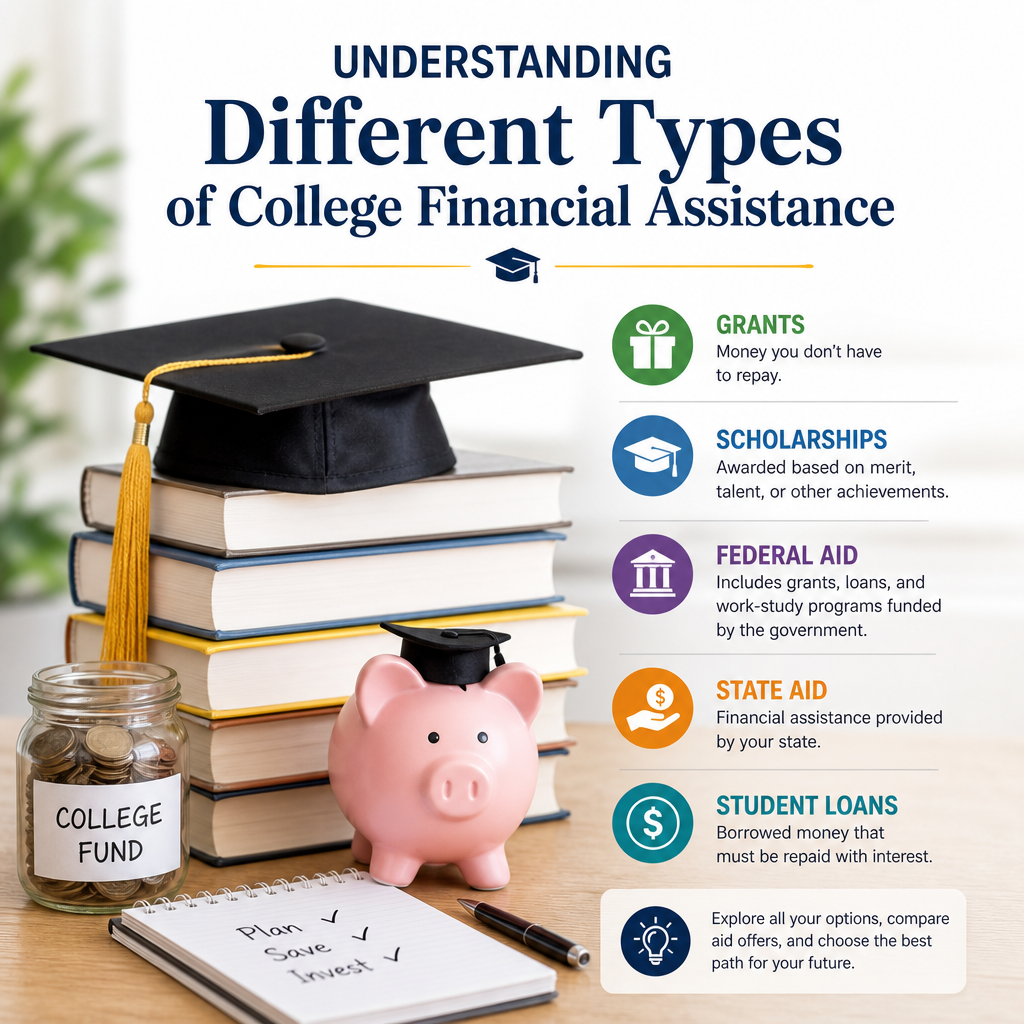
Understanding Different Types of College Financial Assistance
College financial assistance can make paying for school much more manageable, especially when you understand how grants, scholarships, loans, and work-study each work. With the right mix of aid, you can reduce stress, lower out-of-pocket costs, and borrow only what you truly need.
By: Jennifer Collins on julho 30, 2026
Paying for college can feel overwhelming, but the good news is that students have more options than many families realize. Understanding different types of college financial assistance can make the process less stressful and help you build a plan that fits your budget, goals, and eligibility. From scholarships and grants to loans and work-study programs, each form of aid works differently and can affect your college costs in different ways.
The key is knowing what assistance you may qualify for, how it works, and which options are best to use first. When you understand the financial aid landscape, you can make smarter decisions and avoid borrowing more than necessary.
What Is College Financial Assistance?
College financial assistance refers to money or resources that help students pay for educational expenses. These expenses may include:
Tuition and fees
Housing and meal plans
Books and supplies
Transportation
Personal costs
Some types of aid do not need to be repaid, while others do. Some are based on financial need, and others depend on academic performance, special talents, or other qualifications. Knowing the difference is essential when comparing aid offers.
Understanding different types of college financial assistance also helps students complete applications more strategically. For example, filling out the FAFSA can open the door to federal grants, work-study, and loans, while separate scholarship applications may lead to additional free money.
The Main Types of College Financial Assistance
Most college aid falls into four broad categories:
Grants
Scholarships
Loans
Work-study and student employment
Each option serves a different purpose. In many cases, students use a combination of these to cover the full cost of attendance.
1. Grants
Grants are often considered one of the best forms of college financial assistance because they typically do not need to be repaid. They are usually awarded based on financial need, though some may have other eligibility requirements.
Common grant sources include:
Federal government
State higher education agencies
Colleges and universities
Private organizations
Popular types of grants
Federal Pell Grant: A need-based federal grant for eligible undergraduate students.
Federal Supplemental Educational Opportunity Grant (FSEOG): Awarded by participating schools to students with exceptional financial need.
State grants: Offered by many states to residents attending eligible schools.
Institutional grants: Awarded directly by colleges from their own funds.
Why grants matter
Grants reduce the amount you need to pay out of pocket or borrow. For many families, they are a foundational part of an affordable college plan.
2. Scholarships
Scholarships are another form of gift aid that usually does not require repayment. Unlike grants, scholarships are often based on merit, talent, leadership, community service, field of study, or a combination of factors. Some are also need-based.
Common scholarship categories
Academic scholarships
Athletic scholarships
STEM scholarships
Community service scholarships
Identity-based scholarships
Employer or professional association scholarships
How scholarships help students
Scholarships can come from:
Colleges and universities
Private foundations
Businesses
Community organizations
Religious or civic groups
One practical advantage of scholarships is flexibility. Some are applied directly to tuition, while others may help cover books, housing, or other educational costs. In some cases, scholarship money can stack with grants and other aid, making college much more affordable.
Tip for applicants
Many students assume scholarships are only for top GPA holders or star athletes. In reality, there are awards for a wide range of backgrounds, interests, and goals. Applying for several smaller scholarships can add up significantly.
3. Federal Student Loans
Federal student loans are borrowed funds provided by the U.S. government. Students must repay them with interest after leaving school or dropping below half-time enrollment, though repayment terms are often more flexible than private loans.
Types of federal student loans
Direct Subsidized Loans: Available to eligible undergraduate students with financial need. The government pays the interest while you’re in school at least half-time and during certain deferment periods.
Direct Unsubsidized Loans: Available to eligible undergraduate and graduate students. Interest starts accruing when the loan is disbursed.
Direct PLUS Loans: Available to graduate or professional students, and to parents of dependent undergraduate students. These require a credit check.
Why federal loans are often preferred
Federal loans typically offer advantages such as:
Fixed interest rates
Income-driven repayment plans
Deferment and forbearance options
Possible loan forgiveness programs for qualifying borrowers
If borrowing is necessary, federal loans are usually worth exploring before private loan options.
4. Private Student Loans
Private student loans come from banks, credit unions, and other private lenders. These loans can help fill funding gaps after grants, scholarships, and federal aid are exhausted.
What to know before borrowing privately
Private loans often have:
Variable or fixed interest rates
Credit-based approval requirements
Fewer borrower protections than federal loans
Different repayment terms depending on the lender
A student may need a creditworthy co-signer to qualify. Since terms vary widely, it’s important to compare offers carefully and understand the total cost of borrowing.
Private loans can be useful in some situations, but they should generally be considered after more affordable aid options.
5. Work-Study and Campus Jobs
Federal Work-Study is a need-based program that helps students earn money through part-time jobs, often on or near campus. Unlike loans, work-study funds do not need to be repaid.
How work-study works
If you qualify, your financial aid package may include an amount you can earn through part-time work. You are paid for hours worked, and the money can help cover ongoing expenses such as groceries, transportation, or books.
Other student employment options
Even if you don’t qualify for work-study, many colleges offer campus jobs in areas like:
Libraries
Dining halls
Administrative offices
Recreation centers
Research labs
Work-study and campus jobs can be a smart way to reduce borrowing while gaining work experience and building time-management skills.
Understanding Different Types of College Financial Assistance by Need and Merit
When exploring financial aid, it helps to understand why aid is awarded. Most college financial assistance falls into two major categories: need-based and merit-based.
Need-based aid
Need-based aid is awarded when a student’s family financial situation suggests they need help paying for college. This type includes many grants, some scholarships, and work-study eligibility.
To determine financial need, schools may use forms such as:
The Free Application for Federal Student Aid (FAFSA)
The CSS Profile, for some private colleges
State aid applications
Need-based aid is important because it can significantly reduce the amount a student must borrow.
Merit-based aid
Merit-based aid rewards achievement rather than financial need. It may consider:
GPA
Test scores
Artistic talent
Athletic ability
Leadership
Service
Special interests or accomplishments
Merit aid can be highly competitive, but it is worth pursuing because it can reduce costs regardless of family income.
Some aid can overlap
A student may qualify for both need-based and merit-based assistance. For example, a high-achieving student from a low-income household may receive a scholarship, a grant, and work-study eligibility in the same aid package.
How to Apply for College Financial Assistance
Applying for aid may seem complicated, but breaking it into steps makes it much more manageable.
Step 1: Complete the FAFSA
The FAFSA is the primary application for federal student aid and is often required for state aid and institutional aid as well. Many colleges use it to build financial aid offers.
The FAFSA may determine eligibility for:
Federal grants
Federal loans
Federal work-study
Some state and college aid
Step 2: Check for additional applications
Some schools and scholarship providers require extra forms. These may include:
CSS Profile
School-specific financial aid forms
Scholarship essays or recommendation letters
Proof of residency or income
Step 3: Meet deadlines
Deadlines matter. Missing one can reduce the amount of aid available to you, especially for state and institutional programs.
Step 4: Compare financial aid offers
When schools send award letters, compare:
Total cost of attendance
Grants and scholarships offered
Loans included
Work-study eligibility
Remaining out-of-pocket cost
A school with a higher sticker price may still be more affordable after aid.
Step 5: Appeal if needed
If your family’s financial situation has changed or the aid offer seems too low, you may be able to submit a professional judgment or appeal request through the school’s financial aid office.
How to Choose the Right Mix of Aid
Not all aid is equal. A smart financial strategy usually prioritizes aid in this order:
Grants
Scholarships
Work-study or campus employment
Federal student loans
Private student loans
Practical example
Imagine a student whose annual college costs are $28,000 after housing and fees. They receive:
$8,000 in grants
$5,000 in scholarships
$3,000 through work-study earnings
$4,500 in federal loans
That still leaves a gap, but it is much smaller than the full cost. At that point, the family might explore payment plans, savings, or limited private borrowing.
This example shows why understanding different types of college financial assistance matters. The right combination can make college far more manageable.
Common Mistakes to Avoid
Even strong students and organized families can make avoidable mistakes. Here are a few to watch for:
Skipping the FAFSA: This can limit access to federal, state, and school aid.
Ignoring deadlines: Some aid is awarded on a first-come, first-served basis.
Overlooking scholarships: Many smaller awards go unclaimed each year.
Borrowing too early: Exhaust free aid options before taking on debt.
Not reading award letters carefully: “Aid” can include loans, which must be repaid.
Failing to renew aid: Many grants and scholarships require reapplication or continued eligibility.
How Families Can Plan Ahead
College financial planning works best when it starts early. Even before applications are submitted, families can take a few useful steps:
Build a college budget
Estimate the full cost of attendance for each school, not just tuition. Include room, board, travel, and supplies.
Save what you can
Even modest savings can help with books, travel, or housing deposits.
Research schools with strong aid programs
Some colleges offer generous need-based or merit-based assistance. Public, private, and community colleges all have different aid structures.
Encourage students to apply broadly
A wider scholarship search can improve the odds of finding useful awards.
Keep documents organized
Have tax returns, income records, and school information ready for aid applications.
Frequently Asked Questions
What is the difference between a grant and a scholarship?
Both grants and scholarships are forms of gift aid that usually do not need to be repaid. Grants are often based on financial need, while scholarships are more commonly based on merit, talent, field of study, or other criteria. Some awards may combine both approaches.
Do I have to repay financial aid?
It depends on the type of aid. Grants and scholarships usually do not require repayment unless you withdraw early or fail to meet certain terms. Loans must be repaid with interest. Work-study is earned through wages, so there is nothing to repay.
Is the FAFSA required for all college aid?
No, but it is required for most federal aid and often used for state and institutional aid as well. Some private scholarships do not require it, but completing the FAFSA is still a smart first step because it opens the door to many options.
Can I receive both scholarships and loans?
Yes. Many students receive a mix of aid types. In fact, it is common to combine scholarships, grants, work-study, and loans to cover the total cost of college. The goal is to maximize free aid before borrowing.
What if my financial aid package does not cover all expenses?
If there is still a gap, you can look into additional scholarships, payment plans, savings, part-time work, or a limited amount of federal or private loans. You may also contact the school’s financial aid office to ask about appeals or extra resources.
Understanding different types of college financial assistance is one of the most valuable steps a student or family can take before enrolling in school. Grants and scholarships can lower costs without creating debt, while work-study and campus jobs can provide useful income during the school year. When borrowing is necessary, federal student loans usually offer more protections and flexibility than private loans, making them an important part of the comparison process.
The most effective approach is to treat financial aid as a strategy, not a guess. Start with the FAFSA, look for additional scholarship opportunities, compare award letters carefully, and prioritize free aid before borrowing. With a clear plan, college becomes much more manageable and far less intimidating.
If you are preparing for college or helping a student navigate the process, take time to review every aid option available. A thoughtful financial aid plan can reduce stress, protect future earning power, and make higher education a smarter investment.
Jennifer, M.Ed., holds a degree in Higher Education Administration, with
a focus on U.S. college financial aid, admissions policy, and student
support systems. She researches and writes about scholarships, federal
aid programs, and the college planning process to help students and
families make informed, well-supported decisions.