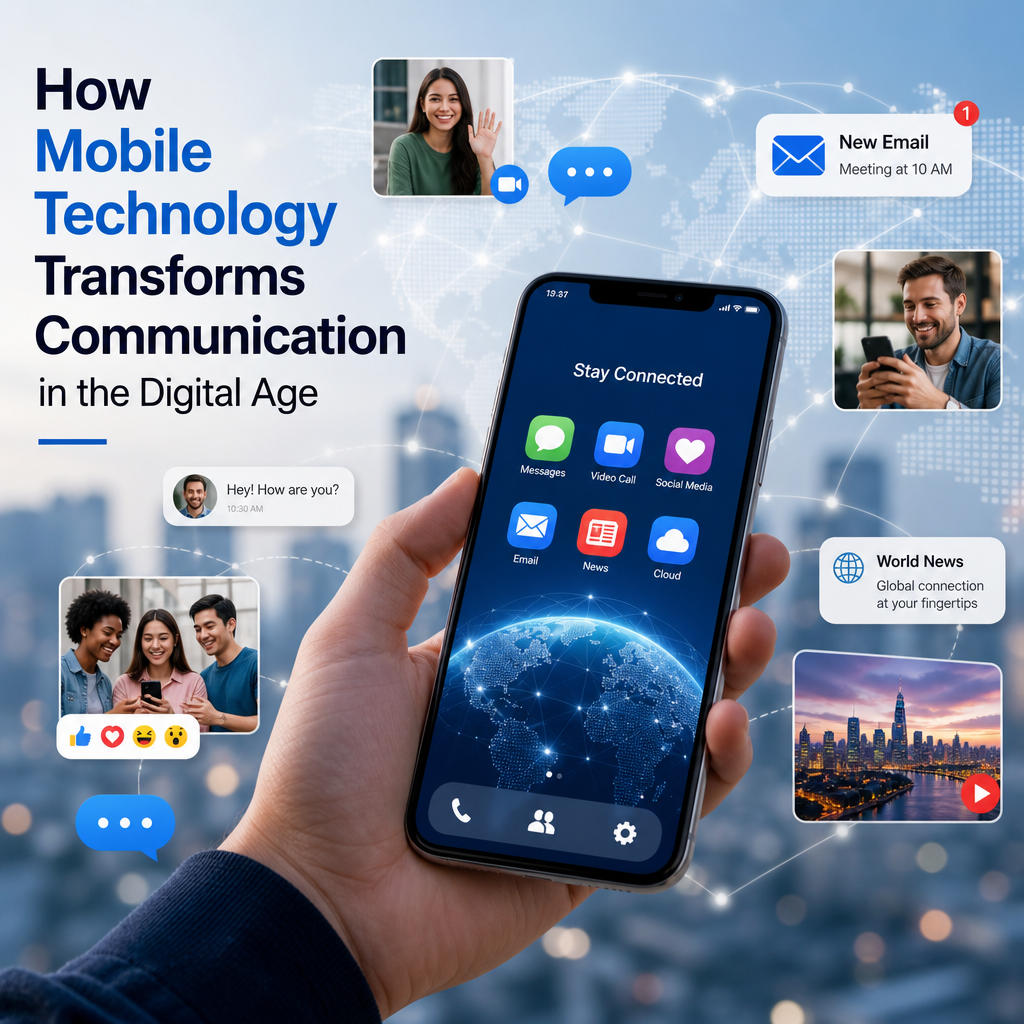
How Mobile Technology Transforms Communication in the Digital Age
Mobile technology has made communication faster, easier, and more personal than ever before. From instant messages to video calls on the go, it continues to reshape how we connect at home, at work, and everywhere in between.
By: Peter B on julho 30, 2026
Mobile technology has changed the way people connect, share, and respond in everyday life. From quick text messages to real-time video calls, the shift has been dramatic and lasting. How mobile technology continues to transform communication is not just a tech trend—it is a fundamental change in how we work, maintain relationships, and access information.
What used to require a landline, desktop computer, or face-to-face meeting can now happen from a pocket-sized device. That convenience has reshaped personal communication, business operations, customer service, education, and even emergency response. As smartphones, tablets, mobile apps, and 5G networks continue to evolve, communication becomes faster, more flexible, and more interactive.
How Mobile Technology Continues to Transform Communication in Daily Life
Mobile devices have made communication more immediate and more accessible than ever before. A message can be sent in seconds, a video call can bridge thousands of miles, and a group chat can keep families, friends, and teams connected throughout the day.
Instant communication has become the norm
Before mobile technology, people often had to wait until they were home or near a phone to connect. Today, communication happens on the go.
Common examples include:
Sending texts, voice notes, and photos instantly
Joining video calls from anywhere with a signal
Sharing location updates in real time
Receiving alerts and reminders through mobile apps
This immediacy has changed expectations. People now assume that messages will be seen quickly, and many conversations happen asynchronously, allowing flexibility without losing momentum.
Communication is no longer limited by location
One of the biggest benefits of mobile technology is mobility itself. People can stay connected while commuting, traveling, working remotely, or managing family responsibilities.
This matters because it supports:
Remote and hybrid work
Long-distance relationships
Emergency coordination
Travel planning and navigation
Access to local and global communities
The result is a communication environment that is both more personal and more global.
How Mobile Technology Continues to Transform Communication at Work
In business, mobile technology has become essential. Teams use smartphones and mobile apps to collaborate, respond to customers, and manage projects without being tied to a desk.
Mobile communication supports faster decision-making
When employees can access email, chat platforms, calendars, and file-sharing tools from their phones, they can act more quickly. This can improve productivity and reduce delays.
For example:
A project manager reviews a client note while traveling.
A sales representative updates a proposal from a tablet.
A support agent responds to a customer issue through a mobile ticketing app.
A team member joins a last-minute video meeting from a coffee shop.
These small moments add up to a more responsive workplace.
Collaboration tools work wherever people are
Mobile technology has made collaboration more fluid. Instead of waiting until everyone is at their desks, teams can use apps like Microsoft Teams, Slack, Zoom, Google Workspace, and similar tools to keep work moving.
This supports:
Real-time messaging
Shared documents and cloud access
Video conferencing
Task tracking and approval workflows
File uploads from mobile cameras and scanners
For many companies, this flexibility helps teams stay connected across time zones and work styles.
Customer communication has become more personal
Businesses no longer communicate with customers only through phone calls or email. Mobile technology enables a more immediate and personalized experience.
Examples include:
Appointment reminders by text
In-app customer support
Push notifications for updates or promotions
Mobile-friendly chatbots
Two-way communication through messaging platforms
This creates more convenient service while helping businesses stay visible and responsive.
The Role of Social Media in Mobile Communication
Social media platforms have played a major role in the rise of mobile communication. Most users now access social media through mobile devices, which makes sharing and engagement constant and highly interactive.
Mobile-first platforms shape how people interact
Apps such as Instagram, TikTok, Facebook, WhatsApp, Snapchat, and LinkedIn are designed for quick, touch-based interaction. That design encourages:
Short-form content
Live updates
Direct messaging
Easy photo and video sharing
Instant reactions and comments
As a result, communication has become more visual, faster, and often more conversational than traditional online formats.
Information spreads faster through mobile networks
News, announcements, and cultural trends often reach people first through mobile social platforms. This speed can be helpful, especially in emergencies or public awareness campaigns.
However, it also means users must be more careful about:
Verifying sources
Avoiding misinformation
Managing digital overload
Protecting privacy
Mobile technology makes communication more open, but it also requires more media literacy.
How Mobile Technology Continues to Transform Communication in Education
Education has also benefited significantly from mobile technology. Students and teachers now use mobile devices to communicate, learn, and share resources in ways that were not possible before.
Learning happens beyond the classroom
With mobile access, learning is no longer confined to a school building. Students can:
Message teachers with questions
Access assignments through learning apps
Join virtual classes
Review digital flashcards
Watch instructional videos on demand
This flexibility supports different learning styles and helps students stay engaged outside class time.
Parents and schools communicate more efficiently
Schools increasingly use mobile apps, text alerts, and portals to keep parents informed. This can improve attendance, safety, and academic support.
Useful examples include:
Attendance notifications
Event reminders
Grade updates
Bus tracking
Emergency alerts
Mobile communication helps families stay involved without needing constant in-person contact.
Mobile Communication and the Evolution of Relationships
Personal relationships have changed just as much as professional ones. Mobile technology has made it easier to maintain contact, but it has also changed the rhythm and expectations of communication.
Staying in touch is easier than ever
Families and friends can keep close through:
Group chats
Photo and video sharing
Voice memos
Video calls
Social media posts and stories
Even people separated by distance can feel part of one another’s daily lives.
Communication can be more frequent but less formal
Mobile communication often feels casual and continuous. That can make relationships more relaxed and accessible, but it can also blur boundaries.
For example:
A text may feel more immediate than an email
Read receipts can create pressure to respond quickly
Constant access may make it harder to disconnect
Short messages can sometimes cause misunderstandings
Healthy communication now includes knowing when to engage, when to pause, and how to use mobile tools respectfully.
Emerging Mobile Technologies That Are Changing Communication
The future of communication is being shaped by new mobile capabilities. These tools do more than speed up existing habits—they create entirely new ways to interact.
5G improves speed and reliability
Faster mobile networks allow smoother video calls, quicker downloads, and better performance for communication apps. That makes mobile interactions more reliable in busy environments and remote areas with the right infrastructure.
AI-powered tools are becoming more common
Artificial intelligence is increasingly built into mobile communication platforms. Examples include:
Smart reply suggestions
Voice-to-text transcription
Chatbots for customer service
Translation tools
Personalized content recommendations
These features help people communicate across languages, time zones, and busy schedules.
Wearables extend mobile communication
Smartwatches and other wearable devices make it possible to receive calls, messages, and alerts without picking up a phone. This is especially useful for quick updates, health monitoring, and hands-free communication.
Benefits and Challenges of Mobile Communication
Like any major technology shift, mobile communication has advantages and trade-offs. Understanding both helps people use it more effectively.
Key benefits
Mobile technology offers several clear benefits:
Convenience: Communicate anywhere, anytime
Speed: Send and receive information instantly
Flexibility: Work and connect across locations
Accessibility: Support for users with different needs
Engagement: More interactive and visual communication
Common challenges
At the same time, mobile communication can create problems:
Notification fatigue
Reduced attention span
Privacy concerns
Miscommunication through short messages
Dependence on connectivity and battery life
In addition, constant access can make it harder for people to separate work from personal time. Managing mobile communication well often requires boundaries and intentional habits.
Best Practices for Smarter Mobile Communication
Using mobile technology effectively means more than just staying connected. It also means communicating clearly, securely, and respectfully.
1. Match the message to the medium
Not every message belongs in a text. Use the right channel for the situation:
Text for quick updates
Email for formal communication
Video call for detailed conversations
Phone call for urgent or sensitive issues
Choosing the right format can reduce confusion.
2. Keep messages clear and concise
Mobile screens are small, and people often read messages quickly. Strong mobile communication is usually brief, direct, and easy to understand.
A good mobile message should:
State the purpose early
Avoid unnecessary jargon
Include action steps if needed
Use plain language
3. Protect privacy and security
Mobile communication often involves personal, financial, or business information. To reduce risk:
Use strong passwords and biometrics
Enable two-factor authentication
Avoid public Wi-Fi for sensitive tasks
Review app permissions
Be cautious with links and attachments
4. Set boundaries around availability
Being reachable all the time is not always healthy or productive. Consider setting specific times for checking messages and turning off nonessential alerts.
That helps with:
Better focus
Lower stress
Improved work-life balance
More thoughtful responses
Frequently Asked Questions
1. How mobile technology continues to transform communication in everyday life?
Mobile technology makes communication faster, more flexible, and more accessible. People can send messages, join video calls, share media, and receive updates from almost anywhere, which changes how they interact at home, at work, and in public spaces.
2. Why is mobile communication important for businesses?
Businesses rely on mobile communication to respond quickly, collaborate across locations, and serve customers more efficiently. Mobile tools help teams manage tasks, communicate in real time, and stay productive outside the office.
3. What are the main benefits of mobile communication?
The biggest benefits include convenience, speed, flexibility, and broader access to communication tools. Mobile technology also supports remote work, education, and instant collaboration.
4. What challenges come with mobile communication?
Common challenges include distractions from constant notifications, privacy risks, overuse, and misunderstandings caused by short messages. Good communication habits and security practices help reduce these issues.
5. How will mobile technology continue to shape communication in the future?
Mobile communication will likely become even more interactive through faster networks, artificial intelligence, wearable devices, and improved app experiences. These advances will make communication more seamless, personalized, and accessible.
Mobile technology has transformed communication in ways that are both practical and profound. It has made it easier to stay in touch, collaborate across distances, respond to customers quickly, and access information on demand. Whether through texting, video calls, social media, mobile apps, or workplace tools, communication has become more immediate and more flexible than ever before.
At the same time, effective mobile communication requires intention. People and organizations benefit most when they choose the right platform, protect privacy, reduce distractions, and set healthy boundaries. The goal is not just to communicate more often, but to communicate better.
As mobile networks, AI tools, and connected devices continue to evolve, the way we share information will keep changing. Staying informed about these shifts can help you communicate more clearly, work more efficiently, and build stronger personal and professional relationships. The next step is simple: use mobile technology thoughtfully, and it can become one of the most powerful communication tools in your daily life.
Peter B holds a degree in Journalism and has 5 years of experience covering U.S. economic policy, labor markets, and financial news. He writes data-driven news content on topics like inflation, interest rates, and employment trends.