Consumer Technology 2026: Smart Devices Changing Daily Life
Consumer technology in 2026 is no longer just about convenience. It is shaping how people wake up, work, communicate, shop, relax, and even manage their health. From AI-powered home assistants to wearables that track wellness in real time, smart devices are becoming more useful, more connected, and more integrated into everyday routines.
The biggest shift in consumer technology 2026 is not just that devices are smarter. It is that they are becoming more proactive. Instead of waiting for instructions, many of today’s smart devices learn habits, anticipate needs, and reduce friction in daily life. That change is making technology feel less like a tool and more like a helpful layer in the background of modern living.
Consumer Technology 2026: What’s Different Now?
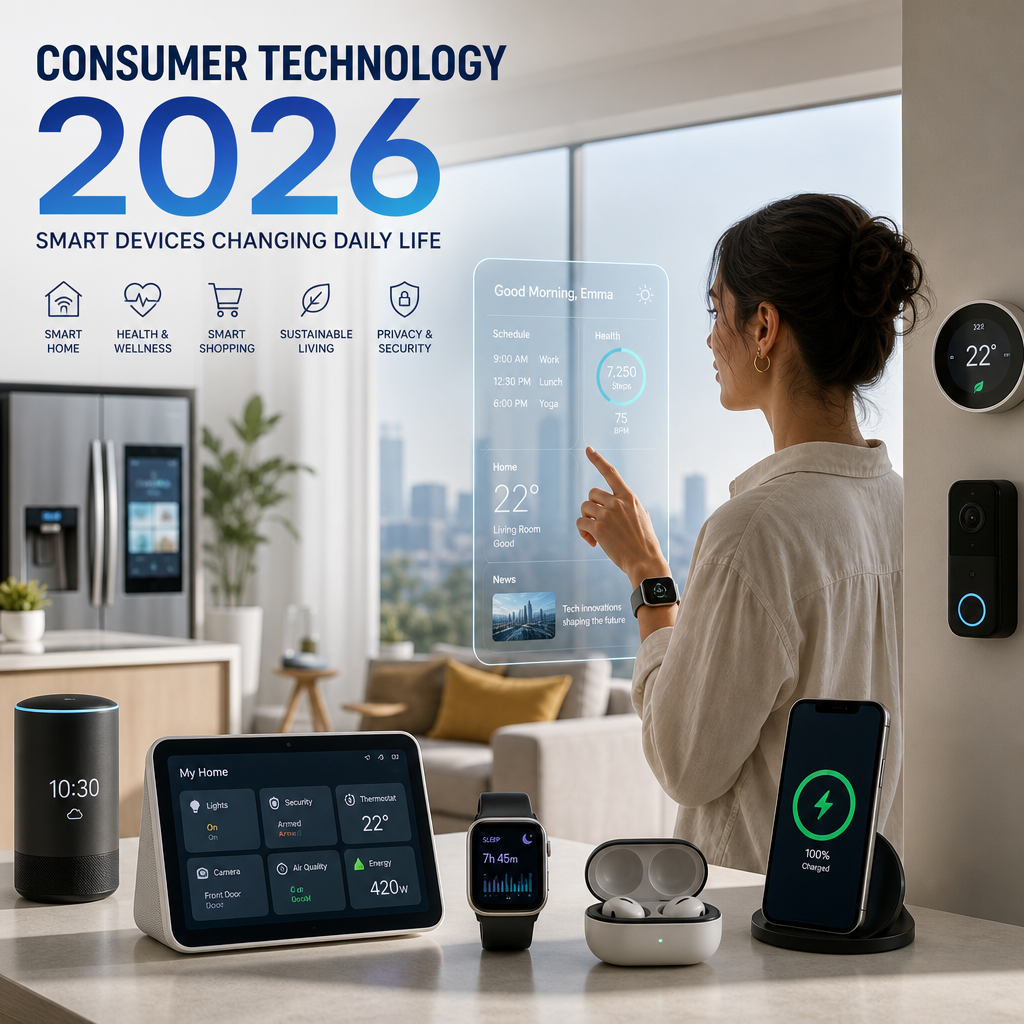
A few years ago, many smart gadgets felt impressive but optional. In 2026, they are increasingly practical. Consumers expect devices to save time, simplify decisions, and work seamlessly across platforms.
From connected to truly intelligent
Earlier smart devices mostly followed commands. Today, AI-enabled products can:
- Adjust settings based on usage patterns
- Sync with other devices automatically
- Send helpful alerts before problems grow
- Learn preferences over time
- Offer personalized suggestions without constant input
This is especially visible in smart homes, wearables, mobile devices, and personal productivity tools. The result is a more personalized and efficient digital experience.
More emphasis on interoperability
People now want devices that work together without a complicated setup. A smart thermostat, security camera, voice assistant, and wellness wearable should communicate easily across ecosystems. That demand is driving better compatibility standards and more unified app experiences.
For consumers, this means fewer frustrations and less time managing technology. For brands, it means designing products that fit into a broader digital lifestyle.
Smart Home Devices Are Becoming Everyday Helpers
The smart home remains one of the clearest examples of how consumer technology 2026 is changing daily life. These devices are no longer novelty items for tech enthusiasts. They are increasingly useful household tools.
Voice assistants do more than answer questions
Voice assistants have evolved from simple Q&A tools into home control hubs. In many homes, they now help with:
- Setting reminders and family calendars
- Controlling lights, locks, and thermostats
- Managing shopping lists
- Playing music and podcasts
- Coordinating routines such as bedtime or morning wake-up sequences
A practical example: a family can set a morning routine where the lights brighten, the coffee maker starts, the weather is announced, and the day’s calendar events are read aloud. That kind of automation saves small amounts of time that add up quickly.
Energy management is getting smarter
Smart thermostats, plugs, blinds, and appliances are helping users manage energy use more efficiently. They can learn when rooms are occupied, reduce waste, and suggest settings that match household routines.
This matters because consumers increasingly care about cost control and sustainability. Smart technology can make those goals easier to achieve without sacrificing comfort.
Security becomes more accessible
Smart doorbells, motion sensors, indoor cameras, and app-based locks are giving homeowners and renters more awareness and control. Key benefits include:
- Real-time alerts
- Remote access while away from home
- Activity logs for deliveries and visitors
- Easier monitoring of package theft or unusual movement
The best systems balance convenience with privacy controls, which is becoming a major consumer expectation.
Wearable Tech Is Turning Health Into a Daily Habit
Wearables are one of the fastest-evolving categories in consumer technology 2026. Smartwatches, rings, and fitness bands are helping users track important health signals in a way that feels more natural than traditional checkups alone.
Wellness tracking is more personalized
Modern wearables can monitor things like:
- Heart rate trends
- Sleep quality
- Activity levels
- Stress indicators
- Menstrual cycle insights
- Recovery patterns after exercise
The value is not just the data itself. It is the ability to spot patterns and make better decisions. For example, someone might notice that late caffeine, inconsistent bedtime routines, or work stress affects sleep quality. That insight can lead to simple behavior changes with real impact.
Wearables support preventive habits
One of the biggest advantages of wearable tech is timely feedback. Instead of waiting for a problem to become obvious, users can see trends early and act sooner.
Examples include:
- Reminders to move after long periods of sitting
- Alerts for irregular heart rhythm patterns
- Breathing exercises when stress rises
- Sleep recommendations based on bedtime consistency
These devices do not replace medical care, but they can support healthier routines and encourage more informed conversations with health professionals.
The new focus: comfort and design
In 2026, wearable technology is also becoming more discreet and comfortable. Consumers want devices that fit into everyday life without drawing attention. Smaller form factors, better battery life, and more durable materials are helping wearables feel like natural extensions of the body rather than bulky gadgets.
Mobile Devices Are Smarter Personal Assistants
Smartphones remain central to consumer technology 2026, but their role has shifted. They are no longer just communication devices. They are personal command centers.
AI on the phone is becoming more practical
On-device and cloud-assisted AI are improving tasks people use every day, such as:
- Summarizing messages and emails
- Organizing photos and files
- Creating reminders from conversations
- Translating content in real time
- Improving voice dictation and search
This saves time and reduces digital overload. Instead of spending minutes digging through apps, users can ask for what they need and get there faster.
Better privacy controls matter more than ever
As mobile devices become more capable, users are paying closer attention to data collection. Strong privacy controls, permission settings, and security updates are now a major part of the value proposition.
People want the benefits of smart features without feeling watched or overexposed. That is pushing manufacturers to be more transparent about how data is stored and used.
The phone as a remote for everyday life
Many consumers now use smartphones to manage:
- Home appliances
- Car settings and charging
- Payments and loyalty programs
- Travel check-ins and boarding passes
- Family coordination and shared calendars
This makes the smartphone less of a standalone device and more of a control center for modern routines.
Smart Appliances Are Saving Time in the Kitchen and Laundry Room
One of the clearest consumer benefits of smart tech is convenience in everyday chores. Smart appliances are helping households reduce guesswork and improve consistency.
Kitchen technology is getting more helpful
Smart ovens, refrigerators, coffee makers, and dishwashers are adding features that support busy schedules. They can:
- Suggest cooking settings
- Send maintenance alerts
- Track supplies or expiration dates
- Start remotely
- Adjust timing based on routines
For a parent managing dinner after work, a smart oven that preheats on schedule and sends a completion alert can make the difference between a rushed meal and a smoother evening.
Laundry and cleaning are becoming more automated
Connected washers, dryers, robot vacuums, and mop systems are taking on more repetitive tasks. Some can map rooms, optimize cleaning paths, or notify users when cycles finish.
These improvements may seem small, but they reduce the mental load of household management. In a world where people are constantly balancing work, family, and personal life, that matters.
Smart Cars and Transportation Tech Are Changing Commutes
Consumer technology 2026 is not limited to the home. Transportation is another area where smart devices are making a noticeable difference.
Cars are turning into connected environments
Many vehicles now include features such as:
- App-based remote start and climate control
- Navigation with live traffic updates
- Driver assistance tools
- Voice-controlled infotainment
- Charging and maintenance notifications for EVs
These systems improve convenience, but they also help drivers make more informed decisions while on the road.
Micromobility and app-based travel continue to grow
Scooters, e-bikes, rideshare platforms, and transit apps are making local travel more flexible. The appeal is not just speed. It is the ability to choose the right mode of transportation for each trip.
This flexibility helps consumers save time, reduce reliance on single-car ownership in some areas, and adapt more easily to changing schedules.
The Rise of Ambient Computing
A major theme in consumer technology 2026 is ambient computing. This refers to technology that blends into the background and responds to context instead of demanding constant attention.
What ambient computing looks like in practice
It may include:
- A home that adjusts lighting automatically based on the time of day
- A wearable that nudges you to stretch after a long meeting
- A phone that suggests travel time before a calendar appointment
- A kitchen device that updates you when food is ready
- A security system that distinguishes normal routines from unusual activity
The goal is not more screen time. It is less friction. Devices should quietly support users without adding complexity.
Why it matters for consumers
Ambient computing works because it respects attention. Instead of forcing people to manage every detail manually, the system reduces repeated tasks and supports natural behavior.
That can make technology feel more human and less invasive when designed well.
Challenges Consumers Still Need to Watch
Even with all the progress, smart devices are not perfect. Understanding the tradeoffs is part of making better buying decisions.
Privacy and data use
Smart devices often collect data to deliver personalized features. Consumers should review:
- What data the device collects
- Whether data is stored locally or in the cloud
- How to disable certain tracking features
- Whether the manufacturer provides regular security updates
A useful device should not require giving up more information than necessary.
Compatibility and subscription costs
Some products work best only within a specific ecosystem. Others require monthly fees for advanced features, storage, or monitoring. Before buying, check whether:
- The device works with existing platforms
- Core features require a subscription
- Updates are included
- Accessories are proprietary or universal
These details can affect long-term value more than the sticker price.
Too much automation can create dependence
Smart devices should simplify life, not make people helpless when apps fail or the internet goes down. It is still wise to keep manual backups for important functions, such as home access, essential routines, and emergency communication.
How to Choose Smart Devices That Actually Help
With so many options in consumer technology 2026, smart shopping matters. A good device should solve a real problem rather than add complexity.
Ask these questions before buying
- What specific task will this device improve?
- Does it fit with my current devices and apps?
- Is the setup process manageable?
- How is privacy handled?
- Will I still find it useful a year from now?
Look for practical features
The best smart devices usually have:
- Clear benefits
- Simple controls
- Reliable performance
- Strong security support
- Good customer reviews from verified users
- Long-term software update policies
Start small and build gradually
If you are new to smart home or wearable tech, begin with one device that solves a real pain point. For example:
- A smart thermostat for energy management
- A smartwatch for fitness and notifications
- A robot vacuum for daily cleaning
- A smart plug for lamps or small appliances
This approach helps you learn what works before investing in a larger ecosystem.
Conclusion
Consumer technology 2026 is reshaping daily life in practical, meaningful ways. Smart devices are becoming better at anticipating needs, reducing repetitive tasks, and supporting healthier, more connected routines. Whether it is a wearable that helps you understand your sleep, a home system that manages energy use, or a phone that acts as a personal assistant, the most valuable technology now feels useful rather than flashy.
At the same time, smart buying still matters. Consumers should look for devices that are secure, compatible, and genuinely helpful in everyday situations. The best technology does not demand more attention; it gives people more time, clarity, and control.
As smart devices continue to evolve, the key is to choose tools that fit your life, not the other way around. Start with one area where convenience, health, or efficiency matters most, and build from there. That thoughtful approach will help you get more value from consumer technology 2026 while avoiding unnecessary complexity.
Frequently Asked Questions
1. What does consumer technology 2026 mean?
Consumer technology 2026 refers to the latest devices and digital tools designed for everyday use, including smart home products, wearables, mobile devices, connected appliances, and AI-powered assistants. The phrase highlights how modern technology is becoming more intelligent, more personalized, and more integrated into daily routines.
2. Which smart devices are most useful in daily life?
The most useful smart devices usually solve a clear problem. Popular examples include smart thermostats, smart speakers, wearables, robot vacuums, video doorbells, and smartphones with AI features. The best choice depends on your needs, such as saving time, improving security, supporting health, or simplifying household chores.
3. Are smart devices safe to use?
Smart devices can be safe when users choose reputable brands, keep software updated, and review privacy settings carefully. It is important to check what data the device collects and whether the manufacturer provides security support. Devices with strong encryption, two-factor authentication, and transparent privacy policies are usually better choices.
4. Do I need a smart home ecosystem for these devices?
Not always. Some devices work well on their own, while others offer the best experience when connected to a larger ecosystem. If you want multiple devices to work together smoothly, choosing compatible platforms can help. If you only need one or two tools, standalone options may be enough.
5. How can I avoid wasting money on smart technology?
Start by identifying a real need. Look for devices that solve a specific issue, fit your existing setup, and do not depend on expensive subscriptions for core features. Read product specifications carefully, compare reviews from trusted sources, and avoid buying gadgets simply because they sound innovative.
Official Resources
- Federal Trade Commission: Consumer Information
- National Institute of Standards and Technology: Cybersecurity
- U.S. Department of Energy: Energy Saver
- Centers for Disease Control and Prevention: Health Information
- Consumer Reports: Tech and Electronics
Conclusion
Consumer technology 2026 is making everyday life more efficient, more connected, and in many cases more comfortable. Smart devices are no longer limited to early adopters or tech hobbyists. They are now practical tools that help people manage homes, improve wellness, streamline commutes, and reduce small daily frustrations. The biggest wins come from technology that quietly supports routines instead of demanding constant attention.
If you are thinking about adopting more smart devices, focus on usefulness first. Choose products that solve a real problem, work with your existing setup, and offer solid privacy and security protections. That approach will help you avoid clutter and get more value from your investment.
The future of consumer technology is not about adding more screens or more noise. It is about making everyday life smoother, safer, and more personalized. As new devices continue to arrive in 2026, the smartest move is to stay informed, start small, and select tools that genuinely improve the way you live, work, and rest.