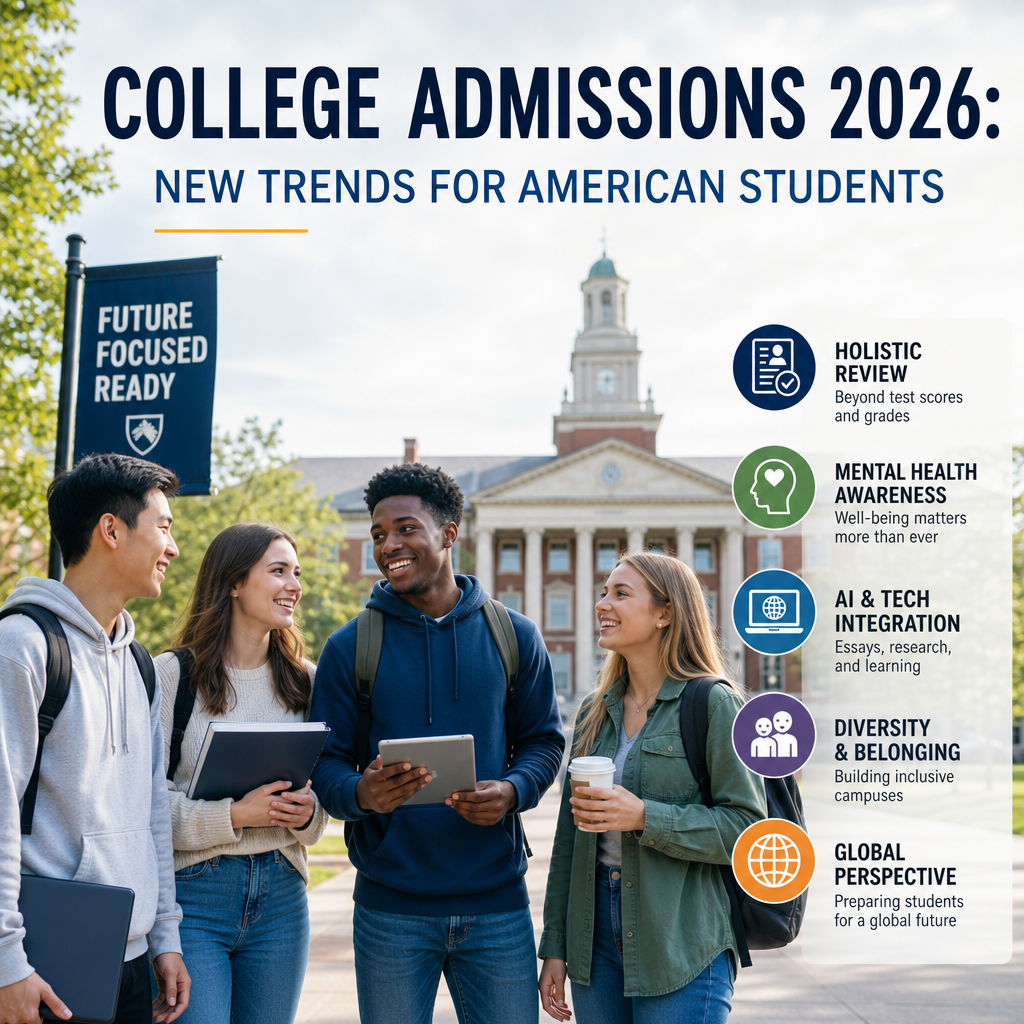
College Admissions 2026: New Trends for American Students
College admissions trends in 2026 are reshaping how American students choose schools, prepare applications, and weigh costs. With testing policies in flux and colleges looking more closely at fit, authenticity, and financial value, smart planning matters more than ever.
By: Jennifer Collins on julho 30, 2026
College admissions 2026 looks different from the process many families remember even a few years ago. Test policies have shifted, colleges are leaning harder into holistic review, and students are paying closer attention to fit, affordability, and long-term outcomes. For American students, that means the old playbook is no longer enough.
The good news? The changing landscape can work in a student’s favor. If applicants understand the latest college admissions trends, they can build stronger applications, make smarter school lists, and avoid common mistakes that hurt chances later in the process.
What College Admissions 2026 Looks Like Right Now
The college admissions process in 2026 is shaped by a mix of technology, changing institutional priorities, and stronger student demand for value. Colleges still care about academics, but they also want to understand how students will contribute to campus life, persist through challenges, and use their education well after graduation.
A few broad shifts stand out:
Test-optional and test-flexible policies remain influential at many schools.
Demonstrated interest matters more at some institutions than families expect.
Colleges are paying attention to authenticity in essays and activities.
Financial fit is becoming a central part of the application strategy.
Students are applying more strategically, not just to the most selective schools.
These trends affect every stage of the application process, from list building to final enrollment decisions.
The Biggest College Admissions 2026 Trends
1. Testing is still in flux
Standardized testing has not disappeared, but its role continues to vary by school. Some colleges remain test-optional, some have reinstated test requirements, and others have adopted flexible approaches. That means students need to check each college’s current policy carefully.
For applicants, this creates a more personalized decision:
Strong test scores can still help at many colleges.
Weak scores may be better left out when a school is test-optional.
Some scholarship programs still use scores in awarding aid.
Competitive majors may weigh academic metrics more heavily.
The smartest move is to treat testing as one part of the application rather than the whole strategy.
2. Admissions offices want clearer evidence of fit
Colleges are looking for students who understand their academic culture and campus environment. In practice, this means generic applications stand out less than thoughtful ones.
Students should show fit by:
Referencing specific academic programs
Mentioning relevant clubs, research, or service opportunities
Explaining why the school matches their goals
Connecting their interests to campus resources
For example, a student interested in environmental policy can strengthen an application by pointing to a sustainability institute, undergraduate research opportunities, or a service-learning program rather than simply saying the college has “a strong reputation.”
3. Activities lists are being read for depth, not just quantity
In college admissions 2026, students should not assume that a long list of clubs automatically impresses admissions officers. Schools want evidence of commitment, leadership, initiative, and growth.
A few meaningful activities often matter more than a crowded résumé. Admissions readers notice when a student:
Stays involved over time
Takes on increasing responsibility
Creates something new
Demonstrates impact in a community
Connects activities to future goals
A student who spends years mentoring younger coders, for instance, may present a stronger story than someone who joined six clubs but never took on real responsibility.
4. Essays are becoming more important as a voice of authenticity
With many schools reviewing applications holistically, essays often help reveal who a student is beyond grades and test scores. That makes authenticity more valuable than polished but hollow writing.
Strong essays in 2026 tend to:
Sound like a real person wrote them
Focus on a meaningful moment or lesson
Show reflection rather than simple description
Avoid trying too hard to sound impressive
Connect experiences to values or growth
Students should resist the temptation to write what they think admissions officers want to hear. A specific, honest essay usually leaves a better impression than a broad, overly curated one.
5. Financial aid strategy starts earlier
The cost of college remains a major concern for American families, and admissions strategy now includes affordability from the start. Students are comparing net price, merit aid, need-based aid, and scholarship opportunities before they even submit applications.
That means families should:
Use each college’s net price calculator.
Research merit scholarships separately.
Watch application deadlines for aid forms.
Compare likely debt after graduation.
Build a balanced list of affordable options.
The best admissions plan is one that leads to schools the student can realistically attend without creating unnecessary financial stress.
How Students Can Build a Stronger Application in 2026
Focus on academic consistency
Colleges still value rigorous coursework. Students should challenge themselves without overloading to the point that grades suffer. A thoughtful course schedule in high school can signal readiness better than a last-minute push.
A strong academic profile usually includes:
Solid grades over time
Increasing challenge in core subjects
Relevant electives tied to interests
Good writing and communication skills
Evidence of intellectual curiosity
If a student’s transcript has a weak spot, the rest of the application should help explain growth, resilience, or a clearer academic direction.
Build a narrative, not just an inventory
One of the most effective ways to approach college admissions 2026 is to think in terms of a story. What themes connect the student’s classes, activities, experiences, and goals?
For example:
A future engineer might show problem-solving through robotics, math tutoring, and a community design project.
A student interested in public health might combine volunteer work, biology coursework, and writing about equity in healthcare.
A future artist could demonstrate persistence through exhibitions, digital design, and independent creative work.
When the application feels connected, it becomes easier for admissions readers to understand the student’s direction.
Be intentional about recommendation letters
Teachers and counselors still play an important role in the process. Students should ask recommenders who know them well and can speak to more than grades.
Helpful recommendation letters often describe:
How the student engages in class
Intellectual habits and curiosity
Leadership or teamwork
Character and perseverance
Contributions to the school community
Students can help by giving recommenders enough time, a resume or activity summary, and a brief note about their goals. That context can lead to stronger, more specific letters.
College Search in 2026: Smarter, More Personalized, and More Data-Aware
The college search process has also changed. Students and families now have better access to information, but that can make the process feel overwhelming. The key is to use data without losing sight of personal fit.
Use data, but don’t overtrust rankings
College rankings can be useful as one input, but they should not dominate the decision. A school’s prestige means little if it is too expensive, too large, too isolated, or misaligned with the student’s goals.
Instead, families should compare:
Major availability
Graduation pathways
Internships and career support
Campus size and environment
Aid packages and total cost
Student outcomes that matter personally
A college that fits a student’s academic style and budget may provide a better outcome than a more selective school that does not.
Visit campuses and connect virtually
In-person visits still help students understand a campus culture, but virtual events continue to be useful for families who cannot travel easily. Admissions offices often offer online information sessions, student panels, and department-specific presentations.
Students can use visits to ask questions like:
What do first-year students say they wish they knew?
How accessible are professors?
What support exists for internships and career planning?
What kind of student thrives here?
These questions give a more honest picture than brochures alone.
What Parents and Families Should Know
Families can support the process without taking over it. In 2026, many colleges want to see student ownership, while still recognizing that parents play a major role in logistics and planning.
Parents can help most by:
Keeping deadlines organized
Reviewing financial aid forms carefully
Encouraging balance and realism
Helping compare college costs
Listening before giving advice
The most useful role is often that of coach, not project manager. Students need room to make decisions, learn from setbacks, and explain their own goals.
Common Mistakes to Avoid in College Admissions 2026
Even strong students can lose momentum by making avoidable mistakes. Here are some of the biggest ones:
Submitting generic applications
When essays and supplemental responses sound copied and pasted, colleges notice. Each school deserves a tailored answer that shows real interest.
Chasing only selective schools
Applying only to highly selective colleges can create unnecessary stress and reduce chances of success. A balanced list should include reach, target, and likely schools.
Ignoring affordability until the end
If a family waits until acceptance letters arrive to think about cost, they may face difficult choices. Financial planning should happen throughout the process.
Underestimating deadlines
Admissions calendars vary, and some aid deadlines arrive earlier than expected. Missing one can affect consideration for scholarships or priority review.
Letting social media define the process
Online chatter can create unrealistic expectations. A college that is perfect for one student may be a poor match for another.
A Practical College Admissions 2026 Timeline
Here is a simple way to stay organized:
Spring of junior year: Review academic progress, test plans, and college interests.
Summer before senior year: Draft essays, research schools, and narrow the list.
Early fall: Finalize applications and request recommendations.
Fall and winter: Submit applications and financial aid forms on time.
Spring: Compare offers, revisit top choices, and make the final decision.
Students who start early usually have more options and less stress.
Frequently Asked Questions
Is standardized testing still required for college admissions 2026?
It depends on the school. Some colleges remain test-optional, while others require SAT or ACT scores again. Students should check each college’s official admissions policy and consider whether their scores strengthen the application. Even when scores are optional, they may still help with scholarships or placement.
What matters most in college admissions 2026?
There is no single factor that matters most at every college. Admissions offices usually review grades, course rigor, essays, activities, recommendations, and sometimes test scores together. The strongest applications show academic readiness, personal growth, and a clear sense of fit with the school.
How many extracurricular activities should students include?
Quality matters more than quantity. Students should highlight activities where they spent significant time, showed leadership, or made an impact. A focused list with depth often looks stronger than a long list of shallow involvement. Admissions officers want to see commitment and initiative.
Are college essays more important now than before?
For many schools, yes. As admissions become more holistic and test policies vary, essays help colleges understand who a student is beyond grades. A strong essay does not need flashy language. It should be specific, reflective, and authentic.
How can families make college more affordable?
Families can start by using net price calculators, researching scholarships, and comparing aid offers carefully. It also helps to include a mix of schools with different tuition levels and scholarship opportunities. Planning early gives families more control over final costs and reduces surprises later.
College admissions 2026 rewards students who are thoughtful, organized, and authentic. The process is no longer about following a single formula or chasing the most selective name on a brochure. Instead, students need to focus on fit, academic strength, meaningful involvement, and affordability. Colleges want to see not just what a student has done, but who that student is becoming.
For American students, that creates both pressure and opportunity. A well-planned application can stand out because it tells a clear story, shows genuine interest, and reflects careful decision-making. Families who start early, research financial aid, and avoid generic applications will be better positioned to make confident choices.
The best next step is simple: build a balanced college list, keep deadlines organized, and approach every part of the process with intention. In a changing admissions landscape, clarity and preparation are powerful advantages.
Jennifer, M.Ed., holds a degree in Higher Education Administration, with
a focus on U.S. college financial aid, admissions policy, and student
support systems. She researches and writes about scholarships, federal
aid programs, and the college planning process to help students and
families make informed, well-supported decisions.