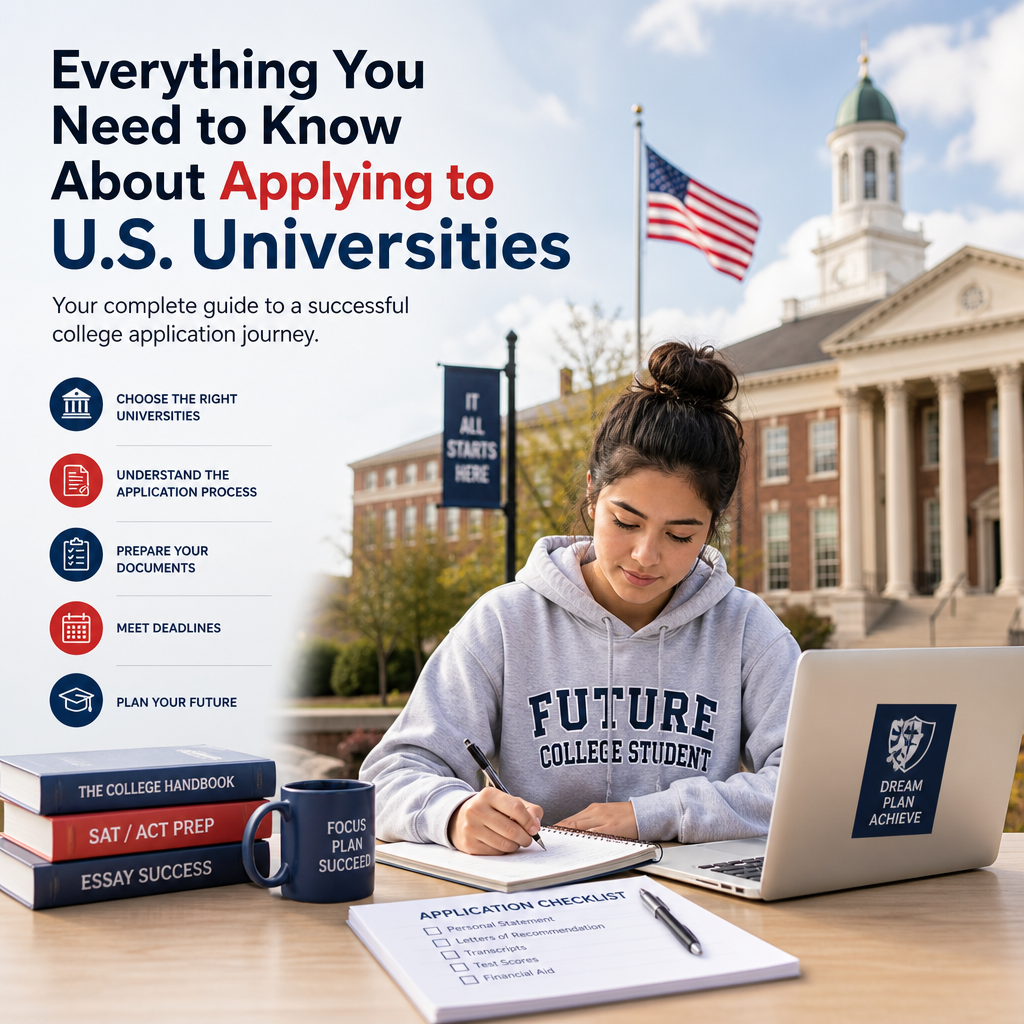
Everything You Need to Know About Applying to U.S. Universities
Applying to US universities can seem overwhelming at first, but the process becomes much easier when you know what to expect. This guide walks you through each step, from choosing schools and preparing documents to submitting a strong application with confidence.
By: Jennifer Collins on julho 30, 2026
Applying to U.S. universities can feel exciting, overwhelming, and full of moving parts all at once. Between choosing schools, writing essays, gathering documents, and meeting deadlines, it helps to have a clear plan. The good news is that the process is manageable when you break it into steps and understand what admissions offices are actually looking for.
Whether you are applying as a first-year student, transfer student, or international applicant, this guide covers the essentials of applying to U.S. universities—from researching colleges to submitting your application and preparing for the next steps. Along the way, you’ll also learn how to avoid common mistakes and present your strongest possible application.
Understanding the U.S. University Application Process
The application process in the United States is different from what many students are used to in other countries. Most U.S. universities review more than just grades. They often look at a combination of academic performance, extracurricular involvement, essays, recommendations, and sometimes test scores.
What admissions officers typically review
While every school is different, most admissions teams consider:
Your high school or previous college transcript
GPA and course rigor
Standardized test scores, if required or submitted
Personal statement or application essays
Letters of recommendation
Extracurricular activities, leadership, and service
Demonstrated interest, at some schools
Portfolios, auditions, or interviews for certain programs
A strong application tells a complete story. Admissions readers want to understand not only what you have achieved, but also how you think, what you care about, and how you might contribute to campus life.
Types of U.S. universities
Before you apply, it helps to know the main categories of schools:
Public universities: State-funded institutions often with large student populations and lower tuition for in-state residents
Private universities: Funded by tuition and donations; may offer smaller class sizes and more financial aid options
Liberal arts colleges: Smaller schools focused on undergraduate education and broad academic exploration
Community colleges: Two-year institutions that can lead to transfer opportunities or associate degrees
Research universities: Large schools with extensive graduate programs and research opportunities
Choosing the right type of institution is one of the most important parts of applying to U.S. universities.
How to Choose the Right U.S. Universities
A thoughtful college list can make the entire application process much easier. Instead of applying to random schools, focus on fit.
Factors to consider
When building your list, look at:
Academic programs and majors
Campus size and location
Cost of attendance
Financial aid and scholarship opportunities
Student support services
Internship and career outcomes
Campus culture and extracurricular options
Admission selectivity
You do not need to choose only the most famous schools. The best choice is the one that matches your goals, budget, and learning style.
Build a balanced college list
A smart list usually includes:
Reach schools
Highly selective universities where admission is less certain.
Match schools
Schools where your academic profile aligns well with typical admitted students.
Safety schools
Colleges where you are confident you meet or exceed admission requirements.
This strategy gives you options and reduces stress later in the process.
Use reliable research sources
Look at:
Official university websites
Department pages for your intended major
Virtual tours and webinars
Student blogs or videos from current students
Admissions counselors and information sessions
Always verify details directly with the university, especially for deadlines, program requirements, and financial aid information.
Key Application Materials for U.S. Universities
Most applications to U.S. universities require several core documents. Preparing them early can prevent last-minute mistakes.
Academic records and transcripts
Your transcript is one of the most important parts of your application. It shows your courses, grades, and academic trend over time.
If you are applying from outside the U.S., you may need:
Official transcripts in English
Certified translations
Credential evaluations, depending on the school
Make sure all documents are accurate and submitted in the format the university requests.
Standardized tests
Some universities are test-optional, while others still require or strongly recommend standardized test scores.
Common tests include:
SAT
ACT
TOEFL
IELTS
Duolingo English Test
If English is not your first language, many schools require proof of language proficiency. Check each university’s policy carefully, because testing requirements can vary widely.
Essays and personal statements
Your essay is your chance to speak directly to the admissions committee. A strong essay shows personality, reflection, and purpose.
Good essays typically:
Answer the prompt clearly
Reveal something meaningful about you
Sound natural and authentic
Include specific experiences or examples
Stay focused and well organized
Avoid writing what you think admissions officers want to hear. Instead, write honestly about your experiences, values, challenges, or ambitions.
Letters of recommendation
Many schools ask for one or more recommendation letters from teachers, counselors, or mentors.
Choose recommenders who:
Know you well
Can speak to your strengths
Understand your academic potential
Can provide specific examples
Ask early, and give your recommenders plenty of time. It also helps to share your resume, goals, and application deadline.
Activity list or resume
Many applications allow you to list extracurriculars, jobs, volunteering, leadership, and awards. Be selective and clear.
Focus on:
Depth over quantity
Leadership roles
Consistent commitment
Impact and initiative
If you worked part-time, helped family members, or took on responsibilities outside school, include those experiences too. They matter.
How to Apply to U.S. Universities Step by Step
Applying to U.S. universities becomes much more manageable when you follow a structured timeline.
1. Research schools early
Start researching at least 9–12 months before deadlines, or even earlier if you can. Learn about programs, admissions requirements, and financial aid options.
2. Check application deadlines
Common deadlines include:
Early Action
Early Decision
Regular Decision
Rolling Admission
Each type works differently. Early Decision is usually binding, meaning you commit to attending if admitted. Regular Decision gives you more time and flexibility. Always confirm the exact dates on each school’s website.
3. Prepare your documents
Gather everything you need well in advance:
Transcripts
Test scores
Essay drafts
Recommendation letters
Passport information, if applicable
Financial documents, if needed
This step often takes longer than students expect, especially for international applicants.
4. Complete the application form
Many schools use platforms like the Common Application, the Coalition Application, or their own institutional application.
Fill out every section carefully. Double-check your:
Name and contact details
Academic history
Activities
Essays
Course selections
Fee waiver requests, if eligible
Small errors can create confusion, so review everything before submitting.
5. Submit and confirm receipt
After submission, keep track of:
Application confirmations
Portal logins
Missing materials
Financial aid forms
Interview invitations, if any
Your work is not finished once you hit submit. Make sure every school has received the required documents.
Applying as an International Student
International applicants often need to complete a few additional steps when applying to U.S. universities.
English proficiency requirements
If English is not your primary language, many schools require a language test. Some may waive this requirement if you studied in English for several years or attended an English-medium school. Policies differ, so check each institution carefully.
Financial documentation
U.S. universities may ask international students to show proof of ability to pay tuition and living expenses, especially for the visa process.
Common documents may include:
Bank statements
Sponsor letters
Financial certification forms
Scholarship award letters
Be honest and accurate. Financial documents are often reviewed closely.
Visa planning
If you are admitted and plan to study in the U.S., you will likely need an F-1 student visa. Universities usually send immigration documents after admission and enrollment confirmation.
Start the visa process early because appointments and document processing can take time.
Writing Strong U.S. University Essays
Many applicants underestimate how important the essay can be. Grades matter, but essays help admissions officers understand the human being behind the application.
What makes a strong essay
A strong essay is:
Specific
Reflective
Well-structured
Clear and concise
Authentic
For example, instead of writing broadly about “wanting to help people,” you might describe a moment when volunteering at a local clinic changed how you think about community health.
Common essay mistakes
Avoid these problems:
Repeating your résumé
Trying too hard to sound impressive
Using clichés
Writing without answering the prompt
Over-editing until your voice disappears
A good essay does not need to be dramatic. It needs to be real.
Financial Aid, Scholarships, and Cost Planning
Cost is one of the biggest concerns for many families applying to U.S. universities. Fortunately, there are several forms of support available.
Types of financial aid
Financial aid may include:
Need-based grants
Merit scholarships
Work-study opportunities
Federal aid for eligible U.S. students
Institutional aid from the university
International students may have fewer options at some schools, but many universities still offer scholarships or need-aware aid.
How to estimate total cost
When comparing schools, look beyond tuition. Consider:
Housing
Meals
Books and supplies
Health insurance
Travel
Personal expenses
The true cost of attendance can differ significantly from the tuition number alone.
Apply for aid on time
Some aid applications have deadlines that match or even come before admission deadlines. Missing them can reduce your options. Read each school’s instructions carefully and keep a checklist.
Avoiding Common Mistakes When Applying to U.S. Universities
Even strong students make avoidable errors. A careful approach can help you stand out for the right reasons.
Mistakes to watch for
Waiting too long to start
Ignoring deadline differences
Submitting generic essays
Forgetting supplemental questions
Listing activities without context
Providing inconsistent information across documents
Failing to proofread
Not following school-specific instructions
Small details can matter. Admissions officers notice when an applicant pays attention.
Helpful habits that improve your application
Create a master spreadsheet of deadlines and requirements
Save copies of every document
Ask teachers and counselors early
Proofread everything more than once
Tailor supplemental essays to each school
Follow up on missing materials
Keep your tone professional in emails and interviews
After You Apply: What Comes Next
Submitting applications is only part of the journey. After that, you may still need to respond to requests or make important decisions.
Possible next steps
You may be asked to:
Complete an interview
Send mid-year grades
Submit additional financial documents
Log into an admissions portal
Wait for an admission decision
Compare aid offers
Confirm your enrollment
Stay organized and check your email regularly.
How to evaluate admission offers
If you are admitted to multiple schools, compare:
Net cost after aid
Academic reputation in your field
Campus environment
Support services
Housing availability
Opportunities for internships or research
The most expensive school is not always the best fit, and the cheapest school is not always the best value. Think long term.
Frequently Asked Questions
1. When should I start applying to U.S. universities?
It is best to start researching schools at least a year before your intended start date. That gives you time to prepare essays, test scores, transcripts, and recommendation letters without rushing. If you are applying for scholarships or financial aid, early planning is even more important.
2. Do all U.S. universities require SAT or ACT scores?
No. Many U.S. universities are test-optional, and some no longer require standardized test scores for admission. However, policies change frequently, and certain programs may still ask for them. Always check each school’s official admissions page before deciding whether to submit scores.
3. What is the difference between Early Decision and Early Action?
Early Decision is usually binding, which means you commit to attend if admitted. Early Action is typically non-binding, so you can apply early and still compare offers later. Because Early Decision is a commitment, it should only be used if the school is your clear first choice.
4. How important are extracurricular activities?
Extracurricular activities matter because they show how you spend your time outside class. Admissions officers like to see commitment, leadership, initiative, and impact. You do not need dozens of activities. A few meaningful experiences are often stronger than a long, unfocused list.
5. Can international students receive financial aid from U.S. universities?
Yes, some U.S. universities offer financial aid or scholarships to international students, but the amount and availability vary by institution. Some schools are more generous than others, so you should research aid policies carefully and apply for scholarships early if possible.
Applying to U.S. universities is a major process, but it becomes far less intimidating when you approach it with a plan. Start by researching schools that fit your academic goals, personal preferences, and budget. Then organize the required materials—transcripts, test scores, essays, recommendations, and financial documents—so you can stay ahead of deadlines. Most importantly, focus on creating an application that reflects your real strengths, interests, and growth.
A strong application is not about perfection. It is about clarity, preparation, and authenticity. When you present your story well and choose schools thoughtfully, you give yourself the best chance of finding a university where you can thrive academically and personally. Whether you are applying to one school or ten, the same principles apply: start early, stay organized, and pay attention to each school’s instructions. The more deliberate you are now, the smoother the process will be later. Take the next step with confidence, and treat each part of the journey as an opportunity to learn more about yourself and your future.
Jennifer, M.Ed., holds a degree in Higher Education Administration, with
a focus on U.S. college financial aid, admissions policy, and student
support systems. She researches and writes about scholarships, federal
aid programs, and the college planning process to help students and
families make informed, well-supported decisions.