How Interest Rates Affect Borrowing, Saving, and Investing
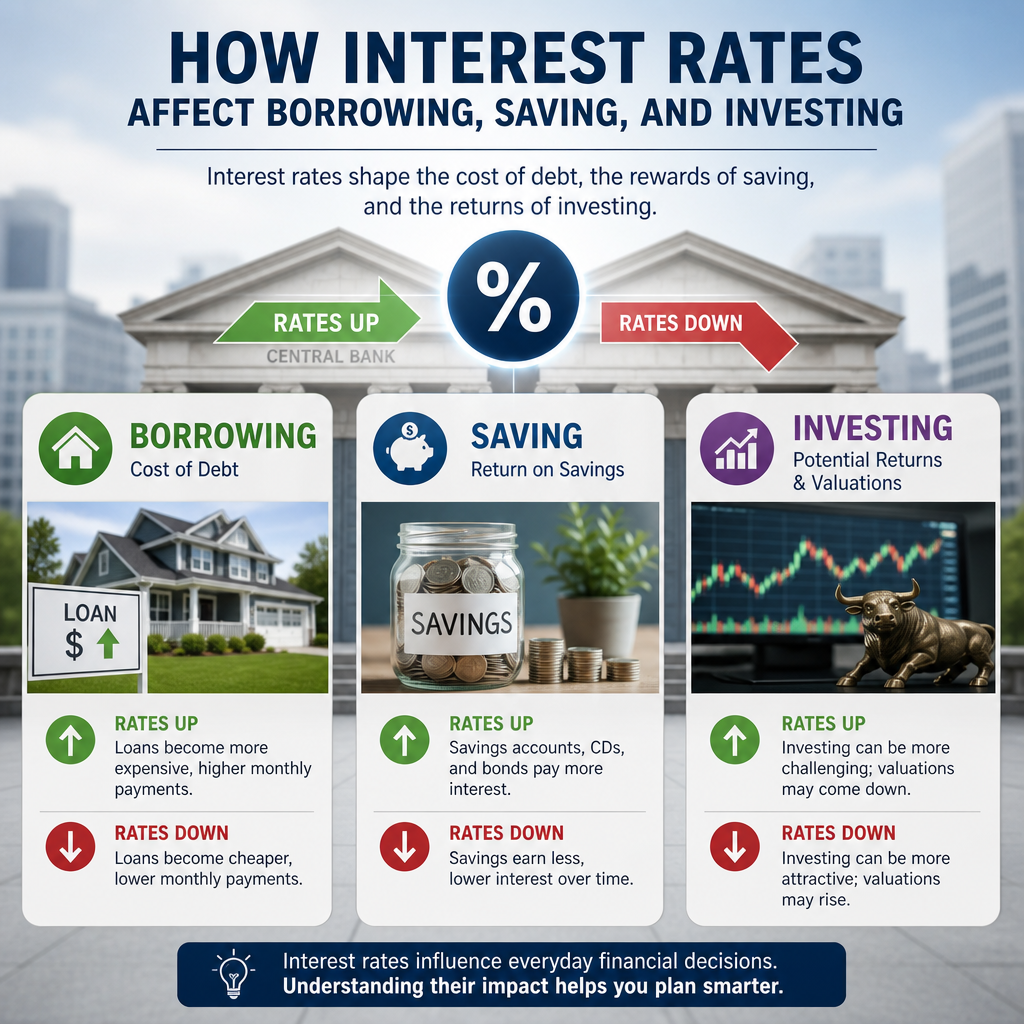
Interest rates affect borrowing by changing how much you pay for loans, from mortgages to credit cards, which can quickly shape your monthly budget. They also influence what you earn on savings and how investors think about bonds, stocks, and long-term returns.
By: Mary Mitchell on julho 31, 2026
Interest rates shape nearly every major financial decision people make. Whether you are applying for a mortgage, parking cash in a savings account, or building a long-term investment portfolio, the cost of money matters. Understanding how interest rates affect borrowing, saving, and investing can help you make smarter decisions, avoid expensive mistakes, and time major financial moves with more confidence.
When rates rise or fall, the impact spreads far beyond banks and lenders. It changes monthly loan payments, savings account yields, bond prices, business growth, and even stock market expectations. If you know how the system works, you can use changing rates to your advantage instead of reacting too late.
What Interest Rates Actually Mean
At a basic level, an interest rate is the price of borrowing money or the reward for lending it. If you take out a loan, the lender charges interest for the privilege of using their money. If you deposit money in a savings account or buy certain investments, you earn interest as a return.
Interest rates are influenced by several factors, including:
Central bank policy, especially the Federal Reserve in the United States
Inflation
Economic growth
Credit risk
Market demand for loans and capital
There are also different types of interest rates. Some are fixed, meaning they stay the same for the life of the loan or investment. Others are variable, meaning they can change over time.
Understanding these basics is the first step in seeing how interest rates affect borrowing, saving, and investing in practical ways.
How Interest Rates Affect Borrowing
Borrowing gets more expensive when interest rates rise and more affordable when they fall. That simple rule affects everything from credit cards to car loans to home mortgages.
Higher Rates Increase the Cost of Debt
When interest rates rise, lenders charge more to borrow money. This can lead to:
Higher monthly payments
More interest paid over the life of the loan
Lower borrowing capacity
Stricter loan approvals
For example, a family shopping for a home may find that the same mortgage amount suddenly carries a much larger monthly payment if rates increase. That can push buyers toward lower-priced homes or delay a purchase altogether.
Lower Rates Make Borrowing Easier
When rates are low, borrowing becomes more attractive. Consumers and businesses may be more willing to take out loans for:
Homes
Cars
Education
Equipment
Expansion projects
Lower rates can stimulate spending and economic activity because financing costs are reduced. But cheap borrowing can also encourage people to take on too much debt if they are not careful.
Variable vs. Fixed-Rate Loans
Interest rate changes affect borrowers differently depending on the loan type.
Fixed-Rate Loans
With a fixed-rate loan, your interest rate stays the same. This offers predictability, which is useful when rates are low. You lock in the cost of borrowing and protect yourself from future increases.
Variable-Rate Loans
Variable-rate loans can rise or fall as market rates change. That means your monthly payment may go up unexpectedly. These loans can be helpful when rates are falling, but they carry more risk if rates climb.
Practical Borrowing Example
Imagine two people each borrow $20,000:
One has a fixed-rate personal loan
The other has a variable-rate loan tied to market conditions
If interest rates rise, the fixed-rate borrower keeps the same payment, while the variable-rate borrower may pay more each month. Over time, that difference can meaningfully affect household budgets.
How Interest Rates Affect Saving
Interest rates also influence how much your savings can grow. When rates are higher, saving usually becomes more rewarding. When rates are lower, cash earns less.
Higher Rates Can Boost Savings Returns
For savers, rising rates can be good news. Banks and credit unions may increase rates on:
Savings accounts
Money market accounts
Certificates of deposit (CDs)
High-yield online savings accounts
This means your emergency fund and short-term cash reserves can earn more without taking on much risk.
Lower Rates Reduce the Reward for Holding Cash
When rates are low, traditional savings accounts may earn very little interest. That can be frustrating for people who are trying to preserve purchasing power. If inflation is running higher than your savings yield, the real value of your cash may decline over time.
This is why it is important to think carefully about where to keep money you do not need right away. A low-rate environment may call for a more deliberate cash strategy, especially if your goal is to outpace inflation.
Certificates of Deposit and Rate Timing
CDs are especially sensitive to interest rate changes because you usually lock in a fixed return for a set period.
A few common approaches include:
Locking in a high rate when you think rates may fall
Using CD ladders to spread money across different maturity dates
Keeping liquidity in mind so you do not tie up all your cash at once
For example, someone expecting lower rates may choose a longer-term CD to secure a better return. But if rates are expected to rise, a shorter-term CD may offer more flexibility.
Practical Saving Example
Suppose you have $10,000 in savings.
At a low interest rate, your account may grow slowly
At a higher rate, you may earn noticeably more each year
The difference may not make you rich, but it can help offset some inflation and reward disciplined saving. That is one reason understanding how interest rates affect borrowing, saving, and investing matters even if you are not taking on debt.
How Interest Rates Affect Investing
Interest rates can reshape investment returns, risk levels, and market behavior. Some assets benefit from rising rates, while others struggle.
Bonds and Interest Rates Move in Opposite Directions
Bond prices and interest rates typically move in opposite directions. When rates rise, existing bonds with lower yields become less attractive, so their market value often falls. When rates decline, older bonds with higher yields tend to become more valuable.
This matters for investors in:
Treasury bonds
Corporate bonds
Bond mutual funds
Bond ETFs
If you own bonds directly, you may care about holding them to maturity. If you invest in bond funds, price changes can affect your account value more visibly.
Stocks Can Respond in Different Ways
The stock market does not react to interest rates in one simple way. Some companies benefit from lower rates, while others face pressure when rates rise.
Rate-Sensitive Businesses
Industries that often react strongly to interest rates include:
Real estate
Utilities
Financials
Homebuilders
Consumer finance companies
Higher rates can slow home sales, reduce refinancing activity, and increase funding costs. Lower rates can have the opposite effect.
Growth Stocks and Discount Rates
Higher interest rates can also affect how investors value future earnings. Growth stocks often rely on profits expected years from now. When rates rise, those future earnings are discounted more heavily, which can pressure valuations.
That does not mean growth stocks always perform poorly in high-rate environments, but they often become more sensitive to rate expectations.
Cash, Alternatives, and Opportunity Cost
When interest rates rise, cash and short-term fixed-income investments may become more attractive. Investors may shift money away from riskier assets if they can earn more with less volatility.
At the same time, higher rates increase the opportunity cost of holding idle cash. If you keep too much money in low-yield accounts, you may miss out on returns available elsewhere.
Practical Investing Example
Consider an investor deciding between:
A bond fund with moderate interest rate sensitivity
A high-yield savings account
A stock portfolio focused on long-term growth
If rates are rising, the bond fund may experience short-term pressure, while the savings account offers better yield. The stock portfolio may still be the best long-term choice, but the investor needs to understand the current rate environment and how it affects each option.
Why Interest Rates Matter for Everyday Financial Decisions
You do not need to be a market expert to benefit from watching interest rates. Small changes can influence everyday choices like:
Whether to refinance a mortgage
Whether to pay off debt faster
Whether to keep cash in savings or invest it
Whether to choose a fixed or variable loan
Whether to buy bonds, stocks, or stay in cash temporarily
A rate change is not always a signal to act immediately. But it is a strong reason to revisit your financial plan.
Smart Ways to Respond to Changing Interest Rates
You cannot control the economy, but you can adjust your strategy.
If Rates Are Rising
Consider:
Paying down high-interest variable debt
Reviewing adjustable-rate loans
Shortening bond duration
Comparing savings account yields
Being cautious about locking in long-term debt unless the rate is favorable
If Rates Are Falling
Consider:
Refinancing existing debt if the numbers make sense
Locking in competitive fixed rates on loans or CDs
Reviewing whether your savings are earning enough
Rebalancing investments with your long-term goals in mind
Keep Your Financial Goals in Focus
Interest rates matter, but they should not override your overall plan. A smart decision depends on your:
Time horizon
Risk tolerance
Debt levels
Cash needs
Income stability
A low-rate environment does not automatically mean you should invest aggressively. A high-rate environment does not automatically mean you should stay in cash. The right move depends on your situation.
Common Mistakes People Make When Rates Change
Many financial mistakes happen when people react emotionally to rate headlines.
Chasing the Highest Yield
A high savings or CD rate may look appealing, but it should not lead you to abandon liquidity or accept penalties you cannot afford. Safety and access still matter.
Ignoring Variable-Rate Debt
If you carry variable-rate credit card balances or loans, rising rates can become expensive quickly. Waiting too long can make repayment harder.
Overlooking Total Loan Cost
A low monthly payment does not always mean a good deal. A longer loan term may reduce the payment but increase total interest paid.
Moving Investments Too Often
Investors sometimes try to predict every rate move and end up trading too frequently. Long-term investing usually works better with patience and diversification.
Frequently Asked Questions
1. Why do interest rates affect borrowing so much?
Interest rates represent the cost of borrowing money. When rates rise, lenders charge more, which increases monthly payments and total interest costs. When rates fall, borrowing becomes cheaper and more accessible.
2. How do interest rates affect savings accounts?
Higher interest rates usually lead to better returns on savings accounts, money market accounts, and CDs. Lower rates reduce the amount of interest your cash earns, which can make it harder to keep up with inflation.
3. What happens to bonds when interest rates rise?
Bond prices typically fall when interest rates rise because newer bonds offer higher yields. Existing bonds with lower rates become less attractive, so their market value usually declines.
4. Should I pay off debt when interest rates go up?
In many cases, yes—especially if you have variable-rate or high-interest debt. Paying down those balances can reduce your exposure to future rate increases and lower the total cost of borrowing.
5. Is it better to invest or save when interest rates are high?
It depends on your goals. Higher rates can make saving more rewarding, but long-term investing may still be the better choice for goals like retirement or wealth building. A balanced approach often works best.
Interest rates affect borrowing, saving, and investing in ways that reach far beyond headlines. They influence how much debt costs, how much cash can earn, and how different investments are priced and valued. When rates rise, borrowing becomes more expensive, savings can become more rewarding, and some investments—especially bonds and rate-sensitive stocks—may face pressure. When rates fall, the picture shifts again, often making loans cheaper and reducing returns on cash.
The key is not to predict every move in the market. It is to understand the mechanics well enough to make thoughtful choices. Review your loans, compare savings options, and make sure your investment mix still matches your goals. If you know how interest rates affect borrowing, saving, and investing, you can respond with confidence instead of guesswork. That knowledge can help you protect your finances, seize better opportunities, and stay focused on the long term.
Mary S, CFP®, is a Certified Financial Planner with over 12 years of experience in personal finance, retirement planning, and wealth management. She writes educational content that helps readers understand financial concepts and make informed decisions based on reliable information.