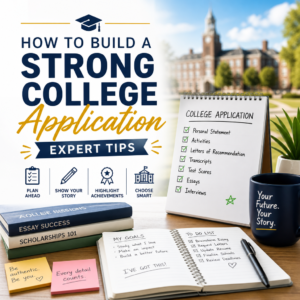
How to Build a Strong College Application: Expert Tips
A strong college application is more than a list of grades and activities—it’s a clear, authentic story that shows your strengths, growth, and fit for college. Learn how to bring together your essays, coursework, recommendations, and experiences in a way that makes your application memorable.
By: Jennifer Collins on julho 30, 2026
Building a strong college application takes more than good grades and a polished essay. Admissions officers look for students who can show academic readiness, personal growth, intellectual curiosity, and meaningful involvement outside the classroom. If you are wondering how to build a strong college application, the answer is simple in theory but more nuanced in practice: present a clear, authentic story that shows who you are and why you will succeed in college.
A strong application does not mean trying to be perfect. It means being intentional. The best applications connect your coursework, extracurricular activities, essays, recommendations, and achievements into a coherent picture. When each part supports the others, your application becomes easier to understand and much more memorable.
What Admissions Officers Look For
Before you start fine-tuning your materials, it helps to understand what colleges are actually evaluating. While each school has its own priorities, most admissions teams want to see evidence of:
Academic preparation
Consistency and challenge in coursework
Engagement beyond the classroom
Character and maturity
A good fit with the school’s mission and environment
Academic Strength Matters, But Context Matters Too
Grades and course rigor are important, but colleges also consider the context behind them. Did you take the hardest classes available at your school? Did your grades improve over time? Did you balance academics with work, family responsibilities, athletics, or other commitments?
A student with a slightly lower GPA who took demanding courses and showed steady growth may stand out more than someone with perfect grades and little depth. This is one reason why building a strong college application is about more than checking boxes.
Demonstrated Interest and Fit
Some colleges want to know that you understand what makes them unique. That does not mean writing a generic compliment about the campus. Instead, it means showing why their programs, values, research opportunities, community, or approach to learning align with your goals.
For example, if you are interested in environmental science, you might mention a specific lab, internship pipeline, or sustainability initiative that fits your academic interests. Specificity shows genuine effort and research.
Start Early and Plan Strategically
A strong college application usually begins long before senior year. Starting early gives you more time to make smart choices, identify strengths, and reduce stress later.
Build an Academic Foundation
Your transcript is one of the most important parts of your application. In high school, try to:
Take challenging courses that match your ability.
Keep grades as strong and consistent as possible.
Focus on core subjects like math, English, science, social studies, and foreign language.
Choose electives that support your interests or intended major.
If your school offers Advanced Placement, International Baccalaureate, honors, or dual-enrollment courses, consider whether you can succeed in them. Colleges value challenge, but not at the expense of a dramatic drop in performance.
Track Your Activities as You Go
Do not wait until application season to remember what you did junior year. Keep a running list of:
Clubs and leadership roles
Sports, arts, or performance activities
Volunteer work
Jobs or internships
Family responsibilities
Awards, honors, and special projects
This makes it much easier to complete applications accurately and present your experiences clearly.
Choose Activities That Show Depth, Not Just Quantity
Many students assume they need a long list of activities to impress colleges. In reality, depth often matters more than breadth. Admissions officers would rather see sustained commitment, leadership, or impact than a long list of short-lived memberships.
Build a Clear Activity Story
A strong college application often includes a pattern. For example:
A student interested in biology volunteers at a hospital, joins science club, and participates in a summer research program.
A student who loves writing contributes to the school newspaper, starts a blog, and edits the literary magazine.
A student passionate about community service helps organize food drives, tutors younger students, and works at a local nonprofit.
These examples show focus and initiative. The goal is not to fit yourself into a theme artificially. It is to identify the real interests that already shape your life and develop them thoughtfully.
Quality Over Quantity in Leadership
Leadership does not always mean holding a title. Colleges also value initiative, responsibility, and influence. You might show leadership by:
Starting a tutoring group
Organizing a fundraiser
Mentoring younger students
Improving a club’s participation
Solving a problem in your community
If your application shows that you made something better, that is meaningful.
Write an Essay That Sounds Like You
The personal statement is one of the most important opportunities to add dimension to your application. A strong essay does not need dramatic events or life-changing stories. It needs honesty, reflection, and a clear voice.
Focus on Insight, Not Just Events
A common mistake is retelling an experience without explaining what it meant. The essay should go beyond “what happened” and address “why it mattered” and “how it changed you.”
For example, instead of simply writing about a competition you won, you might explore what the process taught you about teamwork, resilience, or problem-solving.
Use Specific Details
Specific details help your essay feel real. Compare these two approaches:
Weak: “I learned a lot from my internship.”
Stronger: “Sorting donated supplies in the clinic basement taught me how small tasks can affect a larger system of care.”
The second version gives the reader a clearer image and a stronger sense of reflection.
Avoid Trying Too Hard to Impress
Your essay should not sound like a résumé in paragraph form. Avoid overloading it with big words, lofty claims, or a list of accomplishments. Simple, precise language often reads more powerfully than polished but impersonal prose.
Ask for Strong Recommendation Letters
Recommendation letters give admissions officers a perspective they cannot get from transcripts or test scores alone. The best letters come from teachers, counselors, or mentors who know you well and can speak to your character, academic habits, and growth.
Choose Recommenders Thoughtfully
Select people who can write with detail and sincerity. A strong recommender should be able to describe:
Your classroom contributions
How you handle challenges
Your intellectual curiosity
Your leadership or collaboration skills
Your work ethic and maturity
A teacher from a core academic subject is often a smart choice, especially if they have seen you improve or contribute meaningfully in class.
Make It Easy for Them to Help You
When asking for a recommendation, give your recommender plenty of time and provide helpful background, such as:
Your résumé or activity list
A draft of your essay or personal statement
A brief note about your goals
Deadlines and submission instructions
A thoughtful request shows respect and helps them write a more specific letter.
Prepare Your Test Scores Wisely
Standardized test policies vary by college, and many schools are test-optional. Still, if you choose to submit scores, they can strengthen your application when used strategically.
Know Each School’s Policy
Some colleges require tests, some are test-optional, and others may be test-free. Review each school’s admissions page carefully so you know what is expected.
Submit Scores When They Help You
If your score reflects your academic ability well, it may support your application. If it does not, and the school does not require it, you may be better off focusing on other strengths.
The key is to make a thoughtful decision rather than submitting scores automatically.
Create a Balanced College List
A strong college application is more effective when paired with a realistic, well-researched list of schools. Your list should include a range of options based on selectivity, cost, academic offerings, and campus culture.
Include Different Types of Schools
A balanced list often includes:
Reach schools: Highly selective options that would be challenging admissions-wise
Target schools: Schools where your academic profile aligns well with typical admitted students
Likely schools: Colleges where admission is more probable based on your credentials
This approach helps you stay optimistic while keeping your options practical.
Research Beyond Rankings
A college may look great on paper but still be a poor fit. Look into:
Major availability
Class sizes
Internship and research opportunities
Campus location
Financial aid policies
Student support services
Culture and campus life
A school that matches your goals and personality is often the better choice, even if it is not the most famous.
Keep Your Application Materials Organized
Organization is one of the easiest ways to reduce errors and stress during application season. A missed deadline or incomplete form can weaken even a strong application.
Create a Simple Tracking System
Use a spreadsheet, notebook, or digital planner to track:
Application deadlines
Required materials
Essay prompts
Recommendation requests
Test score submissions
Financial aid and scholarship deadlines
Double-Check Every Detail
Before submitting, review everything carefully. Look for:
Spelling and grammar errors
Inconsistent dates or activity descriptions
Missing documents
Incorrect school names in essays
Formatting issues
Small mistakes can distract from an otherwise solid application.
Make the Most of Interviews and Optional Supplements
Some colleges offer interviews, supplemental essays, or portfolios. These can add value if you use them well.
Treat Interviews as Conversations
If you are invited to interview, prepare by reviewing the school’s programs and reflecting on your own goals. Be ready to answer questions like:
Why are you interested in this college?
What are your academic interests?
What do you contribute to a campus community?
You do not need scripted answers. You need a clear, thoughtful conversation.
Use Supplemental Essays to Add Dimension
Supplemental essays often ask why you want to attend a particular school or how you would contribute to its community. This is your chance to be specific. Mention faculty, research, clubs, programs, or traditions that genuinely matter to you.
Avoid repeating the same ideas from your main essay unless you are deepening them in a new way.
Show Growth and Resilience
Colleges know that students are still developing. They want to understand how you respond to challenges, setbacks, and change.
If Something Affected Your Record, Explain It Briefly and Honestly
If your grades dropped because of illness, family responsibility, or another meaningful circumstance, use the application’s additional information section if appropriate. Keep the explanation clear, factual, and brief.
The point is not to make excuses. It is to give context.
Emphasize What You Learned
A challenge can become a strength in your application if you show reflection. Perhaps you learned time management, perseverance, communication, or independence. Admissions officers value maturity and self-awareness.
Frequently Asked Questions
How early should I start working on my college application?
Ideally, start during sophomore or junior year by building strong academics, exploring activities, and keeping records of accomplishments. Senior year is often too late to develop the depth that makes an application stand out. Early planning also gives you more time to research colleges and write thoughtful essays.
What is the most important part of a strong college application?
There is no single most important part for every student, but academics usually form the foundation. That said, a strong application is a combination of grades, course rigor, essays, activities, and recommendations. The strongest applications tell a consistent story across all sections.
How many extracurricular activities should I list?
There is no magic number. It is better to list a smaller number of meaningful activities than to pad your application with short-term involvement. Colleges want to see commitment, leadership, and impact. Depth matters more than quantity.
Should I use my essay to talk about a hardship?
You can, but only if you can reflect meaningfully on the experience. The essay should not be a complaint or a summary of difficulties. It should show insight, growth, and personality. If the hardship affected your academic record, a brief explanation in the additional information section may be more appropriate.
Do test scores still matter if a school is test-optional?
Yes, test scores can still matter if you choose to submit them. A strong score may support your application, especially if it aligns with your grades and coursework. If your scores do not reflect your ability well, and the college is test-optional, you may choose not to submit them.
Learning how to build a strong college application is really about presenting your best, most authentic self in a clear and organized way. Strong grades matter, but so do your activities, essays, recommendations, and the choices you make along the way. Colleges are looking for students who show curiosity, responsibility, resilience, and a genuine fit with their community. When you approach the process with intention, your application becomes more than a collection of forms—it becomes a compelling story.
Start by focusing on what you can control: your coursework, your involvement, your writing, and your organization. Choose activities that reflect real interests, ask for recommendations from people who know you well, and write essays that sound like you. Research schools carefully so your list fits your goals and strengths. Most importantly, give yourself enough time to make thoughtful decisions rather than rushed ones.
A strong college application is built over time, not overnight. The earlier you begin, the more confident and prepared you will feel. Take the next step by reviewing your current materials, identifying gaps, and creating a simple action plan. Small improvements made consistently can lead to a much stronger application.
Jennifer, M.Ed., holds a degree in Higher Education Administration, with
a focus on U.S. college financial aid, admissions policy, and student
support systems. She researches and writes about scholarships, federal
aid programs, and the college planning process to help students and
families make informed, well-supported decisions.