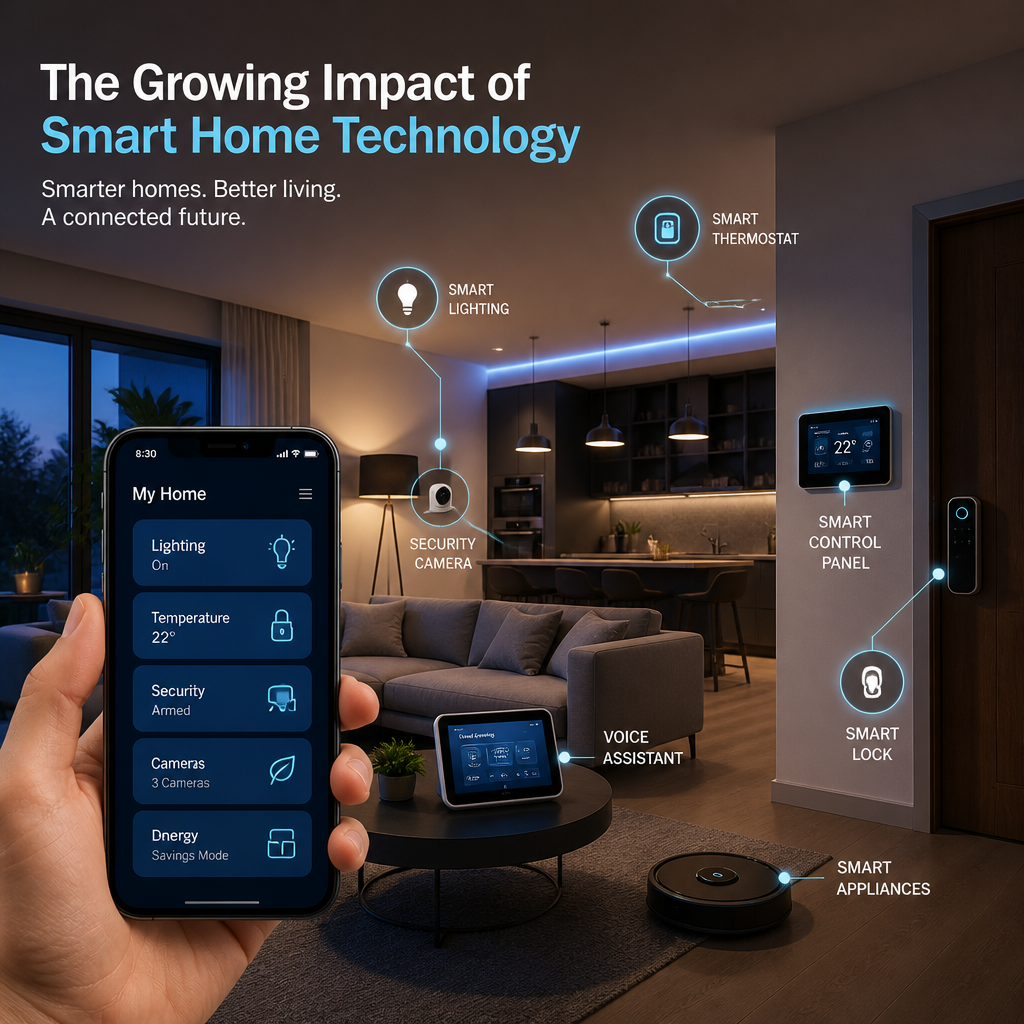
Smart home technology is changing everyday life by making homes more convenient, efficient, and secure. From saving energy to simplifying routine tasks, these connected tools are quickly becoming essentials rather than luxuries.
By: Peter B on julho 30, 2026
Smart home technology has moved far beyond novelty gadgets and voice assistants. Today, it is shaping how people live, manage energy, protect their homes, and save time on everyday tasks. From connected thermostats to intelligent security systems, smart home technology is becoming a practical part of modern life for millions of households.
What makes this shift especially important is that smart home technology is no longer just for tech enthusiasts. It is now designed to be more affordable, easier to install, and more useful for families, renters, homeowners, and older adults alike. As the connected home continues to evolve, it is changing expectations around comfort, convenience, and control.
What Is Smart Home Technology?
Smart home technology refers to devices and systems that connect to the internet and can be monitored, automated, or controlled remotely. These tools often work through a smartphone app, a voice assistant, or a central home hub.
Common examples include:
Smart thermostats
Connected lighting
Video doorbells
Smart locks
Leak detectors
Robot vacuums
Smart speakers
Home security cameras
Connected appliances
The real value of smart home technology comes from how these devices work together. A thermostat can learn your routine, lights can turn off automatically when you leave, and security systems can send alerts when something unusual happens. In other words, the home becomes more responsive to your daily life.
Why Smart Home Technology Is Growing So Quickly
Several forces are driving the rapid growth of smart home technology. Better internet access, lower device costs, and easier setup have made these products more accessible than ever.
Convenience Is a Major Driver
People want tools that reduce friction in daily routines. Smart home technology helps with tasks like:
Turning lights on and off without getting up
Adjusting the temperature from bed or work
Checking a doorbell camera while traveling
Receiving alerts if a water leak is detected
Automating routines for mornings, evenings, or vacations
Small conveniences add up quickly. For many households, the appeal is not flashy tech—it is simply saving time and effort.
Energy Awareness Matters More Than Ever
Homeowners and renters are paying closer attention to utility costs and energy use. Smart home technology supports that goal by helping people see and manage consumption more effectively.
For example:
Smart thermostats can reduce wasted heating and cooling
Smart plugs can cut standby power use
Connected lighting can turn off automatically when a room is empty
Energy-monitoring devices can highlight high-use appliances
These tools do not replace good habits, but they make smart energy management easier and more consistent.
Security and Peace of Mind
Security is another big reason people adopt smart home technology. Video doorbells, motion sensors, smart locks, and connected cameras offer visibility and control that traditional systems often lack.
A homeowner can:
Check who is at the front door
Lock the door remotely
Receive alerts when a window opens
Review footage after a package delivery
Monitor the home while away
This kind of visibility can be especially helpful for frequent travelers, working parents, and anyone who wants added reassurance.
The Biggest Benefits of Smart Home Technology
Smart home technology delivers more than convenience. It can improve day-to-day living in practical, meaningful ways.
1. Better Control Over the Home
With connected devices, people can manage their home from almost anywhere. That control can be useful when:
A child forgets to lock the door
A pet sitter needs entry
A thermostat needs adjusting before returning home
Lights need to be left on for safety
Appliances need to be checked remotely
This flexibility is one of the most compelling reasons people invest in smart home technology.
2. Improved Comfort and Customization
A smart home can adapt to individual preferences. You can create routines such as:
Soft lighting and cooler temperatures in the evening
Bright lights and warmer air in the morning
Music and coffee brewing when you wake up
Automatic adjustments when you leave home
Instead of manually changing settings all day, the home can work around your habits.
3. Potential Savings Over Time
While smart home devices require an upfront purchase, they can help reduce waste and avoid unnecessary costs. Examples include:
Lower heating and cooling bills with a smart thermostat
Reduced water damage risk with leak sensors
Fewer forgotten lights left on
Better awareness of energy-hungry devices
The savings vary by household, but the efficiency benefits are often one of the strongest long-term advantages.
4. Accessibility and Independence
Smart home technology can also support people with mobility limitations, disabilities, or aging-related needs. Voice controls, remote access, and automation can make everyday tasks easier.
For example, a person may use smart home technology to:
Turn lights on by voice
Unlock doors remotely for caregivers
Control thermostats without needing to reach wall switches
Receive reminders for routines or medications
View security cameras without going outside
For many households, these features are not just convenient—they are empowering.
How Smart Home Technology Is Changing Daily Life
The impact of smart home technology is showing up in ordinary routines, not just high-end home setups.
Morning Routines Are More Seamless
Smart home technology can help create a smoother start to the day. A routine might include:
Lights slowly turning on
The thermostat adjusting to a comfortable temperature
A coffee maker starting automatically
Weather or calendar updates playing through a smart speaker
This kind of automation reduces decision fatigue and helps mornings feel less rushed.
Home Security Feels More Responsive
Traditional security systems often rely on alarms alone. Smart home technology adds real-time information and remote action.
Instead of wondering whether a package arrived, residents can check a camera feed. Instead of worrying about whether the garage was left open, they can confirm and close it remotely. That responsiveness can make people feel more in control.
Household Maintenance Becomes Proactive
Smart home technology is also helping people detect problems earlier. Leak sensors can catch water issues before they become expensive repairs. Smoke and carbon monoxide detectors can send alerts to a phone. Some appliances can even notify owners when maintenance is due.
This shift from reactive to proactive management is one of the most valuable changes in the connected home.
Smart Home Technology and Privacy Concerns
As smart home technology becomes more common, privacy and security deserve serious attention. Connected devices collect data, and any internet-connected product can introduce risk if it is not set up properly.
What Users Should Watch For
Before buying or installing smart home technology, consider:
What data the device collects
Whether the company offers security updates
If two-factor authentication is available
How the device stores video or voice data
Whether default passwords can be changed
What permissions the app requests
A well-designed smart home should feel helpful, not invasive.
Practical Security Habits
To reduce risk, households should:
Use strong, unique passwords
Enable two-factor authentication when available
Keep devices and apps updated
Review privacy settings regularly
Limit access for guests or temporary users
Place cameras thoughtfully to respect household privacy
Smart home technology works best when security is built in from the start.
Choosing the Right Smart Home Technology
With so many products on the market, it helps to start with a clear goal. Not every home needs a fully automated setup.
Start With One Problem to Solve
Instead of buying random devices, ask what you want to improve:
Lower energy bills?
Better security?
Easier lighting control?
More convenience for family routines?
Support for aging in place?
Once the goal is clear, it becomes easier to choose the right devices.
Look for Compatibility
Smart home technology works best when devices can communicate with each other. Before buying, check whether products are compatible with your preferred ecosystem, such as:
Amazon Alexa
Google Home
Apple Home
A specific smart hub platform
Compatibility matters because it affects how easily devices can be controlled together.
Prioritize Ease of Use
The best smart home technology is the kind people actually use. A device with too many steps or a confusing app may end up ignored. Look for products that offer:
Simple setup
Clear mobile apps
Reliable customer support
Automatic updates
Easy integration with other devices
If a device feels frustrating from the start, it may not be worth the investment.
Smart Home Technology Trends to Watch
The future of smart home technology is likely to focus on smarter automation, better integration, and more practical applications.
More AI-Driven Automation
Artificial intelligence is helping devices learn routines and make better suggestions. Instead of just responding to commands, smart systems are becoming more predictive. That could mean adjusting temperatures before you notice discomfort or suggesting energy-saving changes based on usage patterns.
Stronger Interoperability
A major challenge in the connected home has been making different brands work together smoothly. Industry efforts are moving toward better interoperability, which should make smart home technology easier to manage across platforms and device types.
Greater Focus on Wellness
Smart home technology is also expanding into health and wellness support. Examples include:
Air quality monitors
Sleep-friendly lighting
Fall detection tools
Smart medication reminders
Temperature and humidity control for comfort
These features show how smart home technology is becoming more than a convenience tool. It is increasingly part of healthy, livable spaces.
Real-World Examples of Smart Home Technology in Action
To understand the impact of smart home technology, it helps to picture how it works in real life.
Example 1: A Busy Family
A family with school-age children might use smart home technology to:
Turn lights off automatically after bedtime
Check that doors are locked after school
Set the thermostat to save energy during the day
Receive alerts if a child arrives home
Control the home while running errands
This setup helps reduce daily stress and keeps routines organized.
Example 2: A Frequent Traveler
A person who travels often might rely on smart home technology to:
Monitor the front door with a camera
Simulate occupancy with scheduled lighting
Lock and unlock doors remotely
Watch for leaks or temperature issues
Check that appliances are off before leaving
In this case, smart home technology adds peace of mind and reduces uncertainty while away.
Example 3: An Older Adult Living Independently
An older adult may use smart home technology to maintain independence longer. Voice assistants, automated lighting, and smart locks can make the home easier to navigate and manage. If caregivers need access, remote entry systems can help without requiring constant in-person support.
Frequently Asked Questions
1. What is the main purpose of smart home technology?
The main purpose of smart home technology is to make homes more convenient, efficient, secure, and responsive. It helps people control devices remotely, automate routines, and monitor their home more easily.
2. Is smart home technology expensive to set up?
It does not have to be. Some devices are affordable and easy to install, especially if you start with one product like a smart plug or thermostat. Costs rise when you build a larger system, but many people begin with a small, practical setup.
3. Does smart home technology save energy?
It can. Smart thermostats, connected lighting, and energy-monitoring devices may help reduce waste by making it easier to manage heating, cooling, and electricity use. Actual savings depend on how the devices are used and the habits of the household.
4. Is smart home technology safe to use?
It can be safe when set up properly. Users should choose reputable brands, keep software updated, use strong passwords, and enable two-factor authentication when available. Privacy settings also matter, especially for cameras and voice-enabled devices.
5. What smart home device should I buy first?
That depends on your goal. A smart thermostat is a strong first choice for energy savings, while a video doorbell or smart lock may be better if security is your priority. If you want simple convenience, a smart speaker or smart lighting system is a practical place to start.
The growing impact of smart home technology is easy to see in everyday life. It gives people more control over their homes, supports better energy use, strengthens security, and creates routines that feel simpler and more efficient. Just as important, smart home technology is becoming more accessible, which means more households can benefit from it without needing a major renovation or a big budget.
The best approach is to start with a clear goal. Maybe you want to lower energy bills, improve home security, or make daily routines less stressful. Once you know what matters most, you can choose devices that solve real problems instead of adding unnecessary complexity. As the connected home continues to evolve, smart home technology will likely play an even bigger role in comfort, safety, and independence. Learning how to use it wisely now can help you build a home that is not only more connected, but also more practical and responsive to your life.
Peter B holds a degree in Journalism and has 5 years of experience covering U.S. economic policy, labor markets, and financial news. He writes data-driven news content on topics like inflation, interest rates, and employment trends.