How to Prepare Your Finances for Unexpected Life Events
Building an emergency fund is one of the simplest ways to protect yourself when life takes an unexpected turn. Even a small cushion can help you cover urgent costs, avoid high-interest debt, and stay calm when surprises come your way.
By: Mary Mitchell on julho 31, 2026
Unexpected life events have a way of showing up when we least expect them. A job loss, medical emergency, car repair, family crisis, or major home issue can throw even a well-planned budget off track. That’s why how to prepare your finances for unexpected life events matters so much. Financial resilience is not about predicting every problem—it’s about building a plan that helps you respond without panic.
The good news is that you do not need a huge income or advanced financial knowledge to get started. With a few intentional habits, you can make your money more flexible, protect your essentials, and reduce the stress that comes with sudden changes. This guide walks through practical steps to strengthen your financial foundation before life takes an unexpected turn.
Why Financial Preparedness Matters
Life rarely follows a perfect script. Even people with steady incomes and careful budgets can face surprises. Preparing ahead of time gives you options.
When you have a financial cushion and a plan, you can:
Cover urgent expenses without relying on high-interest debt
Protect your daily living needs during income disruptions
Make calmer decisions under pressure
Avoid selling important assets too quickly
Recover faster after a setback
Financial preparedness is not just about savings. It also includes insurance, debt management, access to documents, and a clear understanding of your monthly expenses. The more areas you organize now, the easier it becomes to handle a crisis later.
Build a Strong Emergency Fund
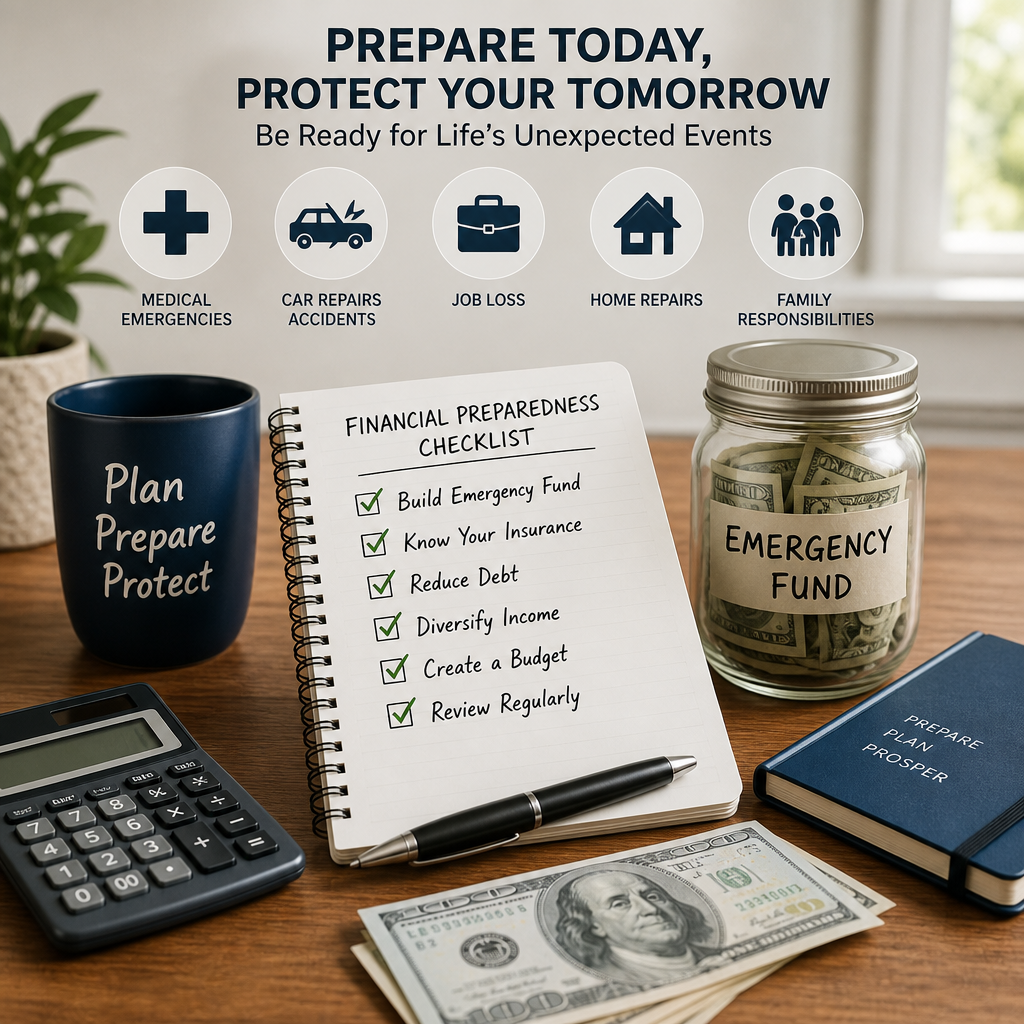
One of the most important parts of how to prepare your finances for unexpected life events is creating an emergency fund. This is money set aside specifically for true emergencies, such as losing your job, facing a medical bill, or replacing a broken essential appliance.
Start with a realistic goal
You do not have to save six months of expenses overnight. Start small and build consistently.
A practical approach:
Save your first $500 to $1,000 for immediate emergencies.
Aim for one month of essential expenses.
Work toward three to six months of basic living costs if possible.
The right number depends on your job stability, household size, health, and monthly obligations. A dual-income household may need a different buffer than a single-income family or a freelancer with variable income.
Keep it separate and accessible
An emergency fund should be easy to reach but not too easy to spend. A separate savings account is usually best. It keeps your emergency money visible and out of your everyday spending account.
Avoid putting this money into risky investments or tying it up in assets that take time to sell. In a real emergency, liquidity matters.
Create a Simple Budget That Works in Real Life
A budget helps you understand where your money goes and how much room you have to save. Without one, unexpected expenses can feel even more overwhelming because you do not know what can be adjusted quickly.
Focus on essentials first
Break your monthly expenses into categories:
Housing
Utilities
Groceries
Transportation
Insurance
Minimum debt payments
Childcare or dependent care
Medicine or health-related costs
Once you know your essentials, you can identify flexible spending areas like dining out, subscriptions, entertainment, and nonessential shopping.
Use a method you will actually follow
There is no single perfect budgeting system. The best one is the one you can maintain.
Popular options include:
Zero-based budgeting: every dollar gets a job
50/30/20 rule: needs, wants, and savings/debt repayment
Envelope system: set spending limits by category
Simple tracking: review income and expenses weekly
If your life is busy, keep it simple. A budget that takes 10 minutes a week and gets used is far more effective than a complicated system you abandon after a month.
Reduce Debt Before an Emergency Hits
Debt can make unexpected life events more difficult because it limits flexibility. Monthly payments continue even when your income changes, which can create added stress during an already hard time.
Prioritize high-interest debt
If you carry credit card balances or other expensive debt, lowering them can free up cash flow. Consider strategies such as:
Paying extra on the highest-interest balance first
Rolling smaller debts into a payoff plan
Avoiding new debt while you build savings
Even small improvements help. Lower debt payments can make it easier to handle a temporary job loss or large repair bill.
Avoid using credit as your emergency plan
Credit cards can be helpful in true short-term emergencies, but they should not replace savings. If possible, use credit as a backup—not your first line of defense. High balances can turn a temporary crisis into a longer financial problem.
Review Insurance Coverage Regularly
Insurance is one of the most overlooked parts of how to prepare your finances for unexpected life events. The right policies can protect you from major financial damage when something goes wrong.
Check the essentials
Review coverage for:
Health insurance
Auto insurance
Homeowners or renters insurance
Disability insurance
Life insurance, if others depend on your income
Make sure your coverage matches your current life situation. A policy that made sense years ago may no longer fit if you changed jobs, bought a home, had children, or started working for yourself.
Understand your deductibles and limits
It is not enough to know that you have insurance. You should also know:
Your deductible
What is covered and excluded
How to file a claim
Whether you have enough coverage limits
For example, a low monthly premium may look appealing, but a high deductible could be difficult to manage in an emergency. Balance affordability with real protection.
Build an Income Backup Plan
Unexpected life events often affect income directly. A job loss, injury, illness, caregiving duty, or reduced hours can create a sudden gap. That is why it helps to think beyond savings.
Diversify your income sources
If possible, reduce dependence on a single paycheck. This does not mean taking on too much at once. It may simply involve developing a side skill, freelance opportunity, or passive income stream over time.
Examples include:
Freelance writing, design, or consulting
Part-time remote work
Selling unused items
Teaching, tutoring, or coaching
Short-term gig work as a temporary bridge
Update your résumé and professional network
If you lose a job unexpectedly, time matters. Keep your résumé current, maintain professional contacts, and save copies of important work documents. Knowing you can search quickly and strategically lowers stress if work becomes unstable.
Organize Important Financial Documents
During a crisis, time is precious. If your documents are scattered, you may waste energy searching for account numbers, policy details, or contact information.
Keep records in one secure place
Store copies of key documents, such as:
Bank and investment account information
Insurance policies
Loan statements
Tax returns
Identification documents
Estate planning documents
Emergency contacts
You can keep physical copies in a fire-resistant file or secure safe, and digital copies in an encrypted cloud folder or password-protected storage.
Make access easy for trusted people
If something happens to you, loved ones may need access to important records. Consider letting a trusted family member or partner know where documents are stored and how to reach your financial institutions if needed.
Plan for Health-Related Financial Risks
Medical events are among the most disruptive unexpected life events because they can affect both your health and your income. Even with insurance, out-of-pocket costs can add up quickly.
Prepare for direct and indirect costs
A medical situation may involve:
Copays and deductibles
Prescription costs
Travel to appointments
Childcare during recovery
Lost wages
Home modifications or caregiving support
A flexible emergency fund and strong insurance can help, but it also helps to know what short-term assistance might be available through employers, disability coverage, or community programs.
Keep a list of health-related contacts
Maintain a list of:
Primary care physician
Specialists
Pharmacy information
Health insurance member services
Employer benefits contact
Local urgent care or hospital resources
That preparation saves time and reduces confusion when decisions need to be made quickly.
Make a Plan for Family and Dependents
If other people rely on your income or care, financial preparation becomes even more important. Your plan should account for both everyday needs and emergency situations.
Clarify who depends on your finances
Think about:
Children
Aging parents
A spouse or partner
Disabled family members
Anyone who depends on you for caregiving or housing
Then ask what would happen if your income were interrupted for a few weeks or months.
Put legal and practical protections in place
Depending on your situation, you may need:
A will
Beneficiary designations on financial accounts
A power of attorney
A healthcare directive
Guardianship planning for minors
These steps do not prevent emergencies, but they make difficult situations much more manageable for the people you care about.
Stress-Test Your Finances
A helpful way to prepare is to imagine a few realistic scenarios and see how your finances would hold up.
Try these questions
What if I lost my income for one month?
What if my car needed a major repair?
What if I had a $2,000 medical bill?
What if I had to help a family member unexpectedly?
What monthly expenses could I cut immediately?
This exercise reveals weak points before they become real problems. Maybe you need a larger emergency fund, lower debt, or a better insurance policy. Maybe you simply need to know which expenses you can pause first.
Create a 30-Day Financial Preparedness Plan
If you want to start now, a one-month action plan can make the process manageable.
Week 1: Assess
List your monthly essential expenses
Review savings balances
Check debt payments
Gather insurance and account information
Week 2: Protect
Open or separate an emergency savings account
Review insurance coverage
Update beneficiaries if needed
Organize financial documents
Week 3: Strengthen
Cut one or two nonessential expenses
Set up automatic savings transfers
Make a plan to reduce high-interest debt
Week 4: Prepare
Update your résumé
Build a contact list for emergencies
Talk with family members about your plan
Review what you would do in a short-term income disruption
Even small steps can significantly improve your readiness.
Common Mistakes to Avoid
When learning how to prepare your finances for unexpected life events, it helps to know what not to do.
Don’t assume “it won’t happen to me”
Many people delay preparation because they believe they will have time later. But emergencies rarely arrive on schedule.
Don’t keep all your money in one place
If every dollar is in a checking account or tied up in investments, you may struggle to access funds when needed. A layered approach works better.
Don’t ignore insurance until after a problem
The best time to review coverage is before you need it. Waiting too long can leave gaps that are expensive to fix.
Don’t build a plan you cannot maintain
A perfect plan that is too complicated will fail. Keep your system simple enough to use during normal life, not just during emergencies.
Frequently Asked Questions
1. How much money should I keep in an emergency fund?
A common starting point is $500 to $1,000, then one month of essential expenses, and eventually three to six months if possible. The right amount depends on your job security, household size, and monthly obligations. If your income is variable, you may want a larger cushion.
2. Should I pay off debt or save for emergencies first?
In many cases, it makes sense to do both. Start by building a small emergency fund so you can handle minor surprises without using credit. Then focus on reducing high-interest debt while continuing to save regularly. If your debt payments are overwhelming, adjusting your budget and payoff strategy may be the first priority.
3. What kind of account should I use for emergency savings?
A separate savings account is usually the best choice. It keeps the money easy to access without mixing it into everyday spending. Some people prefer a high-yield savings account, but the most important factors are safety, accessibility, and separation from regular spending money.
4. How often should I review my financial preparedness?
Review your plan at least once a year, and also after major life changes such as a job change, marriage, divorce, birth of a child, home purchase, or new diagnosis. A yearly review helps you update savings goals, insurance coverage, beneficiaries, and documents.
5. What if I cannot save much right now?
Start with a very small amount, even if it is just $10 or $25 per paycheck. The habit matters. Also look for ways to free up money by trimming subscriptions, negotiating bills, or redirecting windfalls like tax refunds or bonuses. Small, consistent steps build momentum over time.
Preparing your finances for unexpected life events is one of the most practical forms of self-protection you can build. You cannot prevent every surprise, but you can reduce the damage they cause. A strong emergency fund, a realistic budget, manageable debt, proper insurance, and organized documents create a financial safety net that supports you when life gets complicated.
The goal is not perfection. It is resilience. Start with the areas that will make the biggest difference in your situation, whether that means saving your first emergency $500, reviewing your insurance, or mapping out your essential expenses. Each step makes you more prepared, more confident, and less likely to be thrown off course by the next unexpected event.
The best time to prepare is before a crisis arrives. The second-best time is today.
Mary S, CFP®, is a Certified Financial Planner with over 12 years of experience in personal finance, retirement planning, and wealth management. She writes educational content that helps readers understand financial concepts and make informed decisions based on reliable information.